
A toddler’s brain forms more than 1 million new neural connections every second during the earliest years of life, making everyday experiences a powerful driver of learning. One of the most effective ways to support this rapid development is through sensory activities that encourage children to explore the world with their senses. Every time a toddler squeezes playdough, splashes water, listens to different sounds, or walks barefoot on grass, the brain processes new information and strengthens the neural pathways that support future learning.
Sensory activities for brain development do much more than keep toddlers entertained. They build the foundation for cognitive skills, language development, memory, attention, emotional regulation, and both fine and gross motor coordination. Because multiple areas of the brain work together during sensory play, even simple activities using household materials can become meaningful learning experiences without requiring expensive toys or complicated preparation.
This guide brings together 25 toddler sensory activities for brain development that are easy to set up at home and designed to support healthy growth through play. You’ll also learn how sensory experiences strengthen the developing brain, which activities are most appropriate for different ages, how to create a safe sensory play environment, and the common mistakes parents should avoid. By the end of this guide, you’ll have practical ideas you can confidently incorporate into your toddler’s daily routine to encourage curiosity, independence, and lifelong learning.
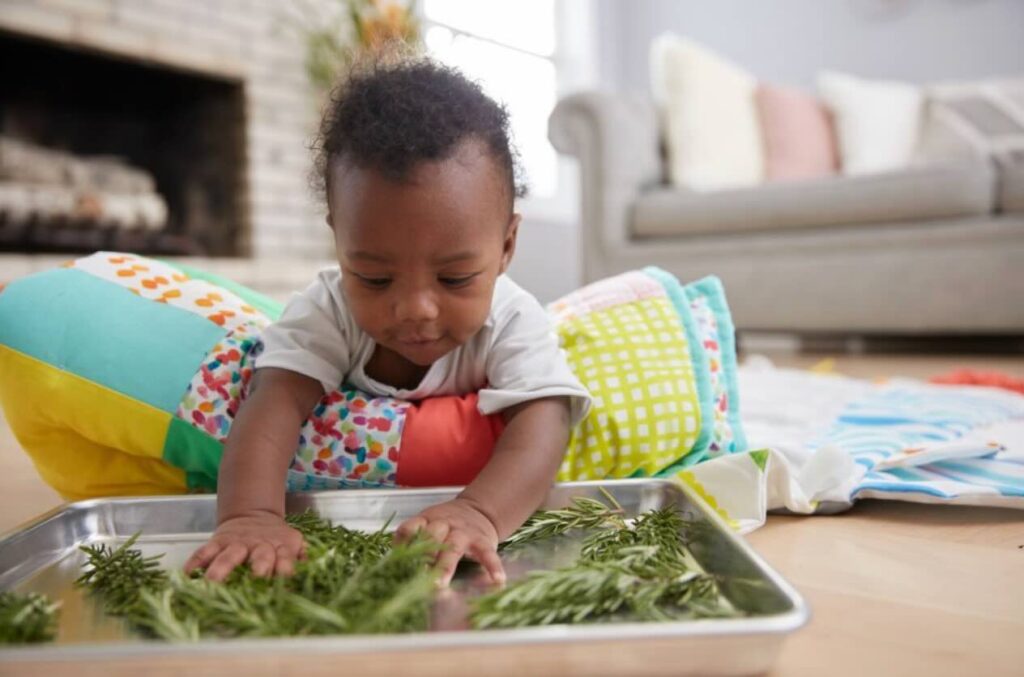
What Are Sensory Activities for Toddlers?
Sensory activities are play experiences that stimulate one or more of a toddler’s senses to help the brain process, organize, and respond to information. These activities encourage children to explore different textures, sounds, colors, movements, smells, and tastes through hands-on experiences instead of passive observation. As toddlers interact with new sensory input, their brains continuously build and strengthen neural pathways that support future learning.
Sensory play engages all eight sensory systems involved in child development. In addition to the five familiar senses—touch, sight, hearing, smell, and taste—it also activates the vestibular system, which supports balance and movement, the proprioceptive system, which helps children understand body position and force, and the interoceptive system, which allows them to recognize internal body signals such as hunger, thirst, and comfort. When multiple sensory systems work together during play, the brain learns to process information more efficiently and coordinate different developmental skills at the same time.
The toddler years are an ideal period for sensory exploration because the brain develops at an extraordinary pace during the first three years of life. Every new sensory experience provides the brain with opportunities to form, reinforce, or refine neural connections. Simple activities such as pouring water between cups, pressing fingerprints into homemade playdough, listening to musical instruments, or walking across different natural surfaces expose children to varied sensory input that strengthens their understanding of the world while encouraging curiosity and independent exploration.
How Do Sensory Activities Support Brain Development?
Sensory activities support brain development by strengthening neural connections through repeated, meaningful experiences. Every time a toddler touches a rough texture, watches colored water move, listens to rhythm, or balances on an uneven surface, different regions of the brain communicate with one another. Frequent communication between these regions improves the efficiency of neural networks, making it easier for children to learn new skills as they grow.
Sensory play contributes to several areas of cognitive development simultaneously. Tactile activities improve fine motor control and hand-eye coordination, while movement-based experiences strengthen balance, body awareness, and spatial understanding. Sorting objects by color, size, or texture develops problem-solving abilities and early mathematical thinking. Listening games expand auditory discrimination that later supports speech development and reading readiness. Open-ended sensory exploration also encourages curiosity, creativity, flexible thinking, and sustained attention because toddlers learn by experimenting instead of following fixed instructions.
Repeated sensory experiences help the brain recognize patterns and respond more efficiently to familiar information. For example, scooping rice from one container to another may appear to be a simple game, but repeating the activity strengthens grip control, bilateral coordination, concentration, motor planning, and visual processing. As these neural pathways become stronger through repetition, toddlers complete similar tasks with greater confidence and less mental effort, allowing the brain to devote more resources to learning increasingly complex skills.
Sensory play also supports emotional and social development by helping toddlers understand and regulate their responses to different experiences. Activities that involve squeezing, pouring, digging, or moving the body can provide calming sensory input, while collaborative play encourages communication, turn-taking, and shared problem-solving. Together, these experiences create a strong developmental foundation that prepares children for future learning in language, academics, self-regulation, and everyday life.
What Are the Best Toddler Sensory Activities for Brain Development?
The best toddler sensory activities combine multiple sensory experiences while encouraging children to explore, experiment, and solve simple problems independently. Activities that involve touching different textures, moving the body, observing cause and effect, and manipulating everyday objects stimulate multiple regions of the brain simultaneously. This combination strengthens neural connections responsible for cognitive development, motor coordination, language acquisition, attention, and emotional regulation.
1. Sensory Bin Exploration
Fill a shallow container with dried rice, colored pasta, oats, pom-poms, or water beads designed for sensory play, then add scoops, cups, spoons, and large toys for exploration.
Brain development benefits: Strengthens tactile processing, problem-solving, and attention while encouraging independent exploration.
Skills developed: Fine motor skills, hand-eye coordination, bilateral coordination, early math concepts, and vocabulary.
Recommended age: 18 months to 3 years.
Safety tips: Always supervise closely and choose fillers large enough to avoid choking hazards for younger toddlers.
2. Water Pouring Station
Prepare two or three containers with cups, funnels, measuring spoons, and floating toys. Encourage toddlers to pour, scoop, and transfer water between containers.
Brain development benefits: Builds an understanding of cause and effect while strengthening neural pathways responsible for motor planning and visual processing.
Skills developed: Fine motor control, concentration, coordination, early science concepts, and independent problem-solving.
Recommended age: 18 months to 3 years.
Safety tips: Use only a small amount of water and provide constant adult supervision.
3. Homemade Playdough Play
Offer homemade or child-safe playdough together with rolling pins, cookie cutters, toy animals, and plastic utensils for open-ended exploration.
Brain development benefits: Improves tactile discrimination while activating brain regions responsible for creativity, planning, and finger strength.
Skills developed: Fine motor development, bilateral coordination, imagination, pre-writing skills, and language through pretend play.
Recommended age: 18 months to 3 years.
Safety tips: Use non-toxic ingredients and remove small accessories that could become choking hazards.
4. Nature Texture Walk
Invite your toddler to safely explore different outdoor surfaces such as grass, sand, smooth rocks, tree bark, leaves, and soil while describing how each one feels.
Brain development benefits: Combines tactile, visual, vestibular, and proprioceptive input, helping the brain integrate information from multiple sensory systems.
Skills developed: Balance, body awareness, observation skills, vocabulary, and curiosity about the natural world.
Recommended age: 12 months to 3 years.
Safety tips: Check outdoor areas for sharp objects, insects, or plants that may irritate sensitive skin.
5. Color Sorting Activity
Place colorful balls, blocks, pom-poms, or bottle caps into matching colored bowls or cups and encourage your toddler to sort them independently.
Brain development benefits: Develops pattern recognition, visual discrimination, and cognitive flexibility by teaching the brain to categorize information.
Skills developed: Early math skills, color recognition, concentration, fine motor coordination, and problem-solving.
Recommended age: 18 months to 3 years.
Safety tips: Choose large objects that cannot be swallowed and avoid items with loose parts.
6. Music and Rhythm Play
Play songs with different tempos and encourage your toddler to clap, dance, tap instruments, or move their body to the beat.
Brain development benefits: Stimulates auditory processing, language centers, memory, and coordination while strengthening communication between both hemispheres of the brain.
Skills developed: Listening skills, rhythm awareness, gross motor coordination, balance, and expressive language.
Recommended age: 12 months to 3 years.
Safety tips: Keep the volume at a comfortable level to protect developing hearing.
7. Texture Board Discovery
Create a board using soft fabric, bubble wrap, felt, sponge, foil, velvet, cork, and other safe materials that offer contrasting textures.
Brain development benefits: Improves tactile discrimination by teaching the brain to recognize subtle differences through touch.
Skills developed: Sensory processing, descriptive language, finger strength, and cognitive classification.
Recommended age: 12 months to 3 years.
Safety tips: Secure every material firmly and avoid anything that could peel off during play.
8. Ice Exploration
Freeze large ice cubes with colorful toys, fruit slices, or flowers inside and allow toddlers to observe, touch, and melt the ice using warm water.
Brain development benefits: Introduces scientific thinking by demonstrating temperature, melting, and cause-and-effect relationships through direct experience.
Skills developed: Observation, patience, fine motor coordination, vocabulary, and early STEM learning.
Recommended age: 18 months to 3 years.
Safety tips: Use large ice pieces that cannot fit into a toddler’s mouth and supervise throughout the activity.
9. Bubble Play
Blow bubbles indoors or outdoors and encourage your toddler to watch, chase, pop, or catch them using both hands.
Brain development benefits: Bubble play strengthens visual tracking and improves communication between the eyes and the brain as children predict movement and react to changing directions.
Skills developed: Visual tracking, hand-eye coordination, balance, reaction time, and gross motor skills.
Recommended age: 12 months to 3 years.
Safety tips: Use non-toxic bubble solution and play in an open area to reduce slipping.
10. Finger Painting
Spread washable, non-toxic finger paint on large sheets of paper and allow your toddler to explore colors, patterns, and movements freely without focusing on creating a finished artwork.
Brain development benefits: Finger painting activates tactile, visual, and creative brain networks simultaneously while encouraging sensory exploration and self-expression.
Skills developed: Creativity, fine motor control, color recognition, emotional expression, and pre-writing movements.
Recommended age: 18 months to 3 years.
Safety tips: Choose washable, child-safe paint and supervise toddlers who still put objects in their mouths.
11. Rice Scooping and Transferring
Fill a sensory tray with dry rice and provide measuring cups, spoons, funnels, or small containers for pouring and transferring.
Brain development benefits: Repetitive scooping movements strengthen neural pathways responsible for motor planning, concentration, and bilateral coordination.
Skills developed: Fine motor skills, grip strength, early measurement concepts, attention span, and hand-eye coordination.
Recommended age: 18 months to 3 years.
Safety tips: Use large containers and supervise closely to prevent toddlers from placing rice in their mouths.
12. Indoor Obstacle Course
Arrange cushions, tunnels, masking tape lines, stepping stones, or soft boxes to create a simple course that encourages climbing, crawling, stepping, and balancing.
Brain development benefits: Movement-based activities stimulate the vestibular and proprioceptive systems, helping the brain improve balance, coordination, and body awareness.
Skills developed: Gross motor development, motor planning, balance, spatial awareness, confidence, and problem-solving.
Recommended age: 18 months to 3 years.
Safety tips: Use soft materials, remove sharp furniture nearby, and ensure the course matches your toddler’s developmental abilities.
13. Sand Play
Offer clean play sand with buckets, scoops, molds, and toy animals to encourage digging, pouring, building, and imaginative play.
Brain development benefits: Sand provides rich tactile input while encouraging experimentation, creativity, and early engineering thinking through construction and exploration.
Skills developed: Fine motor coordination, sensory processing, imagination, bilateral coordination, and language development.
Recommended age: 18 months to 3 years.
Safety tips: Use clean, child-safe play sand and encourage handwashing after the activity.
14. Scent Matching Game
Prepare cotton balls or fabric squares with gentle scents such as vanilla, cinnamon, lemon, orange, lavender, or peppermint, then encourage toddlers to smell and match identical scents.
Brain development benefits: Smell has a direct connection to areas of the brain responsible for memory and emotion, making scent activities effective for strengthening recognition and recall.
Skills developed: Olfactory discrimination, memory, vocabulary, concentration, and cognitive classification.
Recommended age: 2 to 3 years.
Safety tips: Avoid strong fragrances or essential oils that may irritate young children and never allow direct contact with concentrated oils.
15. Safe Taste Exploration
Introduce a variety of age-appropriate fruits, vegetables, yogurt, crackers, or cooked foods with different flavors and textures during supervised snack time.
Brain development benefits: Taste exploration encourages the brain to connect sensory input with language, memory, and food acceptance while reducing hesitation toward unfamiliar foods.
Skills developed: Oral sensory development, descriptive language, decision-making, and healthy eating habits.
Recommended age: 12 months to 3 years.
Safety tips: Follow age-appropriate feeding guidelines and avoid foods that present choking hazards.
16. Light and Shadow Play
Use a flashlight, translucent blocks, colored tissue paper, or window sunlight to create shadows and colorful light patterns for exploration.
Brain development benefits: Light exploration develops visual perception and strengthens the brain’s ability to recognize contrast, movement, and spatial relationships.
Skills developed: Observation, curiosity, scientific thinking, visual discrimination, and problem-solving.
Recommended age: 18 months to 3 years.
Safety tips: Never shine flashlights directly into a child’s eyes and ensure electrical equipment is used safely.
17. Sticky Wall Activity
Attach clear contact paper to a wall with the sticky side facing outward, then provide lightweight materials such as tissue paper, pom-poms, felt shapes, craft sticks, or foam letters for your toddler to stick on and remove.
Brain development benefits: Reaching, placing, and removing objects strengthen visual-motor integration while encouraging the brain to coordinate movement with visual feedback.
Skills developed: Fine motor skills, shoulder stability, hand-eye coordination, creativity, and problem-solving.
Recommended age: 18 months to 3 years.
Safety tips: Secure the contact paper firmly and supervise toddlers to prevent them from placing small materials in their mouths.
18. Water Transfer Game
Provide a sponge, turkey baster, eyedropper, or small squeeze bottle and encourage your toddler to transfer water from one container to another.
Brain development benefits: Controlled squeezing movements strengthen the neural pathways responsible for finger isolation, precision, and motor planning.
Skills developed: Hand strength, bilateral coordination, concentration, and early science exploration.
Recommended age: 2 to 3 years.
Safety tips: Keep water levels shallow and dry any spills immediately to prevent slips.
19. Cotton Ball Race
Invite your toddler to blow cotton balls across a table using only their breath or move them with oversized spoons into containers.
Brain development benefits: Controlled breathing supports oral motor development while movement planning improves attention and coordination.
Skills developed: Oral motor strength, balance, concentration, fine motor control, and visual tracking.
Recommended age: 2 to 3 years.
Safety tips: Use large cotton balls and supervise children who still mouth non-food items.
20. DIY Sensory Bottles
Fill clear plastic bottles with water, glitter, beads, pom-poms, buttons, colored rice, or sequins, then seal the lids securely with strong glue before use.
Brain development benefits: Watching objects move through the bottle improves visual attention, tracking, and pattern recognition while providing calming sensory input.
Skills developed: Visual processing, focus, language development, and emotional regulation.
Recommended age: 12 months to 3 years.
Safety tips: Seal bottle caps tightly to prevent leaks or access to small objects.
21. Pom-Pom Sorting
Offer colorful pom-poms together with tongs, muffin trays, or colored bowls and encourage sorting by color or size.
Brain development benefits: Sorting activities strengthen cognitive flexibility and improve the brain’s ability to organize and categorize information.
Skills developed: Fine motor coordination, grip strength, color recognition, early math concepts, and concentration.
Recommended age: 2 to 3 years.
Safety tips: Use jumbo pom-poms for younger toddlers and supervise throughout the activity.
22. Frozen Toy Rescue
Freeze large plastic toys inside a container of ice and let your toddler use warm water, spray bottles, spoons, or plastic tools to free them.
Brain development benefits: Solving the challenge of releasing toys encourages persistence, planning, and cause-and-effect reasoning while stimulating tactile exploration.
Skills developed: Problem-solving, fine motor control, patience, scientific thinking, and hand-eye coordination.
Recommended age: 2 to 3 years.
Safety tips: Freeze only large toys and avoid hard metal tools that may damage the ice or cause injury.
23. Shaving Foam Drawing
Spray child-safe shaving foam onto a tray or table surface and encourage your toddler to draw shapes, lines, and patterns using their fingers.
Brain development benefits: Combining tactile input with visual feedback strengthens sensory integration while preparing fingers for future handwriting skills.
Skills developed: Finger strength, creativity, pre-writing movements, sensory processing, and letter awareness.
Recommended age: 2 to 3 years.
Safety tips: Test for skin sensitivity first and prevent foam from entering the eyes or mouth.
24. Treasure Basket Exploration
Fill a basket with everyday household objects made from different natural materials such as wooden spoons, silicone whisks, fabric squares, large shells, pinecones, or soft brushes.
Brain development benefits: Exploring objects with different weights, textures, and shapes strengthens sensory discrimination while encouraging independent discovery.
Skills developed: Observation, tactile awareness, vocabulary, concentration, and early critical thinking.
Recommended age: 12 to 24 months.
Safety tips: Inspect every object carefully, remove loose parts, and choose items large enough to eliminate choking risks.
25. Simple Cooking Activities
Invite your toddler to stir batter, wash vegetables, tear lettuce, mash bananas, or sprinkle cheese while preparing simple meals together.
Brain development benefits: Cooking combines touch, smell, taste, sight, and movement into one experience, helping the brain integrate multiple sensory systems during a meaningful everyday activity.
Skills developed: Sequencing, fine motor coordination, language development, early math concepts, independence, and self-confidence.
Recommended age: 2 to 3 years.
Safety tips: Keep sharp utensils, hot surfaces, and small choking hazards out of reach while maintaining close adult supervision.
These 25 sensory activities provide a balanced combination of tactile, visual, auditory, vestibular, proprioceptive, olfactory, and gustatory experiences. Rotating different activities throughout the week exposes toddlers to varied sensory input, preventing overstimulation while giving the developing brain repeated opportunities to strengthen neural connections that support learning, movement, communication, and emotional regulation.
Which Sensory Activities Are Best for Different Toddler Ages?
Choosing sensory activities that match your toddler’s developmental stage creates the right level of challenge without causing frustration or overstimulation. As children grow, their attention span, coordination, language, and problem-solving abilities improve, allowing them to participate in increasingly complex sensory experiences.
Sensory activities for 12–18 months
Toddlers in this stage learn primarily through exploration. Activities should focus on large movements, simple textures, and safe cause-and-effect experiences rather than following instructions.
Recommended activities include:
- Water play with large cups
- Treasure basket exploration
- Bubble play
- Nature texture walks
- DIY sensory bottles
- Music and movement games
These experiences strengthen sensory processing, visual attention, balance, and early language while encouraging curiosity about the surrounding environment.
Sensory activities for 18–24 months
As fine motor skills improve, toddlers begin manipulating objects with greater precision and can concentrate for longer periods.
Recommended activities include:
- Sensory bins
- Homemade playdough
- Rice scooping
- Color sorting
- Texture boards
- Ice exploration
- Finger painting
- Sand play
These activities improve hand strength, bilateral coordination, cognitive flexibility, and problem-solving while supporting early pre-writing movements.
Sensory activities for 2–3-year-olds
Older toddlers are ready for activities that involve planning, imagination, sequencing, and simple decision-making. They also benefit from pretend play and multi-step challenges.
Recommended activities include:
- Frozen toy rescue
- Water transfer games
- Sticky wall activities
- Cotton ball races
- Pom-pom sorting
- Scent matching
- Light and shadow exploration
- Simple cooking activities
- Indoor obstacle courses
These activities strengthen executive function, attention span, memory, creativity, language development, and independent problem-solving while preparing children for preschool learning.
What Materials Are Safe for Toddler Sensory Play?
Safe sensory materials allow toddlers to explore confidently while reducing unnecessary risks. Most effective sensory activities rely on inexpensive household items rather than specialized toys, provided every material is age appropriate and closely supervised.
Safe materials include cooked pasta, large dried beans for supervised play, oats, washable finger paint, homemade playdough, water, ice cubes, sponges, fabric scraps, silicone kitchen utensils, large pom-poms, cardboard tubes, wooden spoons, natural leaves, smooth stones, pinecones, child-safe sand, and food-grade coloring. These materials provide a wide variety of textures, temperatures, weights, and visual experiences that stimulate multiple sensory systems.
Parents should avoid materials that easily break apart into small pieces, contain toxic ingredients, create excessive dust, or present choking hazards. Water beads, small buttons, marbles, coins, magnets, unsealed batteries, sharp shells, and any object that fits completely inside a toilet paper roll require extra caution or should be excluded entirely for younger toddlers.
Safety depends not only on the materials but also on preparation. Every sensory activity should be introduced in a clean play area with constant adult supervision. Containers should remain shallow during water play, sensory fillers should be inspected regularly for contamination, and reusable materials should be cleaned or replaced after each session to maintain a hygienic play environment.
How Can Parents Make Sensory Play More Effective?
Parents play an important role in creating meaningful sensory experiences without controlling every moment of play. The goal is to encourage exploration rather than producing a perfect outcome.
Follow your toddler’s interests whenever possible. If your child repeatedly enjoys pouring water, digging in sand, or squeezing playdough, extending those activities provides repeated sensory input that strengthens neural pathways through practice. Repetition helps the brain process information more efficiently and builds confidence before introducing new challenges.
Allow your toddler to lead the activity instead of demonstrating every step. Open-ended exploration encourages curiosity, experimentation, and independent problem-solving because children discover solutions through trial and error rather than copying adult behavior.
Use simple open-ended questions to encourage language development during play. Questions such as “How does this feel?”, “What happens if you pour more water?”, or “Which object is heavier?” help toddlers connect sensory experiences with vocabulary, observation, and critical thinking without interrupting their exploration.
Rotate activities throughout the week instead of introducing every sensory experience at once. Alternating tactile, visual, movement, auditory, and outdoor activities keeps sensory play engaging while exposing the developing brain to a wide variety of meaningful experiences. A consistent routine of short sensory sessions often produces better long-term developmental benefits than occasional extended play sessions.
What Mistakes Should Parents Avoid During Sensory Play?
Even the best sensory activities become less effective when they overwhelm toddlers or limit opportunities for independent exploration. Avoiding a few common mistakes helps children gain the greatest developmental benefits while keeping play enjoyable.
Offering too much sensory stimulation at once is one of the most common mistakes. Presenting multiple sensory bins, loud music, flashing lights, and colorful materials simultaneously forces the brain to process excessive information. Many toddlers respond by becoming distracted, frustrated, or overstimulated. Introducing one primary sensory experience at a time allows children to focus, explore more deeply, and gradually build tolerance for new sensations.
Interrupting a toddler’s exploration too frequently also reduces learning opportunities. Constantly correcting how a child pours water, stacks objects, or plays with playdough shifts attention from discovery to following instructions. Independent experimentation strengthens problem-solving, creativity, and confidence because toddlers learn by testing ideas and observing outcomes.
Choosing activities that are too difficult can quickly lead to frustration. Tasks requiring advanced fine motor control, long attention spans, or complicated instructions often exceed a toddler’s developmental abilities. Matching sensory activities to the child’s age and current skills creates an achievable challenge that encourages persistence and gradual skill development.
Focusing on the finished product instead of the sensory experience is another common mistake. Finger painting, sand play, and homemade playdough are valuable because children squeeze, mix, press, pour, and explore different materials. A perfect craft or clean artwork is not the objective. The learning occurs throughout the exploration process rather than in the final result.
Ignoring safety guidelines can also reduce the benefits of sensory play. Every activity should include age-appropriate materials, close adult supervision, and a clean play environment. Regularly inspecting materials for damage, removing choking hazards, and introducing unfamiliar textures gradually allows toddlers to explore confidently and safely.
How Do You Know Sensory Activities Are Benefiting Your Toddler?
The benefits of sensory play usually appear through gradual improvements across multiple areas of development rather than sudden milestones. Consistent participation in sensory activities strengthens the brain over time, making everyday learning easier and more enjoyable.
Many parents notice longer attention spans after introducing regular sensory play. Toddlers often spend more time exploring one activity, completing simple tasks independently, and remaining engaged without becoming frustrated. Improved concentration reflects stronger neural connections that support executive function and self-regulation.
Language development often progresses alongside sensory exploration. As children encounter new textures, sounds, colors, movements, and objects, they naturally learn vocabulary to describe their experiences. Many toddlers begin asking more questions, following simple directions more consistently, and using descriptive words during play.
Motor development also becomes more refined through repeated sensory experiences. Activities involving scooping, squeezing, stacking, balancing, climbing, and transferring objects strengthen both fine and gross motor coordination. Parents frequently observe greater confidence when toddlers feed themselves, hold crayons, build block towers, or navigate playground equipment.
Another positive indicator is improved emotional regulation. Sensory activities such as water play, playdough, sand exploration, or sensory bottles provide calming input that helps many toddlers recover more quickly after frustration or transitions. Over time, children often become more adaptable when encountering unfamiliar environments, textures, or daily routines.
Growing curiosity may be the clearest sign that sensory play is supporting healthy brain development. Toddlers who eagerly investigate new objects, ask questions, experiment with different solutions, and remain interested in discovering how things work demonstrate the type of active learning that supports long-term cognitive growth.
Frequently Asked Questions
How often should toddlers do sensory activities?
Most toddlers benefit from 15 to 30 minutes of sensory play each day. Short, consistent sessions provide regular opportunities for the brain to strengthen neural connections without overwhelming a young child’s attention span. Activities can easily become part of everyday routines through water play during bath time, cooking together, outdoor exploration, or simple household tasks.
Can sensory play improve speech development?
Yes. Sensory play creates natural opportunities for conversation, listening, and vocabulary development. Describing textures, colors, temperatures, movements, and actions encourages toddlers to connect words with real experiences, making language easier to understand and remember.
Are sensory activities suitable for toddlers with sensory sensitivities?
Yes, but activities should be introduced gradually and adapted to each child’s comfort level. Begin with familiar materials, allow children to explore at their own pace, and never force participation. If a toddler consistently avoids certain sensory experiences or becomes distressed during everyday activities, parents should discuss their concerns with a pediatrician or pediatric occupational therapist.
Do toddlers need expensive sensory toys?
No. Many of the most effective sensory activities use inexpensive household materials such as water, rice, oats, cardboard boxes, fabric scraps, wooden spoons, cups, sponges, leaves, sand, or homemade playdough. Meaningful exploration and responsive interaction provide greater developmental value than costly toys.
What is the best sensory activity to start with?
Water play is one of the easiest activities for most families because it combines tactile exploration, visual learning, problem-solving, and fine motor practice using simple household items. Sensory bins, homemade playdough, bubble play, and nature walks are also excellent beginner activities because they are easy to prepare, adaptable to different ages, and encourage open-ended exploration.
Regular sensory play gives toddlers opportunities to explore, experiment, and learn through direct experience. By offering age-appropriate activities, rotating different sensory experiences, and allowing children to investigate independently, parents create an environment that supports stronger neural connections, healthy brain development, and lifelong curiosity through everyday play.