
Creating a screen-free routine for toddlers starts with replacing predictable screen-time moments with predictable activities, rather than simply taking the TV, tablet, or phone away. Toddlers often expect screens at specific points in the day, such as during breakfast, while a parent prepares dinner, or before bedtime. Changing those patterns is easier when each screen-time cue has a clear replacement.
Start with one part of the day instead of changing the entire routine at once. For example, replace morning TV with breakfast followed by books or independent play, or replace a bedtime video with a bath, pajamas, and two favorite books. Keeping the same sequence each day helps your toddler learn what happens next without relying on a screen as the transition.
A practical screen-free routine also needs to work for parents. You should not have to entertain your toddler every minute that a screen is unavailable. Independent play, outdoor activities, simple household tasks, sensory play, and quiet activities can each fill different parts of the day. The goal is to build a daily rhythm in which your toddler knows when to play, eat, rest, and get ready for bed without expecting a screen at every pause.
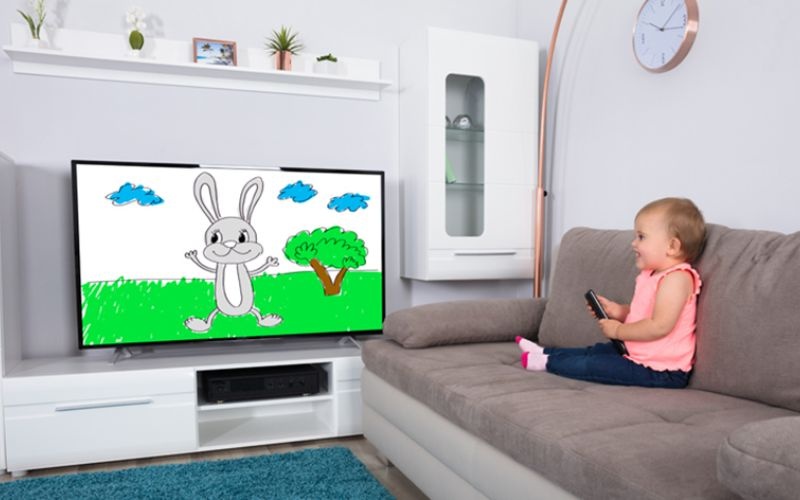
How Do You Start a Screen-Free Routine for a Toddler?
Start a screen-free routine by identifying when your toddler currently uses screens, choosing one predictable screen-time period to change, and replacing it with an activity that serves the same purpose. Changing one part of the routine at a time gives your toddler a clear new pattern to learn instead of making several familiar parts of the day disappear at once.
First, observe your toddler’s normal day and identify exactly when screens appear. Common screen-time moments include watching TV after waking up, using a tablet during meals, watching videos while a parent cooks, or having screen time before bed. The timing matters because screens often perform a specific function within the family routine. A tablet might keep your toddler occupied while you prepare dinner, while a bedtime video might act as a cue that the day is ending. Identifying that function makes it easier to choose a realistic replacement.
Next, choose one screen-time period that you can consistently replace. A predictable daily period is easier to change than several unrelated periods at once. For example, if your toddler watches TV every morning, create a new sequence such as wake up → breakfast → books → independent play. If screens are part of bedtime, use a sequence such as bath → pajamas → books → bed. Keep the order similar each day so the new activity becomes the cue for what happens next.
The replacement activity should also match the reason your toddler was using the screen. Replace entertainment with an engaging activity, waiting time with independent play, and calming screen time with a quieter activity. For example, a toddler who receives a tablet while you cook may use a small basket containing blocks, reusable stickers, or pretend-play toys only during meal preparation. A toddler who watches videos to settle before bed may transition more easily with books, quiet music, and the same bedtime sequence each evening.
Avoid replacing every minute of screen time with parent-led entertainment. A sustainable screen-free routine includes periods when toddlers play independently while parents complete normal household tasks. You can begin with an activity your toddler already knows how to use and remain nearby without directing the play. As the routine becomes familiar, the activity itself becomes part of the daily pattern rather than something you need to introduce and supervise continuously.
Consistency is more important than creating a perfect schedule immediately. Once your toddler recognizes the first new screen-free period, you can apply the same process to another part of the day: identify the screen cue, determine its function, select a replacement, and repeat the new sequence. This creates a screen-free routine through predictable changes instead of relying on repeated negotiations about whether a screen is available.
What Does a Screen-Free Daily Routine for a Toddler Look Like?
A screen-free daily routine for a toddler combines predictable periods for meals, independent play, physical activity, rest, family interaction, and bedtime without using screens to connect each part of the day. The exact times can change according to your toddler’s age, nap schedule, and family routine, but keeping the sequence predictable makes it easier for your child to know what comes next.
A simple routine might follow this pattern: wake up → breakfast → independent play → outdoor play → lunch → nap or quiet time → afternoon activity → dinner → bath → books → bedtime. You do not need to schedule a different activity for every 30 minutes. Instead, use a few recognizable blocks that give the day structure while leaving room for spontaneous play.
Mornings are a useful place to establish a screen-free anchor because the first activity can influence what your toddler expects next. Instead of turning on the TV after waking, move directly into a familiar sequence such as getting dressed, eating breakfast, and playing. After breakfast, offer an activity your toddler can begin with minimal help, such as blocks, toy animals, a simple puzzle, drawing supplies, or books. Keeping several familiar choices available reduces the need to invent a new activity every morning.
The middle of the day can include more active screen-free periods. Outdoor play, a walk, playground time, dancing, or simple movement games give toddlers opportunities to move before lunch and nap time. On days when going outside is impractical, indoor movement can fill the same place in the routine. The important part is not using a screen automatically whenever there is an empty period between meals, errands, naps, or other planned activities.
Meal preparation often creates one of the hardest screen-free periods for parents because you need your toddler occupied while your attention is elsewhere. Set up a predictable activity specifically for this part of the day. For example, your toddler might use play dough at the kitchen table, play with a small rotation of toys nearby, match plastic containers and lids, or help with an age-appropriate household task. Using these activities regularly teaches your toddler that dinner preparation has its own routine rather than being tablet time.
Nap time can transition into quiet time as toddlers grow and their sleep needs change. Books, simple puzzles, drawing, soft toys, or quiet independent play can create a lower-energy period without requiring a video to keep your child still. A predictable quiet period also gives the day contrast: screen-free does not mean every activity needs to be stimulating or physically active.
Evenings should gradually become calmer as bedtime approaches. A simple sequence such as dinner → family play → bath → pajamas → two books → bed gives your toddler several cues that sleep is approaching. Repeating the sequence is more important than adding numerous bedtime activities. When the same events happen in the same order, the routine itself becomes the transition.
A screen-free daily schedule should remain flexible enough for real family life. Appointments, errands, visitors, weather, and changing nap times will occasionally alter the day. Keep a few major anchors—such as screen-free meals, an independent-play period, outdoor or movement time, and a consistent bedtime sequence—rather than trying to reproduce every hour perfectly. These anchors give your toddler a recognizable daily rhythm even when the details of the schedule change.
What Are the Best Screen-Free Activities for Toddlers?
The best screen-free activities for toddlers are simple activities that match what the child needs at that point in the routine: independent engagement, quiet time, or physical movement. A useful activity does not need to occupy a toddler for hours. It needs to fit naturally into a specific part of the day and be simple enough to use repeatedly.
Which Activities Help Toddlers Play Independently?
Familiar, open-ended activities are useful for independent play because toddlers can interact with them in different ways without waiting for constant instructions from an adult. Examples include blocks, toy animals, pretend food, dolls, large-piece puzzles, reusable stickers, stacking toys, and age-appropriate art materials.
Keep the setup simple. Giving a toddler a large collection of toys at the same time can make choosing an activity harder, while a small selection creates a clearer starting point. For example, place blocks and several toy animals on a play mat instead of opening every toy bin in the room. You can introduce the activity briefly and then allow your toddler to decide how to continue playing.
Which Activities Help Toddlers Calm Down Without Screens?
Quiet screen-free activities give toddlers something engaging to do while reducing the pace of the routine. Books, coloring, simple puzzles, soft toys, quiet music, and age-appropriate sensory activities can fit before naps, after active play, or during the transition toward bedtime.
Match the activity to the transition you want to create. Dancing may work well after breakfast but is less useful when you are trying to establish a calm bedtime sequence. Reading two familiar books, for example, creates both a quiet activity and a predictable signal that bedtime is approaching.
Which Activities Help Toddlers Use Their Energy?
Physical activities give toddlers a screen-free way to move, explore, and stay engaged during higher-energy parts of the day. Outdoor play, playground visits, walks, dancing, ball games, and simple indoor movement games can occupy these periods without requiring elaborate preparation.
Physical play does not always need to be a planned outing. A short walk around the neighborhood, dancing to several songs, kicking a ball outside, or creating a simple indoor movement game can fit between other parts of the routine. The goal is to make movement a normal part of the day so a screen does not become the default solution whenever your toddler needs stimulation.
How Do You Get a Toddler Used to Playing Without Screens?
Help a toddler get used to playing without screens by making independent play a predictable part of the daily routine and gradually reducing how much adult involvement is needed. A toddler who is accustomed to receiving a phone, tablet, or TV whenever there is unstructured time may not immediately know what to do when the screen disappears. Providing a clear activity and repeating the same play period each day gives your toddler an alternative pattern to learn.
Start with activities your toddler already understands rather than introducing complicated projects that require continuous instructions. Blocks, toy animals, pretend food, dolls, puzzles, cars, and drawing materials provide clear starting points while allowing the child to decide how the play develops. For example, you might sit beside your toddler for the first few minutes while building with blocks, then move nearby to fold laundry or complete another task while your child continues playing.
Avoid measuring success only by how long your toddler plays independently. A more useful goal is to make independent play a repeatable part of the routine. If your toddler plays alone briefly and then asks for you, provide connection before encouraging another period of play. As the sequence becomes familiar, your toddler can learn that independent play is a normal part of the day rather than something that happens only when a screen is unavailable.
Toy rotation can also make independent play easier without requiring you to continually buy new toys. Keep a smaller selection accessible and store some toys out of sight, then rotate them periodically. For example, one play area might contain blocks, several toy animals, and a puzzle while other toys remain stored away. Rotating the available choices gives familiar toys renewed interest while keeping the play environment manageable.
Parent involvement still has an important place in a screen-free routine. Screen-free does not mean parent-led entertainment all day. A sustainable routine includes a combination of connected play with a caregiver, independent play, physical activity, meals, household participation, quiet time, and rest. This balance gives toddlers opportunities for interaction while allowing parents to complete normal daily responsibilities.
How Do You Handle Tantrums When Removing Screen Time?
Handle tantrums around screen time by keeping the boundary consistent, acknowledging your toddler’s reaction, and directing attention toward the next predictable activity. If watching a show or using a tablet has become part of a familiar routine, removing it changes what your toddler expects to happen. Repeatedly changing the rule in response to protests can make the new routine harder to understand because the child cannot predict whether asking again will result in getting the screen.
Keep your response short and specific. Instead of providing a long explanation during a difficult transition, state what is happening and what comes next. For example, you might say, “TV is finished. Now we’re going outside,” or “The tablet is put away. It’s bath time now.” The first part establishes the boundary, while the second gives your toddler a concrete next step.
The replacement also needs to be available when the screen ends. Telling a toddler to “go play” provides less direction than transitioning directly to a familiar activity. If morning TV has been removed, have breakfast or a play activity ready. If a tablet previously occupied your toddler while you cooked, prepare the kitchen activity before meal preparation begins. This makes the new routine easier to follow because the child is moving toward something specific rather than simply losing access to something familiar.
How Can You Make Screen-Free Transitions Easier?
Make screen-free transitions easier by giving toddlers consistent cues before one activity ends and another begins. Useful cues include a verbal warning, timer, cleanup song, repeated phrase, or the visible preparation of the next activity. The specific cue matters less than using it predictably enough for your toddler to associate it with the upcoming change.
For example, before ending an activity, tell your toddler what will happen next: “After we put the blocks away, we’re having lunch.” Use the same sequence whenever practical: give the cue, finish the current activity, clean up, and move directly to the next part of the routine. Predictability reduces the number of moments in which a screen needs to function as the bridge between activities.
Do not make the screen the reward for completing every screen-free activity. A pattern such as “play for 20 minutes and then you can have the tablet” keeps the tablet at the center of the routine and may turn non-screen activities into tasks your toddler must finish before reaching the preferred activity. Instead, connect screen-free periods naturally: play → lunch → nap → outdoor time → dinner → bedtime routine. Over time, the sequence of the day becomes the structure that guides transitions.
A difficult transition does not mean the screen-free routine has failed. Toddlers can protest a boundary while still learning it. Keep the next activity predictable and avoid redesigning the entire routine after one challenging morning or evening. Repetition gives the new pattern a chance to become familiar.
How Can You Maintain a Screen-Free Routine Every Day?
Maintain a screen-free routine by keeping a few daily screen-free periods consistent instead of trying to follow a perfect schedule every day. Meals, independent play, outdoor time, and bedtime can act as anchors that remain recognizable even when appointments, errands, visitors, or other changes affect the rest of the day. These repeated periods make the routine easier for both toddlers and parents to follow.
Choose boundaries that are specific enough for your toddler to experience consistently. “We don’t watch TV during breakfast” creates a clearer pattern than deciding whether to allow TV each morning. The same approach can apply to other parts of the day, such as keeping the tablet away during meals or using books instead of videos before bed. When the boundary remains consistent, parents spend less time making a new decision each time a toddler asks for a screen.
Parents can also make the routine easier to understand by modeling the behavior expected during screen-free periods. For example, keeping phones away during family meals reinforces that breakfast and dinner are screen-free for everyone, not only for the toddler. Turning off background TV during play also prevents screens from remaining a constant part of the environment even when nobody is actively watching.
Caregivers should follow the same major boundaries whenever practical. If one parent replaces bedtime videos with books while another regularly offers a tablet at bedtime, the toddler receives two different patterns for the same part of the day. Parents, grandparents, babysitters, and other regular caregivers do not need to organize every activity identically, but maintaining the same key screen-free periods makes the routine more predictable.
A disrupted day does not require starting the screen-free routine again from the beginning. Illness, travel, appointments, visitors, and unusually busy days can change what is practical for a family. Return to the normal routine at the next practical opportunity instead of treating one different day as a reason to abandon the established pattern. For example, if travel changes the afternoon routine, you can still return to the usual bath, books, and bedtime sequence that evening.
The goal is consistency without making the routine so rigid that it becomes difficult to maintain. A screen-free routine works best when its main anchors can survive ordinary changes in family life.
How Long Does It Take for a Toddler to Adjust to a Screen-Free Routine?
There is no single adjustment period that applies to every toddler because the transition depends on the child’s previous screen habits, the situations in which screens were used, and how consistently the replacement routine is followed. A toddler who occasionally watched a show may respond differently from a toddler who expects a tablet during several predictable periods every day.
The function of previous screen use also affects the transition. Replacing occasional entertainment may be relatively straightforward because another engaging activity can serve a similar purpose. Replacing a screen that has consistently been used during meals, to calm distress, or whenever a parent needs to complete a task involves changing a stronger daily cue. In these situations, both the toddler and parent are learning a new response to the same moment.
Instead of choosing an arbitrary number of days as the measure of success, watch for specific changes in your toddler’s behavior. Useful signs include asking for screens less frequently, moving to the next activity with less resistance, starting familiar activities without as much adult prompting, and spending more time engaged in non-screen play. These changes show that the replacement activities are becoming part of the toddler’s expected routine.
Consistency between caregivers can also influence how easily the new pattern becomes familiar. A toddler receives a clearer message when the same part of the day follows approximately the same sequence with each regular caregiver. This does not require every caregiver to use identical toys, words, or activities. It means that major boundaries, such as no tablet during meals or no videos before bed, remain recognizable.
Progress does not need to be perfectly linear. A toddler who has stopped asking for morning TV may suddenly request it again after an unusual day or a change in schedule. Return to the familiar sequence rather than assuming the previous progress has disappeared. The more often your toddler experiences the same screen-free cue followed by the same type of activity, the more familiar that pattern becomes.
Does a Screen-Free Routine Mean Toddlers Can Never Use Screens?
No. A screen-free routine does not necessarily mean eliminating every instance of screen use from a toddler’s life. It can instead mean creating predictable parts of the day in which TV, tablets, and phones are not used, so screens do not become the automatic response to meals, boredom, transitions, or bedtime.
For example, a family might establish four screen-free anchors: meals, independent play, family time, and the bedtime routine. These boundaries can exist even if the family makes different choices about screens at other times. The important distinction is that screen use does not control the structure of the toddler’s entire day.
This approach also makes the routine easier to adapt to individual families. Parents have different work schedules, childcare arrangements, household responsibilities, and approaches to media. A routine that depends on perfect zero-screen compliance can become difficult to maintain when real-life circumstances change. Predictable screen-free periods provide a clearer structure without requiring every day to look identical.
The purpose of creating a screen-free routine is therefore not to make parents continually count successful screen-free hours. The practical goal is to help a toddler eat, play, move between activities, spend time with family, and prepare for sleep without automatically expecting a screen. When those parts of the day become familiar on their own, screens no longer need to serve as the default activity or transition tool.