
Raising an emotionally intelligent toddler starts with everyday interactions, not special lessons. The way you respond when your child cries, becomes frustrated, celebrates a success, or struggles to share a toy shapes how they understand emotions and relationships. During the toddler years, the brain develops rapidly, making this an ideal time to build the foundation for emotional intelligence through consistent, responsive parenting.
Emotional intelligence is a child’s ability to recognize emotions, express feelings appropriately, understand how others feel, and gradually manage emotional responses. Toddlers are not born with these skills. They develop them through repeated experiences with trusted caregivers who model healthy emotions, provide comfort during distress, and create opportunities to practice empathy, communication, and self-regulation.
For parents, raising an emotionally intelligent toddler does not mean preventing tantrums or expecting perfect behavior. Tantrums, frustration, and emotional outbursts are normal parts of early childhood. The goal is to guide children through these moments so they learn that every emotion is acceptable, even though not every behavior is.
This guide explains what emotional intelligence looks like in toddlers, why it matters during the first three years of life, and the practical parenting habits, daily activities, and communication strategies that help children develop confidence, empathy, resilience, and healthy emotional regulation from an early age.
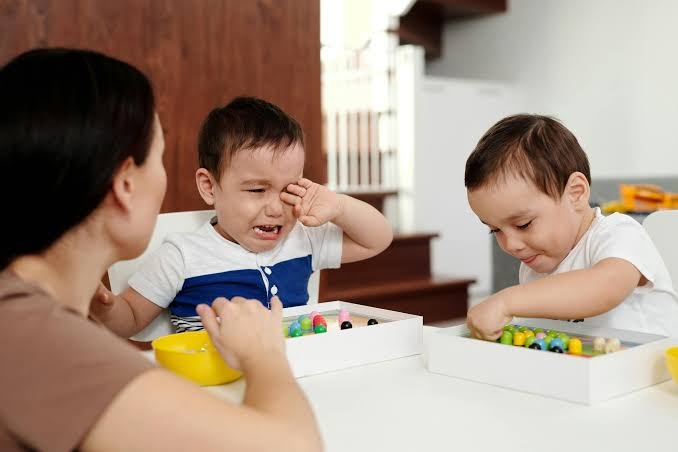
What Does Emotional Intelligence Look Like in Toddlers?
An emotionally intelligent toddler recognizes emotions, expresses feelings in age-appropriate ways, and gradually learns how to respond to emotions instead of simply reacting to them. These abilities develop over time through repeated interactions with parents and caregivers rather than appearing naturally with age.
A toddler with developing emotional intelligence is not always calm or cooperative. Tantrums, crying, frustration, and impulsive behavior remain normal because the parts of the brain responsible for self-control are still immature. The difference is that emotionally supported toddlers slowly become better at identifying what they feel, accepting comfort from trusted adults, and recovering from difficult emotions more quickly after upsetting situations.
Parents can often recognize emotional intelligence through small everyday behaviors. A toddler may point to someone who is crying and show concern, look to a parent for reassurance in unfamiliar situations, use simple words like “happy,” “sad,” or “mad,” or begin asking for a hug instead of immediately melting down. These behaviors demonstrate growing self-awareness, empathy, emotional communication, and trust rather than perfect emotional control.
Emotional intelligence during early childhood consists of several connected skills. Self-awareness helps children notice what they are feeling. Emotional vocabulary gives them words to express those feelings. Emotional regulation develops as children learn to calm down with support before eventually calming themselves. Empathy allows them to recognize that other people have emotions too, while social skills help them cooperate, take turns, and solve simple conflicts with peers.
These abilities emerge gradually during the toddler years because language, memory, attention, and emotional processing are developing simultaneously. A two-year-old who says, “I’m mad,” instead of immediately hitting another child has already made meaningful progress, even if they still need help managing their frustration afterward. Every experience in which a parent names emotions, validates feelings, and models healthy responses strengthens the neural pathways that support emotional intelligence in the future.
Why Is Emotional Intelligence Important During the Toddler Years?
The toddler years provide one of the most important opportunities to build emotional intelligence because the brain forms millions of neural connections that shape future learning, relationships, and behavior. Experiences during this stage influence how children understand emotions long before they develop advanced reasoning or self-control.
Children who develop strong emotional intelligence are more likely to communicate effectively, build healthy friendships, adapt to change, and resolve conflicts without becoming overwhelmed. Emotional skills also support language development, attention, cooperation, and problem-solving because children who can regulate emotions spend less mental energy coping with distress and more energy exploring and learning.
The first three years are especially important because young children rely on co-regulation with caregivers. Every time a parent responds calmly to fear, frustration, disappointment, or excitement, the child’s brain learns what safety feels like and how emotions can be managed. Over hundreds of everyday interactions, these experiences gradually become internal skills that children carry into preschool, elementary school, and later relationships.
Emotional intelligence also protects long-term well-being. Children who learn that emotions are normal and manageable are more likely to develop resilience when facing challenges. Instead of viewing sadness, anger, or fear as problems to avoid, they learn that every emotion provides useful information and can be handled with healthy coping strategies. This mindset becomes the foundation for emotional resilience throughout childhood and adolescence.
How Can Parents Raise Emotionally Intelligent Toddlers?
Parents raise emotionally intelligent toddlers by consistently teaching children to recognize emotions, respond to feelings in healthy ways, and learn through everyday interactions. Emotional intelligence grows through hundreds of small moments, such as comforting a crying child, talking about feelings during play, or staying calm during a tantrum.
Name emotions throughout the day
Children cannot manage emotions they cannot identify. Regularly naming emotions helps toddlers connect physical sensations and experiences with words, making it easier for them to communicate instead of acting out. Rather than asking, “Why are you crying?” describe what you observe by saying, “You look disappointed because the block tower fell,” or “You’re excited to see Grandma.” Repeating emotional words in daily conversations gradually expands a child’s emotional vocabulary and builds self-awareness.
Validate feelings before correcting behavior
Accepting a child’s emotions does not mean accepting every behavior. Validation teaches toddlers that all feelings are normal while also helping them understand appropriate ways to express those feelings. When a child becomes angry because playtime ends, acknowledge the emotion first by saying, “I know you’re upset because you want to keep playing.” Once the child feels understood, they are more likely to listen when you explain the next step or set a boundary.
Validation also strengthens trust between parent and child. Children who feel heard are less likely to become overwhelmed because they learn that difficult emotions can be shared safely instead of ignored or punished.
Practice co-regulation before expecting self-regulation
Toddlers cannot calm themselves consistently because the parts of the brain responsible for emotional regulation continue developing throughout childhood. They first learn emotional control through co-regulation, which means borrowing a calm adult’s support until they gradually develop those skills independently.
During a tantrum, speak slowly, lower your voice, stay physically close if your child is receptive, and offer simple reassurance instead of lengthy explanations. A calm parent provides an external model that teaches the child’s nervous system how to return to a regulated state. Repeating this process over months and years helps children internalize those calming strategies.
Model healthy emotional responses
Children learn more from observing parents than from listening to instructions. Every interaction becomes an example of how emotions should be handled. If you become frustrated, demonstrate healthy coping by saying, “I’m feeling frustrated, so I’m going to take a deep breath before I try again.” This shows that emotions are manageable and that even adults use strategies to regulate themselves.
Modeling also includes apologizing after mistakes. When parents admit they spoke too loudly or reacted impatiently, children learn accountability, empathy, and emotional repair instead of expecting perfection.
Encourage empathy during everyday situations
Empathy develops through repeated opportunities to notice other people’s feelings. Everyday moments provide natural teaching opportunities without requiring formal lessons. If another child falls at the playground, ask, “How do you think they feel?” If a sibling looks sad, encourage your toddler to bring a toy, give a hug, or simply ask if they are okay.
These conversations help toddlers understand that emotions belong to everyone, not only themselves. Over time, they begin recognizing facial expressions, body language, and emotional cues more naturally.
Build emotional vocabulary through books and conversations
Storybooks expose toddlers to emotions they may not experience every day. While reading together, pause to discuss how each character feels and what caused those emotions. Instead of focusing only on the plot, ask simple questions such as, “Why is the bunny worried?” or “What helped the bear feel better?” These discussions help children connect emotions with situations and possible solutions.
Outside reading time, continue these conversations during meals, bedtime, or family activities. The more often children hear emotional language used naturally, the easier it becomes for them to express their own feelings accurately.
Let toddlers solve simple problems independently
Resist solving every challenge immediately. Emotional intelligence grows when children experience manageable frustration and discover that they can overcome it with support. If a puzzle piece does not fit or a toy falls apart, offer encouragement instead of taking over. Ask questions such as, “What could you try next?” or “Would you like a little help?”
Problem-solving builds confidence, patience, and emotional resilience because children learn that frustration is temporary rather than something to fear or avoid.
Create predictable daily routines
Consistent routines reduce uncertainty, making it easier for toddlers to regulate their emotions. Predictable meal times, bedtime rituals, and transition routines create a sense of security because children know what to expect throughout the day.
Simple emotional check-ins can become part of these routines. Asking, “What made you happy today?” before bed or talking about everyone’s feelings during dinner encourages emotional reflection without making it feel like a formal lesson. Over time, these small conversations become lifelong habits that support emotional awareness and open communication within the family.
Which Activities Build Emotional Intelligence in Toddlers?
The best activities for building emotional intelligence encourage toddlers to recognize feelings, understand other people’s emotions, and practice healthy responses through play. Young children learn most effectively when emotional skills are part of enjoyable daily experiences rather than structured lessons.
Pretend play is one of the most effective ways to develop empathy. When toddlers act as parents, doctors, teachers, or animals, they naturally imagine how someone else might think or feel. A child pretending to comfort a sick teddy bear or feed a hungry doll is practicing perspective-taking, which is a core component of emotional intelligence. Parents can deepen the learning by asking questions such as, “Why is the teddy sad?” or “What would help the baby feel better?”
Reading picture books that focus on emotions also strengthens emotional awareness. Stories introduce children to situations they may not experience every day while providing opportunities to discuss different feelings in a safe environment. Instead of reading straight through, pause occasionally to ask what a character might be feeling, why they feel that way, and what they could do next. These conversations help toddlers connect emotions with causes and solutions.
Role-playing common situations prepares children for real-life experiences. Parents can act out scenarios such as sharing toys, waiting for a turn, visiting the doctor, or saying goodbye at daycare. Practicing emotional responses before children encounter these situations reduces anxiety and gives them simple strategies they can remember when similar events happen.
Emotion cards and facial expression games improve emotional recognition. Show pictures of happy, angry, surprised, worried, frustrated, or excited faces and encourage your toddler to name each emotion. Once children become familiar with basic emotions, ask them to imitate each facial expression or describe a time they felt the same way. This activity strengthens the connection between emotional language and real-life experiences.
Mirror games help toddlers observe how emotions appear on their own faces. Stand together in front of a mirror and make different expressions while naming each feeling aloud. Watching facial movements helps children recognize emotions in themselves and others, making nonverbal communication easier to understand as they grow.
Bedtime reflection is another simple activity that builds emotional awareness. Before going to sleep, ask two or three questions such as, “What made you smile today?”, “Did anything make you feel upset?”, or “Who helped you today?” These conversations encourage children to reflect on daily experiences and gradually organize their emotions into meaningful memories.
Parents should remember that consistency matters more than variety. Repeating a few emotional learning activities every week creates stronger long-term habits than introducing new games constantly. Emotional intelligence develops through repeated practice across hundreds of ordinary moments.
What Parenting Mistakes Make Emotional Development Harder?
Several common parenting habits unintentionally slow emotional development by discouraging children from understanding or expressing their feelings. Avoiding these mistakes helps create an environment where toddlers feel emotionally safe while still learning appropriate behavior.
Dismissing emotions is one of the most common mistakes. Statements such as “You’re fine,” “Stop crying,” or “There’s nothing to be upset about” may calm a situation temporarily, but they teach children to question or suppress their own feelings. A better response is to acknowledge the emotion before offering comfort or guidance. Feeling understood helps children recover more quickly and builds trust over time.
Punishing emotions instead of behaviors can also interfere with emotional growth. Anger, disappointment, jealousy, and frustration are normal emotions during early childhood. Parents should set limits on harmful behaviors such as hitting or throwing objects while making it clear that experiencing strong emotions is acceptable. This distinction teaches children to manage emotions instead of fearing them.
Another mistake is solving every problem immediately. Although stepping in quickly often feels helpful, doing so prevents toddlers from practicing resilience and problem-solving. Offering encouragement, asking simple questions, and allowing children to attempt solutions independently helps them build confidence and emotional flexibility.
Expecting emotional control beyond a toddler’s developmental stage creates unnecessary frustration for both parent and child. Toddlers cannot consistently regulate disappointment, wait patiently, or communicate complex feelings because these abilities develop gradually over several years. Setting age-appropriate expectations allows parents to respond with patience rather than punishment, creating a more supportive environment for emotional growth.
Finally, inconsistent emotional responses can confuse young children. If the same behavior is ignored one day but punished the next, toddlers struggle to understand emotional boundaries and expectations. Responding calmly and consistently helps children feel secure because they know what to expect from the adults they trust most.
When Should Parents Seek Extra Support?
Most toddlers experience frequent mood swings, tantrums, and difficulty managing emotions, but some emotional challenges may require professional guidance. Emotional development varies from child to child, so parents should focus on persistent patterns rather than isolated incidents.
Consider discussing your child’s emotional development with a pediatrician if they rarely make eye contact, show little interest in interacting with caregivers, have extreme difficulty calming down even with consistent support, or rarely respond to other people’s emotions after repeated opportunities to learn. Delayed language development combined with ongoing emotional communication difficulties may also warrant further evaluation because language and emotional expression develop together during early childhood.
Parents should also seek guidance if aggressive behaviors become frequent, intense, and continue beyond what is typical for the child’s age despite consistent routines and responsive parenting. Hitting, biting, or prolonged emotional distress that interferes with daily activities, sleep, learning, or relationships may indicate that additional assessment would be helpful.
Seeking professional support does not mean a parent has failed or that a child will receive a diagnosis. Early guidance often provides practical strategies that make everyday parenting easier while helping children build emotional skills during a period of rapid brain development. Many emotional concerns improve significantly when families receive individualized support early rather than waiting until problems become more established.
Frequently Asked Questions
Can emotional intelligence be taught?
Yes. Emotional intelligence is learned through daily experiences with caring adults rather than being a fixed personality trait. Toddlers develop emotional skills when parents consistently model healthy emotional responses, validate feelings, encourage empathy, and provide opportunities to practice communication and problem-solving.
At what age do toddlers begin understanding emotions?
Children begin recognizing basic emotions during infancy, but emotional understanding expands rapidly between one and three years of age. During this period, toddlers gradually learn to identify emotions such as happiness, sadness, anger, and fear while beginning to understand that other people have feelings different from their own.
Does screen time affect emotional development?
Excessive screen time can reduce opportunities for face-to-face interaction, conversation, pretend play, and shared experiences that support emotional learning. Emotional intelligence develops most effectively through responsive relationships with caregivers because children learn by observing facial expressions, hearing tone of voice, and practicing real social interactions.
How long does it take to see progress?
Emotional intelligence develops gradually over several years rather than within a few weeks. Parents often notice small improvements first, such as children using emotional words more frequently, recovering from frustration more quickly, showing greater empathy, or asking for help instead of reacting impulsively. Consistent daily interactions create lasting changes because emotional skills strengthen through repetition rather than isolated lessons.
Final Thoughts
Raising an emotionally intelligent toddler is not about eliminating big emotions but teaching children how to understand and navigate them. Every conversation about feelings, every calm response during a tantrum, and every opportunity to practice empathy helps build skills that support healthy relationships, confident communication, and emotional resilience for years to come.
The most effective approach is not perfection but consistency. Naming emotions, validating feelings, modeling healthy coping strategies, encouraging independent problem-solving, and maintaining predictable routines create an environment where emotional intelligence can develop naturally. Small interactions repeated every day have a far greater impact than occasional lessons because they become part of how children experience relationships and understand themselves.
As your toddler grows, these early emotional skills become the foundation for managing friendships, adapting to new environments, resolving conflicts, and coping with life’s challenges. By investing in emotional development today, parents are helping their children build abilities that will continue supporting their well-being long after the toddler years have passed.