
A toddler’s attention span refers to how long a young child can stay focused on an activity before becoming distracted or moving to something else. Toddler attention span by age changes significantly between 1 and 3 years old because children are developing their cognitive skills, language abilities, memory, and ability to regulate their behavior.
A short attention span is a normal part of toddler development. Young children learn through exploration, movement, and interaction with their surroundings rather than through long periods of structured focus. As their brains mature and they gain more experience with play and learning activities, toddlers gradually develop the ability to stay engaged for longer periods.
This article explains how long toddlers can typically focus at different ages, including attention span expectations for 1-year-olds, 18-month-olds, 2-year-olds, and 3-year-olds. It also covers the factors that influence toddler concentration, such as brain development, sleep, routines, environment, and daily activities. Parents will learn how to support their child’s attention skills with realistic expectations and age-appropriate strategies.
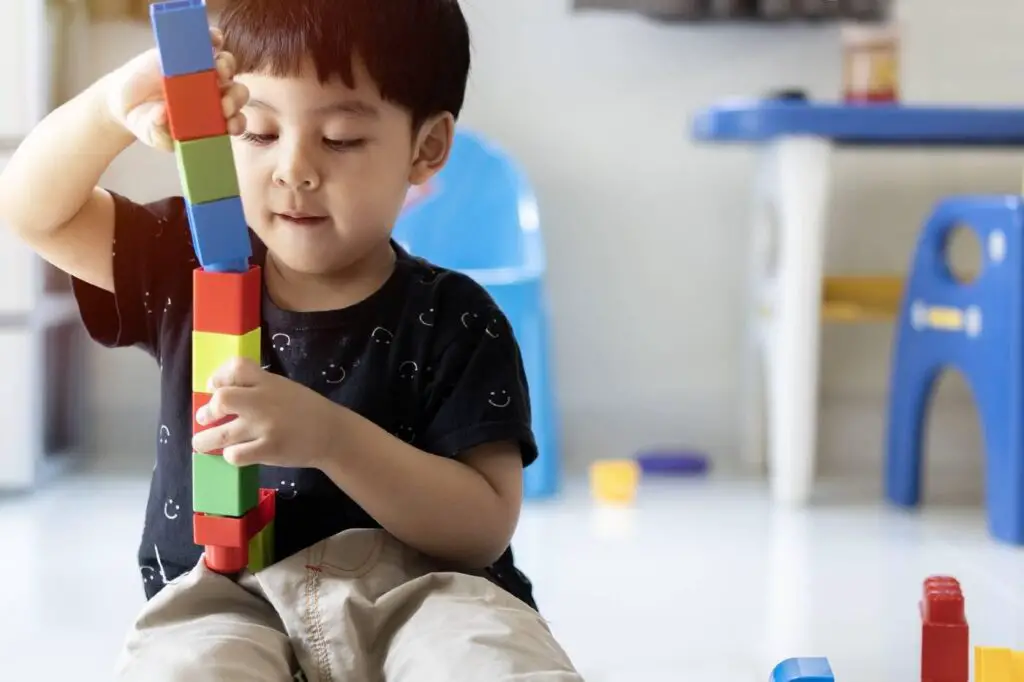
How long is a toddler’s attention span by age?
A toddler’s attention span changes significantly between ages 1 and 3 as the brain develops new cognitive abilities, language skills, and emotional regulation. Most toddlers can only focus on an activity for a few minutes at a time, and the length of attention gradually increases as they grow older. The exact duration depends on the child’s development, the type of activity, and the environment where the activity happens.
Attention span should be measured by looking at age-appropriate behavior rather than expecting toddlers to focus like older children or adults. A 1-year-old who moves between toys every few minutes is showing typical exploratory behavior, while a 3-year-old who can stay engaged with a puzzle, book, or creative activity for longer periods is showing developing sustained attention.
| Age | Typical attention span development | Common behaviors |
|---|---|---|
| 1 year old | Short periods of focused attention | Explores objects, changes activities quickly, responds to sensory experiences |
| 18 months old | Increasing engagement during familiar activities | Begins independent play and follows simple directions |
| 2 years old | Longer focus during interesting activities | Participates in pretend play and completes simple tasks with support |
| 3 years old | Improved sustained attention | Stays engaged in structured activities and follows multi-step instructions |
How long can a 1-year-old focus on an activity?
A 1-year-old typically has a short attention span because their learning process is driven by exploration and sensory discovery. Most 1-year-olds focus on an activity for only a few minutes before moving to something new. This behavior happens because toddlers at this stage are developing curiosity, motor skills, and early problem-solving abilities rather than practicing long periods of concentration.
Activities that involve movement, touch, sounds, and visual changes usually hold a 1-year-old’s attention longer than passive activities. For example, a toddler may spend several minutes stacking blocks, opening containers, or exploring a toy with different textures because these activities provide immediate feedback.
Parents should focus on creating opportunities for attention development instead of expecting long periods of sitting still. Reading a short picture book together, singing songs, and allowing safe exploration help strengthen early focus skills while matching the child’s developmental stage.
How long can an 18-month-old focus on an activity?
An 18-month-old usually shows longer engagement compared with a younger toddler because language development and memory skills are improving. Children around 18 months can often stay involved with familiar activities for several minutes, especially when the activity matches their interests.
At this age, toddlers begin developing early independent play skills. They may repeat actions such as putting objects into containers, arranging toys, or copying household activities because repetition helps strengthen attention and understanding of cause and effect.
Parents can support attention growth by allowing toddlers enough time to explore an activity before interrupting or changing it. Simple activities such as sorting objects, looking at books, or playing with building toys encourage toddlers to practice sustained attention naturally.
How long can a 2-year-old focus on an activity?
A 2-year-old typically develops a stronger ability to maintain attention, especially during activities that involve imagination, interaction, or problem-solving. Many 2-year-olds can stay engaged with an interesting activity for several minutes and gradually increase their focus with practice.
At this stage, toddlers begin using more advanced cognitive skills. They can follow simple instructions, participate in pretend play, and complete basic tasks with adult guidance. For example, a 2-year-old may focus on building a tower with blocks, completing a simple puzzle, or pretending to cook with toy food.
Attention at age 2 is still highly influenced by interest and environment. A child may concentrate for a longer period when playing a favorite game but lose focus quickly during an activity that feels difficult or uninteresting. This difference is a normal part of toddler development.
How long can a 3-year-old focus on an activity?
A 3-year-old usually has a more developed attention span because brain development supports stronger memory, language, and self-control skills. Three-year-olds can often stay engaged with structured activities longer than younger toddlers, especially when they understand the goal of the activity.
At this age, children begin preparing for preschool-style learning experiences. They can participate in activities such as storytelling, drawing, matching games, simple crafts, and group play with increasing independence.
However, a 3-year-old still has a developing attention system. Frequent movement, curiosity, and switching between activities remain normal behaviors. Parents should support concentration by providing age-appropriate challenges rather than expecting adult-level focus.
Why do toddlers have short attention spans?
A toddler’s short attention span is mainly caused by ongoing brain development. Toddlers naturally have limited attention because the areas of the brain responsible for focus, impulse control, and task management are still developing. During the first years of life, children are building the foundation for executive function skills, which include staying focused, controlling distractions, remembering instructions, and completing tasks.
The prefrontal cortex, the part of the brain involved in attention regulation and decision-making, develops gradually throughout childhood. Because this system is still immature during the toddler years, young children often move quickly between activities, become distracted by new experiences, and need adult support to maintain focus.
Toddlers also learn differently from older children. They rely heavily on exploration and sensory experiences to understand the world around them. A child who repeatedly opens and closes a box, stacks the same blocks, or pours water between containers is not losing focus; they are practicing problem-solving and learning through repetition.
A toddler’s attention is also influenced by the level of interest in an activity. Children usually maintain attention longer when an activity matches their curiosity, abilities, and developmental stage. For example, a 2-year-old may spend 15 minutes building with favorite toys but lose interest within seconds when asked to complete an unfamiliar task.
What factors affect toddler attention span?
A toddler’s attention span is influenced by several factors, including age, brain development, sleep quality, daily routines, environment, and learning experiences. These factors determine how easily a child can engage with an activity and how long they can maintain focus.
Age and brain development are the strongest influences because attention skills naturally improve as children mature. A 1-year-old and a 3-year-old may respond very differently to the same activity because they have different levels of language ability, memory development, and self-control.
Sleep is another important factor affecting toddler concentration. Toddlers who do not get enough sleep often show shorter attention periods, increased irritability, and more difficulty following instructions. A consistent sleep routine helps children maintain the energy needed for play, learning, and emotional regulation.
The environment also affects how long toddlers can focus. A space with excessive noise, frequent interruptions, or too many toys available at once can make it harder for children to concentrate. Reducing distractions and providing simple, organized play areas can help toddlers spend more time engaged in an activity.
Play experiences influence attention development because toddlers build focus through repeated practice. Activities such as reading books, completing puzzles, building blocks, and pretend play require children to remember steps, solve problems, and stay engaged. These experiences strengthen attention skills naturally while allowing children to learn through enjoyable activities.
Screen time is another factor parents often consider when thinking about attention. Digital content with fast changes and constant stimulation may affect how children interact with slower-paced activities. Balanced routines that include physical play, social interaction, creative activities, and independent exploration provide broader opportunities for attention development.
How can parents improve toddler attention span?
Improving a toddler’s attention span requires consistent support, realistic expectations, and activities that match the child’s developmental stage. Parents can strengthen toddler focus skills by creating opportunities for concentration rather than forcing children to stay focused for longer periods. Attention develops through repeated practice, positive interactions, and experiences that encourage children to complete simple tasks.
One effective approach is choosing activities that match a toddler’s current abilities. Activities that are too easy may not hold interest, while activities that are too difficult can create frustration and cause children to give up quickly. For example, a 2-year-old may benefit from simple puzzles with a small number of pieces, while a 3-year-old may engage longer with matching games, drawing activities, or more complex building tasks.
Parents should also increase activity duration gradually. Toddlers develop attention skills by extending focus little by little, not by suddenly completing long tasks. A child who focuses on a book for three minutes today may gradually increase that time through regular reading routines. Encouraging progress rather than demanding perfection helps children build confidence and motivation.
Reducing distractions is another important strategy for supporting concentration. A play area with fewer available toys, limited background noise, and clear activity boundaries allows toddlers to direct more attention toward one task. For example, offering one set of building blocks instead of placing many different toys around the room can help a child stay engaged longer.
Consistent routines also support toddler attention development. Children often focus better when they know what to expect because predictable routines reduce unnecessary stress and help them prepare mentally for activities. A daily schedule that includes regular times for play, reading, meals, and rest creates a stable environment for learning.
Parents can also improve attention by following the child’s interests. Toddlers naturally spend more time on activities that feel meaningful to them. If a child enjoys animals, parents can use animal books, toy animals, or animal-themed puzzles to encourage longer engagement while building vocabulary and problem-solving skills.
What activities help toddlers develop attention skills?
Activities that require exploration, problem-solving, and interaction help toddlers strengthen their attention skills. The best attention-building activities are those that encourage children to focus on a goal while remaining appropriate for their age and abilities. Toddlers develop concentration through active participation rather than passive observation.
Reading together is one of the most effective activities for improving toddler attention. Picture books encourage children to listen, observe images, answer questions, and predict what happens next. A short daily reading routine helps toddlers practice staying engaged while also developing language and memory skills.
Building activities such as blocks, stacking toys, and simple construction sets also support sustained attention. These activities require children to plan actions, test ideas, and adjust their approach when something does not work. For example, a toddler building a tower learns to focus on balance, sequence, and problem-solving while playing.
Puzzles and sorting games help develop attention by encouraging children to recognize patterns and complete specific goals. Simple activities such as matching colors, grouping objects by size, or completing beginner puzzles strengthen visual attention and cognitive flexibility.
Creative activities such as drawing, painting, and crafts provide another opportunity to practice focus. Art activities support attention because toddlers must follow steps, make choices, and stay involved in a process from beginning to end. Parents can support this development by allowing children to explore materials instead of focusing only on creating a perfect result.
Pretend play is also important for toddler attention development. Activities such as playing house, pretending to cook, or caring for toy animals require children to remember roles, create stories, and maintain a sequence of actions. These experiences strengthen imagination, memory, and sustained attention.
Simple household activities can also build concentration skills. Toddlers can participate in tasks such as sorting laundry, putting toys away, watering plants, or preparing simple snacks with supervision. These activities help children practice following instructions and completing small responsibilities.
When should parents worry about toddler attention span?
A toddler’s short attention span is usually a normal part of early childhood development, but some patterns may indicate that additional support is needed. Parents should pay attention when difficulties with focus appear alongside other developmental concerns or significantly affect daily activities. A child who becomes distracted easily, changes activities frequently, or struggles to sit still is often showing age-appropriate behavior rather than a serious problem.
Normal toddler distractibility usually depends on the situation. Toddlers naturally lose focus when an activity is too challenging, unfamiliar, or less interesting. For example, a 2-year-old may ignore a structured learning activity but spend a long time playing with favorite toys. This difference shows that attention is influenced by motivation, environment, and developmental stage.
Parents should consider discussing concerns with a pediatrician if a toddler consistently struggles to engage in activities that are appropriate for their age, has difficulty responding to simple instructions, or shows attention challenges across different environments. The concern is not a short attention span alone, but a consistent pattern that affects communication, play, learning, or daily routines.
Developmental concerns often involve multiple areas rather than attention alone. For example, a toddler who rarely interacts with others, does not show interest in exploring their environment, or has significant delays in language and social skills may benefit from professional evaluation.
Comparing a child with other toddlers can also create unnecessary worry because children develop attention skills at different rates. A 3-year-old who prefers active play may still have healthy development even if they do not sit quietly for long periods. Parents should focus on overall progress, including communication, problem-solving, social interaction, and ability to learn new skills.
How does toddler attention span compare with preschool attention span?
Toddler attention span is shorter than preschool attention span because younger children are still developing the cognitive skills needed for sustained focus. Preschool children usually demonstrate longer attention periods because their language, memory, and self-regulation abilities become more advanced between ages 3 and 5.
Toddlers between ages 1 and 3 often rely on immediate interest and sensory experiences to stay engaged. They may focus intensely on activities they enjoy but quickly move away from tasks that require waiting, listening for longer periods, or following multiple steps.
Preschool children gradually become better at participating in structured activities. They can follow classroom routines, listen to longer stories, complete multi-step instructions, and participate in group activities with less adult support. These changes happen because executive function skills continue developing during early childhood.
The transition from toddler attention to preschool attention is a gradual process rather than a sudden change. Children build stronger focus through daily experiences, including play, conversation, reading, and opportunities to complete simple tasks independently.
Parents can support this transition by providing activities that gently challenge attention without creating pressure. For example, a toddler may begin with short picture books and simple puzzles, while a preschool child may be ready for longer stories, more complex games, and activities that require planning.
Understanding the difference between toddler and preschool attention helps parents set realistic expectations. A young child’s ability to focus develops through consistent practice, supportive environments, and age-appropriate experiences rather than through forcing longer periods of concentration.
What should parents remember about toddler attention span by age?
A toddler’s attention span develops gradually as the brain matures and children gain more experience with play, communication, and daily routines. The most important point for parents is that short attention periods are a normal part of toddler development, especially between ages 1 and 3. Children build focus skills over time through repeated opportunities to explore, solve problems, and complete age-appropriate activities.
Understanding toddler attention span by age helps parents create realistic expectations. A 1-year-old who moves quickly between activities, a 2-year-old who focuses longer on favorite tasks, and a 3-year-old who begins participating in structured activities are all showing different stages of healthy attention development.
Supporting attention does not require forcing toddlers to sit still for long periods. Parents can strengthen concentration by providing engaging activities, reducing distractions, maintaining predictable routines, and allowing children to practice focus through play. Reading together, building with blocks, solving simple puzzles, and encouraging pretend play are practical ways to develop attention skills naturally.
Every child develops at a different pace, so attention span should be considered alongside other developmental areas such as language, social interaction, problem-solving, and independence. When parents understand the normal progression of toddler focus, they can provide better support and recognize when additional guidance may be helpful.