
Preparing your child for kindergarten successfully requires building readiness in five main areas: emotional adjustment, social skills, independence, daily routines, and basic learning skills. A child does not need to enter kindergarten already knowing how to read, write sentences, or solve math problems. Instead, they need practical skills that help them participate in classroom activities, communicate their needs, follow routines, and feel comfortable spending time away from their parents.
Parents can build these skills gradually through everyday activities at home. Reading together develops vocabulary and listening skills, family games teach children to wait and take turns, and simple responsibilities such as putting away toys or opening a lunch container build independence. Establishing consistent bedtime and morning routines also helps children adjust to the structure of a school day. Emotional preparation matters just as much: talking about what happens at kindergarten, practicing short separations, and becoming familiar with the school environment can make the transition less intimidating.
The goal is not to make your child academically perfect before the first day. It is to help them arrive confident, increasingly independent, and ready to learn in a new environment. The following steps focus on the practical skills and routines parents can develop before kindergarten begins.
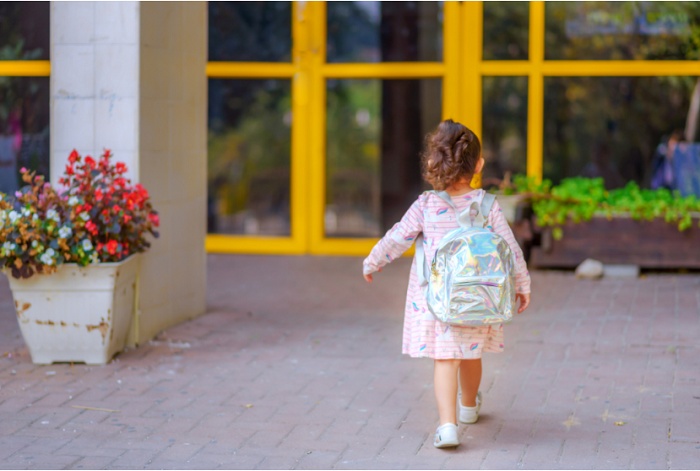
What Should You Do to Prepare Your Child for Kindergarten?
Prepare your child for kindergarten by developing five areas of readiness: emotional adjustment, social skills, independence, daily routines, and basic learning skills. These areas help children manage the practical demands of a kindergarten day, from separating from a parent in the morning to listening to instructions, interacting with classmates, and taking care of their belongings. Academic preparation is only one part of the process.
Emotional readiness helps your child enter an unfamiliar environment without depending on you for every situation. Before school begins, talk about what kindergarten will be like, explain when you will leave and return, and give your child opportunities to spend short periods with trusted adults. The purpose is to make separation and new environments increasingly familiar rather than expecting your child to become completely fearless before the first day.
Social readiness focuses on participating in a group. Children can practice waiting for a turn, sharing materials, listening when another person speaks, asking for help, and expressing basic needs. Everyday activities provide opportunities to develop these skills. A simple family board game, for example, teaches your child to follow rules and wait while someone else takes a turn.
Independence and self-care reduce the number of everyday tasks for which your child needs immediate adult assistance. Practice age-appropriate skills such as washing hands, using the toilet, putting on a jacket, eating independently, opening familiar food containers, and keeping track of personal belongings. Your child does not have to perform every task perfectly. The important preparation is learning to attempt familiar tasks before automatically asking an adult to do them.
Daily routines prepare your child for the predictable structure of kindergarten. A consistent schedule for sleeping, waking, dressing, eating breakfast, and leaving home makes the transition to school mornings easier. Parents can practice the complete morning routine before kindergarten starts so that waking up and getting ready are not new challenges on the first school day.
Basic learning readiness prepares children to participate in classroom activities rather than requiring them to master kindergarten academics in advance. Reading together, counting objects during everyday activities, drawing with crayons, completing simple tasks, and listening to short instructions all support this readiness. The objective is to develop a child who can engage with learning, communicate, and participate in the classroom.
How Can You Emotionally Prepare Your Child for Kindergarten?
Emotionally prepare your child for kindergarten by making the school experience predictable, practicing separation, and helping your child become familiar with what will happen during a normal school day. Children have fewer unknowns to process when they already understand basic events such as arriving at school, entering the classroom, participating in activities, eating, playing, and being picked up.
Start by describing kindergarten with concrete language. Instead of repeatedly saying that school will be “fun” or that there is “nothing to worry about,” explain what your child is likely to experience. You might explain that a teacher will welcome them, other children will be in the classroom, the class will complete activities together, and you will return at the expected pickup time. This approach gives your child useful information without promising that every part of the first day will feel easy.
Practice short separations before school begins when your child has limited experience being away from you. Time with a trusted relative, caregiver, preschool group, or another familiar setting gives your child opportunities to experience the same basic sequence: you leave, another trusted adult is present, and you return. Repeated experiences make the concept of temporary separation more concrete.
Create a simple and predictable goodbye routine for school. A hug, a short goodbye phrase, and a clear reminder about when you will return are enough. Avoid repeatedly leaving and returning to the classroom or extending the goodbye because your child becomes upset. A consistent routine gives the separation a recognizable beginning and end.
Familiarity with the school environment can also reduce uncertainty. Attend an orientation or visit the kindergarten before the first day when the school provides that opportunity. Show your child concrete locations such as the classroom, entrance, playground, bathroom, and pickup area. Meeting the teacher beforehand can also give your child a familiar face to recognize when school begins.
Your own language about kindergarten shapes how your child interprets the transition. Discuss school positively without presenting it as a test your child must pass or using teachers and school rules as threats. A statement such as “Your teacher will help you learn what to do” gives your child a clearer expectation than “You have to behave or your teacher will be angry.”
Some nervousness before kindergarten is expected during a major transition. The goal of emotional preparation is therefore not to eliminate every worried feeling. The goal is to give your child enough familiarity, predictable routines, and successful experiences with separation to enter kindergarten knowing what happens next and that you will return.
What Social Skills Should Your Child Practice Before Kindergarten?
Your child should practice seven core social skills before kindergarten: taking turns, sharing, listening to others, playing cooperatively, asking for help, expressing needs, and handling simple disagreements. These skills help children participate in a classroom where attention, materials, space, and adult assistance must be shared with other students. The goal is not perfect social behavior but enough experience to understand how group interactions work.
Taking turns is particularly important because kindergarten includes activities in which children cannot always act immediately. Your child may need to wait while another student answers a question, uses a toy, washes their hands, or speaks with the teacher. Practice this skill through ordinary family activities. Board games, building a block tower together, taking turns choosing songs, or passing materials during crafts give children repeated experience with waiting and participating in sequence.
Sharing is related to taking turns but requires a different skill: understanding that another person can temporarily use an object or material. Instead of forcing your child to share every personal possession, create opportunities to practice with items intended for group use. For example, children can share crayons during a drawing activity or divide building blocks while constructing something together. These situations teach cooperation without making sharing feel like losing ownership of something important.
Listening and communicating are equally important for classroom participation. Teach your child to notice when another person is speaking, listen long enough to understand a simple message, and respond appropriately. Everyday conversations at meals, story time, and family activities provide practice. Reading a short story and asking your child what happened, for example, combines listening, comprehension, conversation, and turn-taking in one familiar activity.
Your child should also know how to communicate basic needs to an adult. Practice simple statements such as “I need to use the bathroom,” “I don’t understand,” “I need help,” or “I don’t feel well.” A kindergarten teacher supervises multiple children, so being able to explain a need gives your child a practical way to seek assistance rather than waiting silently or becoming increasingly frustrated.
Playing with other children provides practice that parent-child interaction cannot completely reproduce. Playdates, playground visits, preschool activities, library programs, or time with siblings and relatives can expose your child to situations involving different personalities and preferences. During these interactions, children learn that another child may choose a different game, want the same toy, or disagree about what should happen next.
Simple disagreements are also opportunities to develop social readiness. Teach your child a basic sequence: use words to explain the problem, listen to the other child, look for a simple solution, and ask an adult for help when the problem cannot be resolved safely. A child does not need advanced conflict-resolution skills before kindergarten. They need to understand that hitting, grabbing, or screaming is not the only way to respond when another child disagrees with them.
Social skills develop through repetition rather than a single lesson before school starts. Regular opportunities to wait, communicate, cooperate, and solve small problems give your child practical experience with the same social demands they will encounter in a kindergarten classroom.
What Self-Care Skills Should Your Child Learn Before Kindergarten?
Before kindergarten, your child should practice five main groups of self-care skills: toileting, handwashing, dressing, eating, and managing personal belongings. Greater independence with these everyday tasks allows children to participate in school routines without requiring immediate adult assistance at every step.
Toileting is one of the most practical skills to work on before school. Your child should practice recognizing when they need the bathroom, communicating that need, managing clothing as independently as developmentally appropriate, using the toilet, and washing their hands afterward. Individual schools and kindergarten programs can have different expectations, so parents should check the specific toileting requirements of the program their child will attend rather than assuming one standard applies everywhere.
Handwashing should become a familiar sequence rather than an activity that always requires detailed parental instructions. Practice turning on the water when the faucet is manageable, using soap, washing and rinsing the hands, drying them, and disposing of paper towels appropriately when relevant. Repeating the same sequence before meals and after using the bathroom helps turn the steps into a predictable routine.
Dressing skills should focus on the clothes your child actually uses. Practice pulling pants up and down, putting arms into sleeves, taking a jacket on and off, and putting on shoes that your child can realistically manage. Complicated buttons, laces, and fasteners can create unnecessary difficulty if a child has not yet developed the fine motor control required for them. Choosing school clothes that support your child’s current level of independence can make bathroom, outdoor, and transition routines easier.
Eating independently is another useful area to practice because school meals and snacks happen within a limited routine. Give your child opportunities to open the lunch box, use familiar containers, eat with appropriate utensils, drink from the type of bottle or cup they will take to school, and put items away afterward. If you plan to send packaged foods, practice opening the exact packaging beforehand. A lunch that a child can eat independently at home is more practical than introducing several unfamiliar containers on the first school day.
Managing personal belongings helps children take responsibility for the objects they use throughout the day. Teach your child to recognize their backpack, lunch box, jacket, and water bottle and to return these items to a designated place. Labeling belongings can help teachers identify lost items, but your child should also become familiar with what their own belongings look like.
Parents can develop these skills by giving children time to attempt tasks instead of automatically completing every step for them. If putting on a jacket takes longer than it would with parental help, allow additional time during practice rather than immediately taking over. Assistance is still appropriate when a task exceeds your child’s current ability, but repeated opportunities to attempt manageable steps build both skill and confidence.
Kindergarten self-care readiness does not require complete independence. It means your child has practiced common daily tasks, can complete an increasing number of steps independently, and knows how to ask an adult for help when a task is beyond what they can manage.
How Can You Build a Kindergarten Routine Before School Starts?
Build a kindergarten routine before school starts by gradually aligning your child’s bedtime, wake-up time, morning activities, and departure time with the schedule they will follow on school days. A predictable routine reduces the number of changes your child must handle at once. Instead of experiencing a new school, new teacher, new classmates, and a completely new home schedule on the same day, your child arrives with familiar morning and evening patterns already in place.
Start with sleep because the morning routine depends on when your child goes to bed and wakes up. If your current family schedule differs significantly from the kindergarten schedule, move bedtime and wake-up time gradually rather than making one large change immediately before school begins. Keep the sequence before bed consistent as well. Activities such as bathing, putting on pajamas, brushing teeth, reading together, and going to bed in the same order give your child clear signals that the day is ending.
Next, create a morning sequence that your child can learn through repetition. A practical routine might follow the same order each school day: wake up, use the bathroom, get dressed, eat breakfast, brush teeth, collect belongings, and leave home. Keeping the sequence consistent makes it easier for your child to understand what comes next without needing a new instruction at every stage.
Practice the morning routine before the first day of kindergarten. Have your child get dressed in the clothes they would normally wear to school, eat breakfast, put on their shoes, collect their backpack, and prepare to leave by the required time. This practice helps parents identify practical problems early. For example, breakfast may take longer than expected, a child may struggle with particular shoes, or the backpack may not have an obvious place where the child can find it each morning.
Give your child responsibility for manageable parts of the routine. They might put pajamas in a designated place, choose between two appropriate outfits, carry their backpack to the door, or place their water bottle beside their lunch box. These small responsibilities connect routine preparation with independence and help children understand that getting ready for kindergarten is something they participate in rather than something a parent does entirely for them.
Keep the routine simple enough to repeat. An elaborate morning schedule with too many optional activities creates more opportunities for delays and conflict. The most useful kindergarten routine is one your family can follow consistently: adequate sleep, a predictable wake-up time, essential self-care, breakfast, organized belongings, and enough time to leave without rushing.
What Learning Skills Should Your Child Practice Before Kindergarten?
Before kindergarten, your child should practice three broad areas of learning readiness: early literacy, early math, and fine motor skills, alongside the ability to listen and participate in short learning activities. The objective is not to complete kindergarten-level academics before school begins. These foundational skills make it easier for children to engage with the instruction they will receive in the classroom.
Learning readiness develops effectively through ordinary activities because young children can practice language, numbers, movement, and attention without turning every activity into a formal lesson. Reading a picture book, counting pieces of fruit, drawing a family picture, sorting toys, or talking about what happened during the day can each develop skills that support later classroom learning.
Parents should also pay attention to how their child participates in an activity. A child who can listen to a short story, attempt a simple task, ask a question, and continue after making a mistake is practicing behaviors that support learning. Kindergarten readiness therefore includes both what children are beginning to know and how they respond when they encounter something new.
What Early Literacy Skills Are Helpful Before Kindergarten?
Helpful early literacy skills before kindergarten include listening to stories, discussing what happened in a book, developing vocabulary, recognizing a child’s own name, and becoming familiar with letters and their sounds. These experiences create a foundation for formal reading and writing instruction without requiring children to read independently before kindergarten.
Read aloud together regularly and make reading interactive. Ask your child to describe a picture, predict what might happen next, identify a character, or explain a favorite part of the story. These conversations require children to listen, recall information, organize ideas, and express them verbally. For example, after reading a story about a character losing a toy, ask your child what the character lost and how the problem was solved.
Connect letters and words with things your child encounters in everyday life. Their own name is a useful starting point because it has personal meaning and appears on belongings, drawings, labels, and school materials. You can also point out letters on signs, food packages, books, or household objects without turning every encounter into a test.
Vocabulary grows through conversation as well as books. Describe objects accurately, answer questions, introduce words connected with everyday experiences, and encourage your child to explain what they see or think. A trip to the grocery store, for instance, can introduce words related to colors, sizes, quantities, foods, and locations while keeping language connected to a concrete experience.
What Early Math Skills Are Helpful Before Kindergarten?
Helpful early math skills before kindergarten include counting real objects, recognizing small quantities, comparing amounts and sizes, identifying basic shapes, and understanding simple position concepts. Children can develop these concepts through daily routines and play rather than worksheets alone.
Use objects your child can touch and move when practicing counting. Count blocks while putting them away, pieces of fruit on a plate, steps while walking, or toy cars in a row. Connecting number words with physical objects helps a child understand that numbers represent quantities rather than simply memorizing a sequence of sounds.
Comparison activities introduce mathematical relationships. Ask which of two objects is bigger, which group has more items, which container is empty, or which toy is closer to the chair. Position words such as above, below, beside, inside, and behind also help children describe spatial relationships they will encounter in classroom instructions and early mathematics.
Shapes can be learned through the environment. A plate can illustrate a circle, a book can resemble a rectangle, and a simple block can provide opportunities to compare shapes and dimensions. The goal is to make mathematical language meaningful by connecting it with objects and situations your child already understands.
What Fine Motor Skills Should Your Child Practice?
Before kindergarten, your child should practice fine motor activities that strengthen control of the fingers and hands, including drawing, coloring, manipulating small objects, using child-safe scissors, building with blocks, and working with play dough. Fine motor control supports classroom tasks such as handling art materials, turning book pages, managing clothing, and beginning to write.
Provide different activities rather than concentrating only on pencil practice. Drawing with crayons, placing stickers, building block structures, threading large beads with appropriate supervision, tearing and folding paper, and shaping play dough all require controlled hand and finger movements. Variety develops coordination while keeping practice connected to play.
Using child-safe scissors can help children practice coordinated hand movements when they are developmentally ready and supervised. Start with simple cutting activities rather than expecting precise shapes. Similarly, drawing does not need to become handwriting practice immediately. Scribbling, coloring, tracing simple paths, and drawing recognizable objects all give children opportunities to control a writing tool.
Fine motor practice also connects with independence. The hand control used to manipulate crayons and blocks supports practical tasks such as handling clothing fasteners or opening familiar containers. A combination of play, everyday self-care, drawing, building, and simple crafts gives children repeated opportunities to strengthen the hand control they will use throughout kindergarten.
How Can You Teach Your Child to Follow Classroom Directions?
Teach your child to follow classroom directions by practicing listening, completing one-step instructions, progressing to simple multi-step instructions, and finishing short tasks before moving to another activity. Kindergarten requires children to respond to directions throughout the day, including putting away materials, moving between activities, washing their hands, joining a group, and preparing to go home. Practicing these behaviors at home makes the structure more familiar before school begins.
Start with clear one-step directions that describe exactly what your child needs to do. Instructions such as “Put your shoes by the door,” “Place the book on the shelf,” or “Bring your cup to the kitchen” give your child one action to process and complete. Keep the instruction short enough that the task, rather than remembering a long explanation, remains the main challenge.
Progress to simple multi-step directions after your child can consistently manage individual instructions. For example, ask your child to put a toy in the basket and then bring a book to the table. Another practical instruction might be to place dirty clothes in the hamper and then choose pajamas. These activities require children to listen to the complete direction, remember the sequence, and carry out more than one action.
Practice listening before acting as well. Young children may begin a task after hearing only the first few words, especially when they think they already know what an adult wants. Use short instructions and give your child an opportunity to hear the complete message before beginning. You can occasionally ask them to repeat the direction in their own words when you need to confirm that they understood it.
Everyday routines provide repeated opportunities to practice following directions without creating formal lessons. Cleaning up toys can involve sorting items into their usual places. Getting ready to go outside can require finding shoes, putting them on, and bringing a jacket. Preparing for a meal can involve carrying napkins to the table and sitting in the usual place. These familiar tasks connect listening with a clear result.
Children also need experience transitioning from one activity to another because kindergarten days involve frequent changes. A child may move from free play to cleanup, from a group activity to lunch, or from the classroom to the playground. At home, use simple and consistent cues before transitions. For example, tell your child that playtime will end after the current activity and explain what happens next. Predictable cues help children practice stopping one task and shifting attention to another.
Avoid expecting perfect compliance with every direction. The purpose is to develop the underlying sequence of listen → understand → act → complete. When your child misses a step, repeat or simplify the instruction instead of immediately completing the task for them. This gives the child another opportunity to process and respond.
Following directions is closely connected with communication. Teach your child that asking for clarification is appropriate when they do not understand what an adult has requested. Phrases such as “Can you show me?” or “What do I do next?” provide alternatives to standing silently, guessing, or abandoning the activity.
A child who can listen to a short instruction, attempt the requested task, transition between familiar activities, and ask for help when confused has a practical foundation for following directions in kindergarten.
How Can You Help Your Child Become More Independent Before Kindergarten?
Help your child become more independent before kindergarten by giving them regular responsibility for age-appropriate choices, belongings, household tasks, and simple problems they can attempt before receiving adult help. Independence does not mean expecting a young child to manage every situation alone. It means creating repeated opportunities for the child to take action instead of automatically relying on a parent for tasks they are beginning to manage.
Start with limited choices. Asking a child to choose between two school-appropriate shirts, two breakfast options, or two books gives them control without presenting an overwhelming number of decisions. This practice helps children become comfortable making small choices, an ability they will use when selecting activities, materials, or play options at school.
Give your child responsibility for personal belongings as well. They can carry their backpack, place shoes in their usual location, put a lunch box on the counter after practice, or return toys and books to designated places. Consistent storage locations make these responsibilities easier because the child knows exactly where an item belongs.
Small household responsibilities can strengthen independence without turning preparation into formal training. A child might put napkins on the table, place dirty clothes in a hamper, return books to a shelf, or help sort toys after play. These tasks teach a simple but useful pattern: recognize a responsibility, complete it, and see the result.
Allow enough time for your child to attempt manageable tasks. Parents often complete a task because doing it themselves is faster, particularly during busy mornings. However, a child cannot practice independence if an adult routinely takes over as soon as the task becomes slow or inconvenient. Build additional time into practice situations so your child can try putting on a jacket, organizing belongings, or cleaning up without being rushed.
Simple problem-solving should also become part of everyday life. If a toy is out of reach, a container will not open, or an item cannot be found, avoid solving the problem immediately when the situation is safe. Ask your child what they could try first. They might look in the usual storage place, adjust how they are holding the container, or decide that the task requires adult assistance.
Independence also includes knowing when to ask for help. A kindergarten-ready child is not expected to solve every problem without an adult. Teach your child to attempt an appropriate solution and then clearly request assistance when necessary. For example, struggling briefly with a familiar lunch container is useful practice; becoming increasingly frustrated because they believe asking for help is wrong is not.
Parents can support this process by focusing on effort and specific actions. Instead of emphasizing that your child is now a “big kid,” identify what they actually accomplished: they remembered where the backpack belongs, put on their jacket, cleaned up the activity, or asked clearly for assistance. Specific feedback connects confidence with skills the child is genuinely developing.
The goal of independence before kindergarten is not complete self-sufficiency. It is for your child to recognize familiar responsibilities, attempt manageable tasks, make simple decisions, solve basic problems, and confidently seek adult help when they need it.
When Should You Start Preparing Your Child for Kindergarten?
Start preparing your child for kindergarten several months before school begins, while leaving schedule-specific preparation for the final few weeks. Skills such as independence, communication, emotional regulation, and cooperation develop through repeated everyday experiences, so they are better practiced gradually than introduced during the final week before school.
Several months before kindergarten, focus on skills that require repetition. Give your child opportunities to spend time away from you with trusted adults, play with other children, follow simple directions, take responsibility for belongings, and complete basic self-care tasks. Reading together, drawing, counting objects, helping with household routines, and having regular conversations can also support learning readiness without creating a formal academic program at home.
This early period is also useful for identifying tasks that remain difficult. For example, your child may communicate confidently with family members but hesitate to ask another adult for help. They may use the toilet independently but still need assistance managing certain clothing. Identifying these specific challenges gives you time to practice the individual skill rather than treating kindergarten readiness as one large goal.
Several weeks before school begins, shift more attention toward the routines your child will experience every day. Adjust bedtime and wake-up time when necessary, practice getting dressed in the morning, and establish a predictable breakfast routine. Let your child use the backpack, lunch box, water bottle, clothing, and other items they will regularly manage at school. Familiar objects require less attention during an already unfamiliar first week.
Use this period to make kindergarten itself more concrete. Attend orientation, visit the school, or meet the teacher when these opportunities are available. Talk about what happens during a school day and explain the drop-off and pickup routine. Your child benefits from knowing practical details such as who will take them to school, where you will say goodbye, and who will return to pick them up.
During the final week, avoid turning preparation into an intensive attempt to teach every skill your child has not mastered. Concentrate on consistency instead. Maintain the sleep schedule, repeat the morning routine, organize necessary belongings, and keep conversations about school calm and specific. A sudden increase in worksheets, behavioral expectations, or independence demands can make the transition feel more like a test than the beginning of a new routine.
Preparation should continue after kindergarten begins because readiness develops during the transition itself. Observe which parts of the school day your child finds manageable and which require additional support at home. A child who struggles to organize belongings, for example, can continue practicing that specific responsibility without needing to repeat every other aspect of kindergarten preparation.
The most effective timeline is therefore gradual: develop foundational skills over several months, establish school-specific routines during the final weeks, and use the first school days to identify skills that need continued practice.
How Do You Know If Your Child Is Ready for Kindergarten?
You can assess kindergarten readiness by looking at six areas: emotional adjustment, social interaction, communication, independence, self-care, and participation in learning activities. Readiness should not be judged only by whether a child knows letters, numbers, or how to write their name because kindergarten requires children to manage social, behavioral, and practical demands throughout the school day.
Emotional readiness includes your child’s developing ability to separate from a parent, enter a different environment, cope with small frustrations, and accept support from another trusted adult. A child may still feel nervous on the first day and be ready for kindergarten. The more useful question is whether they can gradually recover from that nervousness and participate once they receive appropriate support.
Social readiness concerns functioning around other children. Look at whether your child is beginning to take turns, share common materials, listen while another person speaks, participate in group play, and manage minor disagreements without always needing immediate parental intervention. These behaviors do not need to be perfect. Kindergarten itself provides continued opportunities to develop them.
Communication readiness means your child can express essential needs and understand basic messages. For example, they should be developing ways to tell an adult that they need the bathroom, feel unwell, cannot find something, or do not understand an instruction. They should also be able to listen to short directions and respond to familiar questions at a developmentally appropriate level.
Independence can be assessed by observing what happens before you offer help. Does your child attempt to put away belongings, make a simple choice, complete a familiar task, or solve a small problem? A child who still requires assistance with some tasks can be developing appropriate independence. The important distinction is whether they have opportunities and willingness to attempt manageable responsibilities.
Self-care readiness includes practical activities such as toileting, handwashing, dressing, eating, and managing personal items. Expectations can differ between kindergarten programs, particularly for toileting and other personal-care needs. Check the requirements of your child’s specific school rather than using a generic checklist as an absolute standard.
Learning readiness includes more than recognizing letters or counting. Observe whether your child can listen to a short story, engage with a simple activity, manipulate crayons or other classroom materials, follow an instruction, ask questions, and remain involved for an age-appropriate period. A willingness to participate and learn provides a stronger foundation than memorizing academic material solely to appear prepared.
Avoid treating these six areas as a pass-or-fail test. Development is uneven, and a child can be stronger in one area while continuing to develop another. One child may be socially confident but need more practice with self-care, while another may recognize many letters but find separation or group activities difficult.
Parents should also distinguish between a skill that has not yet been practiced and one that remains consistently difficult despite appropriate opportunities and support. A child who has never opened their own lunch container may simply need practice. A persistent difficulty affecting communication, daily functioning, or participation deserves a more individualized discussion with the adults responsible for supporting the child.
Kindergarten readiness is best viewed as a pattern of developing abilities rather than a checklist your child must complete perfectly. A child is building a strong foundation when they can participate in familiar routines, communicate basic needs, interact with others, attempt age-appropriate responsibilities, and engage with new learning while accepting help when needed.
What Should You Do During the Week Before Kindergarten Starts?
During the week before kindergarten starts, focus on six practical priorities: stabilize your child’s sleep schedule, practice the morning routine, organize school belongings, rehearse meals and snacks, confirm transportation plans, and keep conversations about school calm and predictable. The final week is better used to reinforce familiar routines than to introduce a large number of new academic or behavioral expectations.
Keep bedtime and wake-up time close to the schedule your child will follow once kindergarten begins. If you have already adjusted the schedule during the previous weeks, avoid abandoning it because of late outings or irregular mornings immediately before school. A predictable sleep and wake routine makes the first school morning more familiar and reduces the number of changes your child must manage at once.
Practice the complete morning routine at least a few times. Have your child wake up, use the bathroom, get dressed, eat breakfast, brush their teeth, put on their shoes, collect their belongings, and prepare to leave. Try to complete the routine within approximately the amount of time available on a real school morning. This rehearsal can reveal small problems, such as breakfast taking longer than expected or your child struggling with a particular piece of clothing.
Organize school belongings where your child can recognize and access them. Let your child practice carrying the backpack and identifying their lunch box, water bottle, jacket, and other regularly used items. Place frequently needed belongings in consistent locations at home. This reduces unnecessary searching and gives your child a simple responsibility within the morning routine.
Practice meals and snacks with the containers your child will actually use. Let your child open the lunch box, remove food containers, use familiar utensils, drink from their school bottle, and put everything away afterward. If a container repeatedly requires adult strength or complicated movements, replacing it with an easier option may be more useful than expecting your child to master it immediately before school.
Confirm the drop-off and pickup plan and explain it in concrete terms. Tell your child who will take them to school, where the goodbye will happen, and who will pick them up. If another caregiver or family member will handle transportation on certain days, explain that arrangement beforehand. Predictability is especially useful for children who are concerned about separation.
Keep conversations about kindergarten positive but realistic. Instead of repeatedly asking whether your child is excited or telling them that school will be perfect, describe what they already know: they will meet their teacher, spend time with other children, participate in activities, and return home after the school day. Allow your child to express excitement, uncertainty, or nervousness without treating one emotion as the correct response.
Avoid intensive last-minute teaching. The final week is not the time to require your child to memorize the alphabet, practice writing for long periods, or master every self-care skill that remains difficult. Continue normal reading, counting, drawing, conversation, and play, but keep the focus on maintaining readiness rather than testing it.
Prepare practical items ahead of time as well. Choose clothes that your child can manage, label belongings when required, check the school’s supply instructions, and place necessary items together before the first morning. Completing these adult responsibilities in advance gives you more time to support your child instead of searching for supplies or making last-minute decisions.
The final week should make kindergarten feel more predictable, not more demanding. Familiar sleep, morning, meal, transportation, and goodbye routines give your child a stable framework while the school environment itself is still new.
What Should You Avoid When Preparing Your Child for Kindergarten?
Avoid seven common mistakes when preparing your child for kindergarten: excessive academic drilling, comparing children, creating fear around school, making unrealistic promises, changing routines at the last minute, doing every task for your child, and repeatedly emphasizing separation. These approaches can make kindergarten preparation more stressful without strengthening the practical readiness children need for school.
Avoid turning kindergarten preparation into intensive academic training. Children benefit from exposure to books, language, counting, shapes, drawing, and other early learning experiences, but readiness includes emotional, social, behavioral, and self-care abilities as well. Spending most preparation time on worksheets can leave less time for practicing tasks such as communicating needs, following directions, taking turns, and managing belongings.
Do not compare your child’s readiness with that of siblings, relatives, or other children. Development does not progress evenly across every area. One child may recognize letters earlier while another manages social interactions or self-care more independently. Comparison does not identify what your child needs to practice. Observing specific behaviors does. If your child struggles to ask adults for help, for example, practicing that skill provides a clearer next step than pointing out that another child already does it.
Avoid using kindergarten teachers or school rules as threats. Statements suggesting that a teacher will become angry, punish the child, or refuse to help can make the school environment appear unsafe before your child has entered it. Explain instead that teachers establish classroom rules to help children learn and participate together. When discussing behavior, describe what your child should do rather than creating fear about what will happen if they make a mistake.
Do not promise that every part of kindergarten will be easy or enjoyable. Your child may have an exciting first day, but they may also feel nervous, miss you, dislike an activity, or experience a disagreement with another child. Unrealistic promises can make ordinary difficulties feel unexpected. A more useful message is that some parts may feel new or difficult and that teachers and parents are available to help.
Avoid major last-minute changes to sleep and morning routines when they can be introduced earlier. Moving bedtime substantially on the night before kindergarten does not give your child time to adapt to the new schedule. The same principle applies to breakfast, clothing, transportation, and goodbye routines. Familiarity develops through repetition, so school-specific routines should be practiced before they become necessary.
Do not complete every manageable task for your child simply because it is faster. Automatically putting on their jacket, carrying their backpack, opening every container, or putting away all belongings removes opportunities to practice independence. Give your child time to attempt tasks they are developmentally ready to manage, then provide help with the steps that remain difficult.
At the same time, avoid pushing independence beyond your child’s current abilities. Kindergarten preparation should not become a test in which asking for assistance represents failure. Teach your child to try an appropriate task and request help when needed. Independence includes recognizing when adult support is necessary.
Finally, avoid repeatedly focusing conversations on separation. Constantly asking whether your child will miss you, cry, or feel scared can make separation the defining feature of kindergarten. Discuss the goodbye routine clearly, answer questions, and then broaden conversations to the rest of the school day, including teachers, classmates, books, play, meals, and classroom activities.
Effective kindergarten preparation builds familiarity and capability rather than pressure. Focus on specific skills your child can practice, provide realistic information about school, and allow readiness to develop through repeated everyday experiences instead of expecting perfect performance before the first day.
What Should You Do If Your Child Still Does Not Feel Ready for Kindergarten?
If your child still does not feel ready for kindergarten, identify the specific area causing difficulty, continue practicing that skill, and discuss persistent concerns with the child’s teacher, school, or an appropriate qualified professional. Readiness is not an all-or-nothing condition. A child can be prepared in several areas while still needing support with separation, communication, social interaction, self-care, routines, or participation in learning activities.
Start by separating normal nervousness from a specific skill difficulty. Feeling worried about the first day, asking when a parent will return, or becoming hesitant in an unfamiliar classroom does not automatically mean a child is unprepared for kindergarten. A new school introduces unfamiliar people, routines, expectations, and surroundings at the same time, so some uncertainty during the transition is understandable.
When a specific skill remains difficult, focus practice on that skill instead of restarting the entire kindergarten preparation process. A child who struggles to open a lunch container can practice using that container at home. A child who forgets where belongings belong can use consistent storage locations. A child who hesitates to ask adults for help can practice simple phrases during role-play with a parent. Targeted practice gives the child repeated experience with the exact situation that is creating difficulty.
Continue using predictable routines during the first weeks of kindergarten. Keep bedtime and morning schedules consistent, use the same brief goodbye routine, and make pickup arrangements clear. Stability at home gives your child fewer changing variables to manage while learning the routines of a new classroom.
Talk with your child about school using specific questions rather than relying only on broad questions such as “Did you have a good day?” Ask about concrete parts of the experience, such as what activity they completed, who they played with, what book the teacher read, or what happened at lunchtime. These conversations can help parents identify whether a concern involves separation, friendships, classroom directions, meals, toileting, learning activities, or another part of the school day.
Communicate with the kindergarten teacher when a difficulty continues. Teachers can provide information that parents cannot observe directly because a child may behave differently at school than at home. For example, a child who appears distressed during morning drop-off may settle into classroom activities shortly after the parent leaves. Conversely, a difficulty that is not obvious at home may become more noticeable during group activities or classroom transitions.
Ask specific questions when speaking with the teacher. Instead of asking only whether your child is “doing okay,” discuss the behavior you are concerned about. You might ask whether your child communicates when they need help, participates in group activities, follows routine directions, interacts with classmates, manages personal belongings, or recovers after morning separation. Specific observations make it easier for parents and teachers to determine what support is useful.
Persistent difficulties affecting communication, daily functioning, participation, or development deserve individualized attention. Parents should not try to diagnose the cause based on a kindergarten readiness checklist or comparisons with other children. Discuss the concern with the child’s school and an appropriate qualified professional when additional assessment or guidance is needed.
Most importantly, avoid communicating to your child that struggling with one skill means they have failed at kindergarten. Readiness continues to develop after school starts. Children learn classroom routines by experiencing them, strengthen friendships through repeated interaction, and become more independent as familiar tasks are practiced throughout the school year.
Successful kindergarten preparation does not require your child to master every skill before the first day. It gives them a foundation for entering school, participating in new routines, asking for help, developing independence, and continuing to learn as they adjust to kindergarten.