
An 8-month-old can drink small amounts of water alongside breast milk or infant formula and solid foods. At this age, babies are typically eating complementary foods and learning new drinking skills, so water can become part of their daily feeding routine. However, water should complement rather than replace breast milk or formula, which remain important sources of fluids and nutrition during the first year.
The amount of water an 8-month-old needs is different from the amount an older child or adult drinks. Babies have smaller bodies and developing kidneys, and they already receive fluids through breast milk, formula, and moisture-containing foods. Giving water in appropriate amounts can help babies become familiar with drinking from a cup and can accompany solid-food meals, while excessive water can interfere with normal milk intake and, in serious cases, disrupt electrolyte balance.
Parents therefore need to consider more than whether an 8-month-old is allowed to drink water. This guide explains how much water an 8-month-old can drink, how often and when to offer it, how water fits alongside breast milk or formula, and how to recognize signs of too much or too little fluid.
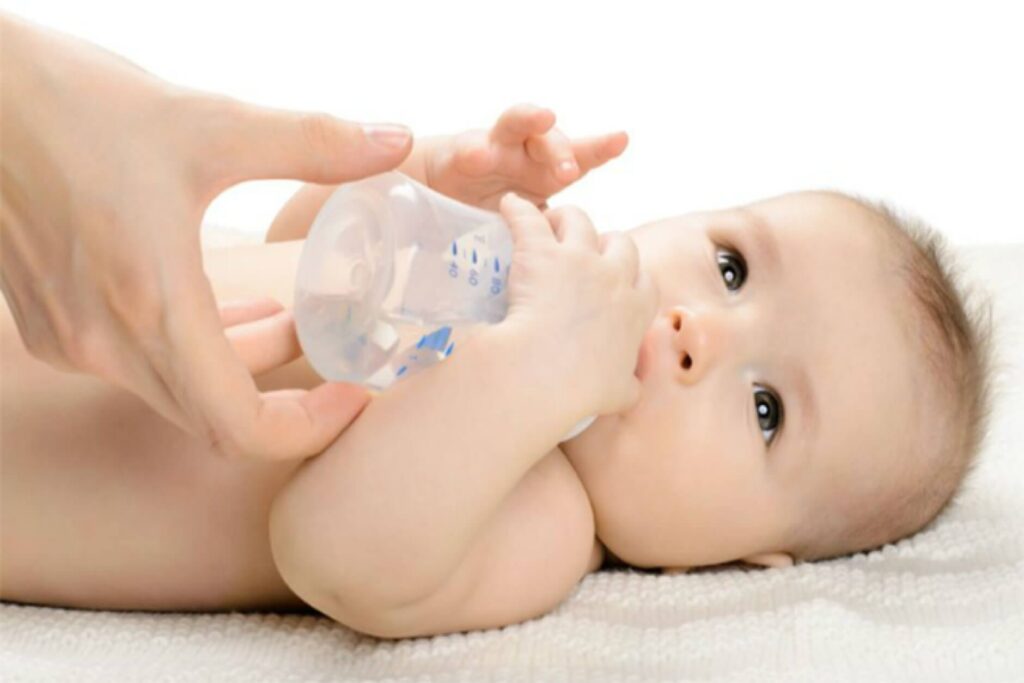
Can an 8-month-old drink water?
Yes, an 8-month-old can drink small amounts of water as part of a normal complementary feeding routine. By this age, water can be offered alongside solid foods while breast milk or infant formula continues to provide most of the baby’s fluids and essential nutrition. Water has a supporting role at 8 months rather than becoming the baby’s primary drink.
The timing matters because an 8-month-old is in a different feeding stage from a young infant who relies exclusively on breast milk or formula. Once complementary foods are introduced, babies begin eating foods with different textures and moisture levels and can start learning how to drink from a cup. Offering water during this stage supports that transition without requiring parents to replace established milk feeds.
Water and milk also serve different nutritional purposes. Plain water provides fluid but does not provide the protein, fat, carbohydrates, vitamins, and minerals supplied by breast milk or properly prepared infant formula. For this reason, giving an 8-month-old water should not mean diluting formula, replacing a normal milk feed with water, or intentionally filling the baby’s stomach with water before feeding.
Parents can instead treat water as one small part of the baby’s developing feeding routine. For example, a baby eating breakfast or lunch can be offered a small amount of water with the meal while continuing their usual breast milk or formula feeds throughout the day. This approach introduces water without allowing it to displace the more nutritionally important drinks.
How much water can an 8-month-old drink a day?
An 8-month-old generally needs only a small amount of plain water because breast milk or formula still supplies much of the baby’s daily fluid intake. There is no need to make plain water the main source of hydration at this age. The appropriate amount should be considered alongside milk intake, complementary foods, the baby’s individual feeding pattern, and guidance from the child’s pediatric healthcare provider.
Daily water intake and total fluid intake are not the same measurement. Total fluid intake includes fluid obtained from breast milk or formula as well as water contained in foods. An 8-month-old who breastfeeds regularly, for example, is already consuming substantial fluid even when the amount cannot be measured in ounces. Formula-fed babies similarly receive both water and nutrients through correctly prepared formula.
Solid foods also differ in their water content. Foods such as fruit and vegetable purées contain considerably more moisture than dry finger foods or cereals. As a result, two 8-month-old babies eating different diets can consume different amounts of plain water while both remain adequately hydrated. Parents should therefore avoid using plain-water intake alone as a measure of hydration.
Hot weather does not automatically mean that parents should replace breast milk or formula with large quantities of plain water. Fluid needs can change with temperature, activity, illness, feeding frequency, and other individual factors, but maintaining appropriate milk feeds remains important. Parents who are concerned that their baby needs substantially more fluid because of extreme heat, fever, vomiting, diarrhea, or another health issue should seek individualized pediatric guidance rather than simply increasing plain water without limits.
How often should an 8-month-old drink water?
An 8-month-old can be offered small amounts of water a few times throughout the day, particularly around solid-food meals. Water does not need to follow a rigid hourly schedule because breast milk or formula still contributes substantially to the baby’s fluid intake. The goal at this stage is to introduce water gradually without allowing it to interfere with normal milk feeds.
Offering water in small amounts also matches the way an 8-month-old is learning to eat and drink. Babies at this age are developing oral motor skills and becoming familiar with drinking from a cup while managing increasingly varied food textures. A few opportunities to drink during meals can help the baby practice these skills without creating pressure to finish a specific amount every time.
Parents should also consider the baby’s overall feeding pattern rather than counting water servings in isolation. A baby who breastfeeds frequently may have a different plain-water intake from a baby who follows a structured formula-feeding schedule. Differences in solid foods matter as well because foods such as fruit, vegetables, yogurt, and purées contain fluid, while toast, crackers, and other relatively dry foods contain less.
Water should therefore fit around established feeding rather than control it. For example, parents can offer a small amount with breakfast, lunch, or dinner and allow the baby to decide whether to drink it. Breast milk or formula feeds should continue according to the baby’s normal feeding routine rather than being delayed because the baby recently drank water.
When should you give an 8-month-old water?
A practical time to give an 8-month-old water is with or shortly after solid-food meals. Pairing water with meals makes it part of complementary feeding and gives the baby regular opportunities to practice drinking without positioning water as a replacement for breast milk or formula.
Offering water with solid foods is particularly useful as babies begin eating thicker and drier textures. A baby eating soft finger foods, mashed foods, or infant cereal, for example, can be offered a small amount of water from a cup during the same meal. This creates a consistent association between eating and drinking while supporting the development of independent drinking skills.
Parents do not need to offer water immediately before every breast milk or formula feed. Filling a baby’s small stomach with water before a nutritionally important feed can reduce interest in milk without providing comparable calories or nutrients. When both are being offered around the same period, the feeding routine should continue to prioritize the baby’s normal breast milk or formula intake.
Water also should not automatically become the response every time an 8-month-old wakes at night or appears unsettled before bed. Hunger, comfort, sleep associations, illness, temperature, and other factors can influence nighttime waking. Replacing a normal milk feed with water solely to reduce nighttime feeding changes the baby’s feeding pattern and should not be treated as a general hydration strategy.
The appropriate timing can change temporarily during illness. Vomiting, diarrhea, fever, poor feeding, or signs of dehydration require more careful fluid management than an ordinary mealtime routine. In these situations, parents should seek pediatric guidance rather than relying on extra plain water to correct a suspected fluid deficit.
Can water replace breast milk or formula for an 8-month-old?
No, water should not replace breast milk or infant formula for an 8-month-old. Plain water provides hydration but does not provide the energy, protein, fat, carbohydrates, vitamins, and minerals that a growing baby receives from breast milk or properly prepared infant formula. Water should remain a complementary drink while milk feeds continue to play a central nutritional role.
An 8-month-old has a relatively small stomach, so the amount and timing of drinks can affect how much food and milk the baby consumes. Filling that limited stomach capacity with water can reduce appetite for breast milk, formula, or complementary foods. The problem is therefore not that ordinary amounts of water have no place in the diet; it is that water has much lower nutritional value than the foods and milk it can displace.
Formula should also always be prepared according to its instructions rather than diluted with additional water to increase the volume of a feed. Adding more water changes the intended concentration of nutrients and electrolytes. If a formula-fed baby appears thirsty after regular feeds, parents should consider the baby’s overall feeding and hydration pattern rather than independently changing the formula-to-water ratio.
A practical feeding routine keeps the roles of each drink clear. Breast milk or formula continues to provide important nutrition and fluid, complementary foods introduce new nutrients and textures, and plain water can be offered in small amounts as the baby learns to drink with meals. This distinction allows an 8-month-old to become familiar with water without prematurely replacing nutritionally important milk feeds.
Can an 8-month-old drink too much water?
Yes, an 8-month-old can drink too much water, and excessive intake can become dangerous because it can disturb the body’s normal fluid and electrolyte balance. Babies are particularly vulnerable because of their small body size and developing kidneys. This is why water should be offered in appropriate amounts rather than used freely as a substitute for breast milk or formula.
The main physiological concern is dilution of sodium in the blood. The kidneys regulate water and electrolytes by controlling how much water is retained or removed from the body. When water intake substantially exceeds the body’s ability to maintain this balance, blood sodium can fall to an abnormally low level. Severe disturbances can affect normal brain and nervous-system function.
Excessive water can also create a nutritional problem before it creates an electrolyte problem. An 8-month-old who regularly fills up on water may consume less breast milk, formula, or food. Because water contains no meaningful calories, protein, fat, or micronutrients, replacing nutrient-containing feeds with water reduces the nutritional value of the baby’s overall diet.
Parents should not try to prevent dehydration by repeatedly giving large amounts of plain water when a baby has vomiting, diarrhea, fever, or poor feeding. Fluid and electrolyte losses during illness are different from ordinary thirst, and plain water alone may not address what the body has lost. Pediatric guidance is appropriate when illness is affecting a baby’s normal fluid intake or hydration.
What are the signs that an 8-month-old has had too much water?
Signs of a potentially serious fluid or electrolyte imbalance can include unusual sleepiness, irritability, weakness, vomiting, abnormal behavior, or seizures in severe cases. These signs are not specific to excessive water intake, so parents should not use symptoms alone to diagnose water intoxication at home.
Water intoxication occurs when excessive water intake dilutes electrolytes, particularly sodium, enough to interfere with normal body functions. The resulting low sodium concentration can cause water to move into cells. Swelling of brain cells is the major concern in severe cases because the skull limits the space available for expansion.
The circumstances surrounding the symptoms are therefore important. A baby who develops concerning symptoms after consuming an unusually large amount of water, receiving consistently over-diluted formula, or experiencing another major change in fluid intake requires prompt medical assessment. Severe symptoms such as seizures, marked difficulty waking, loss of responsiveness, or significant changes in consciousness require urgent medical care rather than home treatment.
For routine feeding, the safer approach is straightforward: keep breast milk or correctly prepared infant formula as an important source of fluids and nutrition, introduce plain water in appropriate amounts alongside complementary foods, and avoid deliberately replacing normal feeds with large quantities of water.
What is the best way to give water to an 8-month-old?
The best way to give water to an 8-month-old is to offer small amounts during meals while the baby is sitting upright and supervised. At this age, offering water is not only about hydration. It also gives the baby an opportunity to develop drinking skills alongside chewing, swallowing, and self-feeding skills that emerge during complementary feeding.
An open cup is one option for introducing water. Parents can begin with a small cup containing only a little water, which makes the cup easier to control and limits how much water spills or reaches the baby’s mouth at once. Initially, an adult may need to hold and tilt the cup while the baby learns to close their lips around the rim, take a small sip, and swallow.
A sippy cup can also be used, particularly when parents need a more spill-resistant option. However, the drinking mechanism differs between cup designs, so a baby may need time to learn how a particular valve, spout, or straw works. The practical goal is not to make an 8-month-old finish a cup of water but to provide repeated opportunities to practice drinking while maintaining normal breast milk or formula feeds.
Parents should avoid using a bottle of water as a routine replacement for a breast milk or formula bottle. Babies may associate bottles with larger milk feeds and can consume more liquid from them than they would through small supervised sips from a cup. Keeping water connected to mealtimes and cup practice helps distinguish it from nutritionally important milk feeds.
Drinking water should always be supervised at this age. An 8-month-old is still developing coordination between sucking or sipping, swallowing, and breathing. Coughing or spluttering can occur while learning, particularly when water flows too quickly. Using small amounts and allowing the baby to drink at a manageable pace makes the learning process easier to control.
How can you tell if an 8-month-old is getting enough fluids?
An 8-month-old who is receiving enough fluids generally continues to feed normally, produces wet diapers regularly, and remains alert and responsive when awake. Hydration should be assessed from the baby’s overall condition and feeding pattern rather than from the amount of plain water consumed alone.
Breast milk or infant formula makes a substantial contribution to hydration at 8 months. Water in complementary foods contributes as well. For example, fruit, vegetables, yogurt, and puréed foods contain fluid in addition to their nutrients. A baby can therefore drink relatively little plain water while still receiving fluid from several sources throughout the day.
Wet diapers provide parents with a practical way to observe changes in hydration. The baby’s normal pattern is particularly useful because diaper frequency can vary between babies and can change as feeding develops. A noticeable reduction from the baby’s usual urine output, especially when accompanied by poor feeding or illness, deserves more attention than whether the baby finished a particular amount of water at lunch.
Parents should also consider behavior and physical appearance. A baby who is feeding normally and behaving as usual presents a different situation from a baby who has become unusually sleepy, is refusing feeds, or is losing fluid through repeated vomiting or diarrhea. Hydration assessment therefore requires several observations rather than one isolated sign.
What are the signs of dehydration in an 8-month-old?
Signs of dehydration in an 8-month-old can include fewer wet diapers than usual, a dry mouth, reduced tears when crying, unusual sleepiness or irritability, and changes in normal feeding behavior. More pronounced changes in responsiveness or appearance can indicate a more serious problem and require medical assessment.
Dehydration develops when fluid losses exceed fluid intake. Vomiting and diarrhea can increase losses rapidly, while fever or poor feeding can make it harder for a baby to maintain normal fluid intake. The combination is particularly important: a baby experiencing repeated diarrhea while also refusing breast milk or formula has both increased fluid loss and decreased fluid replacement.
Parents should not respond to suspected significant dehydration by simply giving unrestricted plain water. Illness can involve losses of both water and electrolytes, and the appropriate fluid strategy depends on the baby’s condition. A pediatric healthcare professional can determine whether continued milk feeds, an appropriate oral rehydration approach, or further medical assessment is required.
Urgent assessment is appropriate when dehydration signs become severe, the baby is difficult to wake, cannot keep fluids down, has markedly reduced urine output, or appears seriously unwell. These situations require evaluation of the underlying illness and fluid balance rather than simply increasing the amount of water offered at home.
What type of water can an 8-month-old drink?
An 8-month-old can drink plain, safe drinking water that meets local water-quality standards. The most important factor is not whether the water comes from a tap or bottle, but whether the source is considered safe for drinking and appropriate for infants in the family’s location. Water offered to a baby should also remain plain rather than being sweetened or flavored to encourage drinking.
Tap water can be appropriate when the household supply is safe to drink. However, water quality differs between locations and water systems, so parents should follow local public-health guidance when there are concerns about contamination, plumbing, private wells, or temporary water advisories. A recommendation that applies to one household does not automatically apply to another household using a different water source.
Bottled water is not automatically safer or more appropriate for an 8-month-old than tap water. Mineral composition differs between bottled-water products, and choosing bottled water does not remove the need to consider whether the water is suitable for an infant. Parents who rely primarily on bottled water or have concerns about their local supply can ask their pediatric healthcare provider or local health authority which option is appropriate.
The water used to prepare powdered infant formula requires separate attention because formula preparation is not the same as offering a baby a small drink of plain water. Parents should follow the preparation instructions for their specific formula and applicable local health guidance. Formula should be mixed using the specified water-to-powder ratio rather than adding extra water to make a feed larger or more diluted.
Parents also do not need to make water more appealing by routinely adding juice, sugar, honey, or other flavorings. Introducing plain water allows an 8-month-old to become familiar with its taste while avoiding unnecessary additions. The purpose at this stage is simple: provide an appropriate supplementary drink while the baby continues receiving breast milk or formula and complementary foods.
When should you ask a pediatrician about your 8-month-old’s water intake?
Parents should contact a pediatric healthcare professional when an 8-month-old has a significant change in drinking, feeding, urine output, or overall condition rather than simply adjusting water intake at home. A baby’s fluid needs can change during illness, and unusual thirst or refusal to drink can sometimes reflect a problem that requires more than additional plain water.
A noticeable reduction in breast milk or formula intake is one reason to seek guidance, particularly when it persists or occurs with other symptoms. Water should not become the baby’s primary drink because milk feeds continue to provide important nutrition at 8 months. If a baby repeatedly chooses or receives water instead of normal milk feeds, a pediatric professional can help assess the feeding pattern and determine whether an underlying issue is affecting appetite.
Vomiting and diarrhea also require closer attention because both can cause fluid and electrolyte losses. Giving large quantities of plain water is not an appropriate substitute for individualized advice when an infant is losing fluids through illness. The baby’s age, symptoms, feeding ability, urine output, and severity of fluid loss all influence how hydration should be managed.
Parents should seek medical advice when they notice signs consistent with dehydration, such as substantially fewer wet diapers than the baby’s normal pattern, persistent dry mouth, reduced tears, unusual sleepiness, or poor feeding. A baby who cannot keep fluids down, becomes difficult to wake, has a major change in responsiveness, or appears seriously unwell requires prompt medical evaluation.
Unusually high water consumption also deserves attention. Persistent excessive thirst, repeated requests for fluids, or consumption of an unexpectedly large quantity of water should not simply be treated as a new drinking habit. A pediatric healthcare professional can evaluate the baby’s total fluid intake, feeding pattern, symptoms, and health status to determine whether further assessment is needed.
For most healthy 8-month-olds following a normal complementary feeding routine, water remains straightforward: offer appropriate amounts of plain, safe water alongside meals, continue breast milk or properly prepared infant formula, and use the baby’s overall feeding, urine output, and behavior to monitor hydration.