
A newborn can have their first bath after their vital signs and body temperature are stable, and the first bath does not need to happen immediately after birth. At home, parents should generally use sponge baths while the umbilical cord stump is still attached. A baby can transition to a tub bath once the cord stump has fallen off and the belly button area has healed.
The first bath after birth and the first tub bath at home are therefore two different milestones. Delaying the first bath gives a newborn time to adjust after delivery and allows vernix caseosa, the protective white coating present on many babies at birth, to remain on the skin for longer. Once you bring your baby home, sponge bathing provides a practical way to clean the face, neck, diaper area, and skin folds without immersing the umbilical cord stump in water.
This guide explains when your newborn can have their first bath, how the umbilical cord affects bath timing, when to switch from sponge baths to a baby tub, and how often newborns need bathing. It also covers safe water temperature, bath products, positioning, and essential safety practices so you can establish a simple bathing routine during the first weeks of your baby’s life.
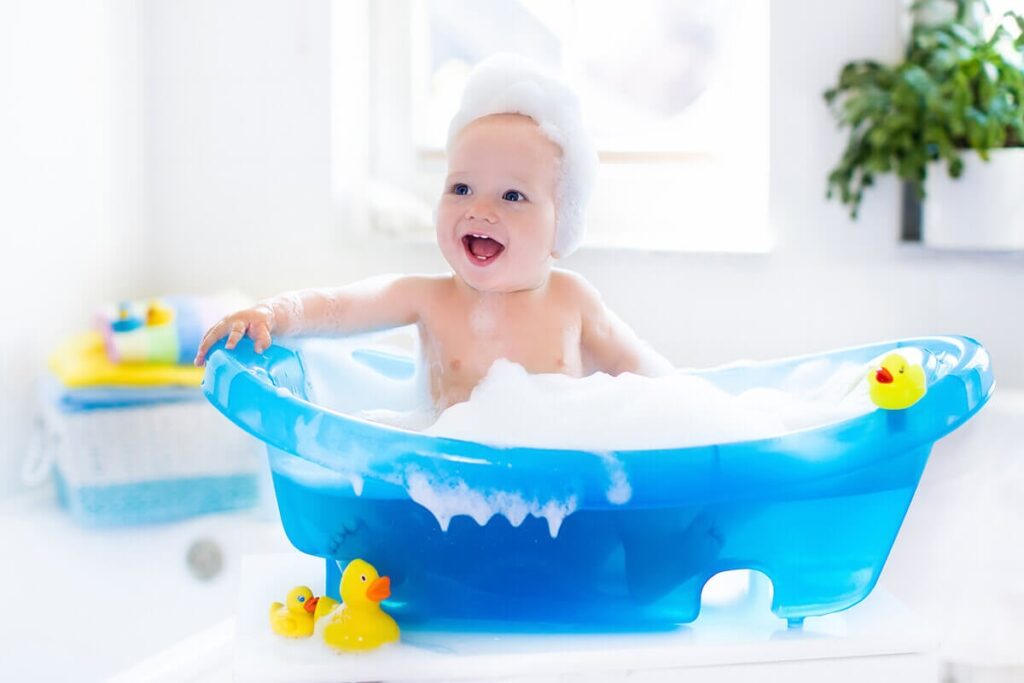
When Can a Newborn Have Their First Bath?
A newborn can have their first bath once they are medically stable and have had time to adjust after birth. The bath does not need to happen immediately after delivery. Delaying it gives the baby time to maintain body temperature, stay in skin-to-skin contact with a parent, and begin feeding before being washed.
Newborns lose body heat more easily than adults because they have a larger surface-area-to-body-mass ratio and an immature temperature-regulation system. Bathing removes the baby from a warm environment and places water against the skin, which can increase heat loss. For this reason, keeping the newborn warm and stable takes priority over washing them immediately after delivery.
Delaying the first bath also leaves vernix caseosa on the baby’s skin for longer. Vernix is the white, creamy substance that covers some or much of a newborn’s skin at birth. It develops during pregnancy and forms a temporary protective coating between the baby’s skin and the surrounding amniotic fluid. Parents do not need to scrub vernix off immediately; much of it gradually absorbs into the skin or disappears naturally.
The exact timing of the first bath can also depend on the baby’s condition and the birth setting. A healthy full-term newborn may follow the hospital or birth center’s routine, while a baby who needs monitoring, temperature support, or other medical care may have their bath postponed. Parents can ask the maternity team when the first bath is planned and whether there is a reason to delay it further.
Can You Bathe a Newborn Before the Umbilical Cord Falls Off?
You can clean a newborn before the umbilical cord stump falls off by giving them a sponge bath rather than immersing their body in a tub of water. This allows you to clean areas that become dirty while keeping the stump area from being submerged during the early healing period.
The umbilical cord is cut after birth, leaving a short stump attached to the baby’s belly button. Over the following days and weeks, the stump dries, darkens, shrinks, and eventually separates from the body. During this period, parents should follow the cord-care instructions provided by their maternity or pediatric care team and pay attention to how the area is healing.
A newborn does not become unhygienic simply because they are not receiving full tub baths. The areas that require the most frequent cleaning are usually the diaper area, face, neck, hands, and skin folds where milk, saliva, sweat, or urine can collect. These areas can be cleaned individually without placing the baby’s entire body in water.
Avoid trying to make the stump fall off sooner by pulling or picking at it. Let it separate naturally. Parents should also monitor the surrounding skin while cleaning their baby. Increasing redness, swelling, persistent bleeding, pus-like discharge, or an unusual foul odor warrants advice from a pediatric healthcare professional rather than simply changing the baby’s bathing routine.
How Do You Give a Newborn a Sponge Bath?
To give a newborn a sponge bath, place the baby on a secure, comfortable surface and clean one area at a time with a soft, damp washcloth while keeping the rest of the body warm. Gather the washcloth, warm water, towel, clean diaper, and fresh clothes before starting so everything remains within reach.
Start with the baby’s face and use gentle movements rather than scrubbing. Continue with the neck, behind the ears, hands, arms, torso, legs, and skin folds. Clean the diaper area toward the end because it is more likely to contain urine or stool. A separate clean section of the washcloth can be used as you move between areas.
Expose only the part of the body you are washing and keep the rest of the newborn wrapped in a towel. This reduces unnecessary heat loss and can make the experience more comfortable. Pay particular attention to folds around the neck, where breast milk or formula can collect after feeding.
Keep the umbilical cord stump out of the bath water during the sponge-bathing stage. If the surrounding area needs cleaning, follow the cord-care guidance given by your baby’s healthcare provider and dry the area appropriately afterward. The goal of a sponge bath is effective hygiene without unnecessarily soaking the healing belly button.
When Can a Newborn Have a Tub Bath?
A newborn can generally transition to a tub bath after the umbilical cord stump has fallen off and the belly button area has healed. The condition of the area matters in addition to whether the stump itself is still present.
The stump does not fall off on an identical day for every baby. Parents should therefore use the condition of their own baby’s umbilical area rather than choosing a fixed calendar date for the first tub bath. Until that transition is appropriate, sponge baths are sufficient for routine cleaning.
After the stump separates, look at the belly button before switching to immersion bathing. If the area still appears raw, is actively bleeding, has discharge, or does not appear to be healing normally, continue with sponge baths and ask your baby’s healthcare professional for guidance. A fallen stump does not mean an abnormal-looking umbilical area should be ignored.
For the first tub bath, use a baby bathtub or another bathing setup specifically appropriate for an infant. Prepare the towel, diaper, clothes, washcloth, and other necessary items before placing your newborn in the water. The first tub baths can be brief; their purpose is to clean the baby safely, not to keep the newborn in the water for an extended period.
How Often Should You Bathe a Newborn?
A newborn does not need a full bath every day when the diaper area and other frequently soiled areas are cleaned regularly. Newborns spend most of their time indoors, do not become dirty through physical activity in the same way older children do, and already receive frequent cleaning during diaper changes.
Bathing more frequently does not automatically make a newborn cleaner or healthier. Newborn skin has a developing protective barrier, and repeated exposure to water and cleansing products can contribute to dryness or irritation in susceptible babies. Bath frequency should therefore reflect the baby’s actual hygiene needs rather than an assumption that a daily bath is mandatory.
Daily hygiene still matters between full baths. Clean the diaper area during diaper changes and remove milk, formula, saliva, or other residue from the face, neck, and skin folds when necessary. For example, milk can run into the folds beneath a newborn’s chin during feeding and remain there even though the rest of the baby’s body is clean.
An additional bath can be useful when a newborn has a particularly messy diaper, spits up over a larger area of the body, or otherwise needs more extensive cleaning. Bathing should remain a practical part of newborn hygiene rather than a rigid daily schedule. Parents can also adjust the routine if their pediatrician recommends a different approach because of a baby’s skin condition or other individual needs.
What Water Temperature Is Safe for a Newborn Bath?
Bath water for a newborn should be comfortably warm rather than hot, with a temperature of about 37–38°C (98.6–100.4°F). Newborn skin is sensitive to temperature, so parents should check the water before placing the baby in the bath and avoid relying on appearance alone to judge whether the water is safe.
Fill the baby bathtub and mix the water thoroughly before checking its temperature. This prevents isolated hot spots from remaining in the bath. A bath thermometer provides a more precise measurement, while the inside of your wrist or elbow can provide a practical secondary check. The water should feel comfortably warm against the skin rather than noticeably hot.
Room temperature also affects a newborn’s comfort during bath time. Babies lose heat more quickly than adults, particularly when their wet skin is exposed to air. Prepare a comfortably warm room, keep the bath relatively brief, and have a dry towel ready before the baby enters the water. Drying and dressing the newborn promptly after the bath limits unnecessary heat loss.
Parents should never add hot water while their newborn is sitting in the bathtub. Water coming directly from a hot tap can be considerably hotter than the surrounding bath water and may burn delicate skin before it has time to mix. Adjust and test the entire bath before putting the baby into it.
What Do You Need Before Giving a Newborn a Bath?
Prepare all bathing and changing supplies before putting your newborn in the bath so you can remain within reach of the baby from start to finish. Essential items include an infant bathtub or another appropriate bathing setup, a soft washcloth, towels, a clean diaper, and clean clothes. If you use a cleanser or shampoo, place those products within easy reach as well.
Preparation is a safety measure rather than simply a matter of convenience. A forgotten towel or diaper can tempt a parent to move away from the bathtub while the newborn is still in the water. Instead, arrange the bathing area so you can reach every necessary item without leaving the baby.
Keep the setup simple. A newborn does not need numerous bath accessories, toys, or multiple skin products to become clean. A soft washcloth and water are sufficient for many parts of routine bathing, while a small amount of an appropriate baby cleanser can be used when necessary. Using fewer items also allows the parent to concentrate on supporting and washing the baby.
Place the towel where you can reach it immediately after lifting the newborn from the bath. Have the clean diaper and clothing ready nearby so the baby can be dried, diapered, and dressed without remaining wet and uncovered for an extended period. This sequence makes the transition from bath to clothing faster and helps keep the newborn warm.
How Do You Safely Bathe a Newborn in a Baby Tub?
To safely bathe a newborn in a baby tub, prepare the bath first, support the baby’s head and neck continuously, wash the body gently, and remove and dry the baby as soon as the bath is finished. Keep everything you need within reach before starting because the newborn requires continuous supervision around water.
Begin by filling and checking the bathtub before bringing the baby to the bathing area. Undress the newborn only when the water and supplies are ready. Lower the baby into the water gradually while maintaining a secure grip, allowing the newborn time to adjust to the change in temperature and position.
Wash the baby gently rather than scrubbing the skin. Start with cleaner areas such as the face and upper body before moving toward the diaper area. Pay attention to the neck, behind the ears, under the arms, and other skin folds where milk, saliva, or other residue can accumulate. Clean these folds carefully and dry them afterward because trapped moisture can irritate the skin.
A newborn bath only needs to last long enough to clean the baby effectively. A short bath also limits the amount of time the newborn spends wet and exposed to cooler air. If the baby becomes noticeably cold or distressed, finish the bath rather than trying to extend it to fit a predetermined routine.
Lift the newborn securely from the tub and move directly to the prepared towel. Wet babies are slippery, so maintain a firm but gentle hold throughout this transition. Pat the skin dry, including the folds around the neck, arms, and legs, then put on a clean diaper and clothing.
How Should You Hold a Newborn During a Bath?
Hold a newborn during a bath by continuously supporting the head and neck while keeping a secure grip on the baby’s upper body. Newborns cannot independently control their head position, and wet skin makes them more difficult to hold securely.
Use one arm to support the baby’s head, neck, and upper body while your free hand does the washing. Keep the newborn positioned so the face remains well above the water. The exact grip can vary with the bathtub design and the baby’s size, but maintaining control of the head and keeping the airway clear are constant priorities.
Do not treat an infant bath seat, sling, or shaped baby bathtub as a replacement for physical supervision. Bathing equipment can help position a baby, but it does not remove the need for an adult to stay close enough to support the newborn immediately.
If you need to answer the door, respond to another child, retrieve an item, or deal with any interruption that requires leaving the bathing area, take the newborn out of the water first. Wrap the baby in a towel and bring them with you rather than leaving them in the tub, even for a brief interruption.
Can You Use Soap and Shampoo on a Newborn?
You can use soap or shampoo on a newborn, but plain water is sufficient for many routine baths and cleansing products should be used sparingly. Newborn skin is delicate, and the purpose of bathing is to remove milk, saliva, urine, stool, and other residue without unnecessarily stripping the skin’s natural protective barrier.
Choose a mild cleanser designed for babies when water alone does not adequately clean an area. Use a small amount rather than covering the baby’s entire body with soap. Pay particular attention to areas where residue collects, including the neck, diaper area, behind the ears, under the arms, and within skin folds. Rinse cleanser from the skin so it does not remain trapped in these areas after the bath.
Newborns also do not need shampoo during every bath. The scalp can usually be cleaned gently with water, with a small amount of baby shampoo used when needed. Massage the scalp gently rather than scratching or scrubbing it, then rinse while keeping water and cleanser away from the baby’s eyes and face.
A more complicated bath routine does not provide better hygiene. Multiple cleansers, strongly fragranced products, and frequent washing can expose sensitive newborn skin to ingredients it does not need. If a particular product is followed by persistent redness, dryness, swelling, or irritation, stop using it and discuss the reaction with your baby’s healthcare professional when appropriate.
What Should You Do If Your Newborn Cries During a Bath?
Take your newborn out of the bath if they become very distressed, then check their temperature, comfort, hunger, tiredness, and positioning before trying again later. Crying does not mean that a baby must continue bathing until they become accustomed to it. A newborn can be cleaned quickly and safely without completing a long bath.
Temperature is one of the first factors to check. Water that feels too cool or too warm can make bath time uncomfortable, while a cool room can cause the baby to lose heat after being undressed. Prepare the room, water, towel, and clothes before starting so the newborn spends less time uncovered.
Timing can also affect how a newborn responds. A hungry or overtired baby may be less comfortable with being undressed and placed in water. Parents can experiment with bath time when the baby is calm and alert rather than insisting on bathing at a fixed hour regardless of feeding and sleeping patterns.
Position and physical security matter as well. A newborn who feels unsupported may become distressed when lowered into a tub. Maintain continuous head and neck support, introduce the baby to the water gradually, and keep movements slow and controlled. A brief sponge bath remains an option when a full tub bath is consistently stressful.
Bathing does not have to become a soothing ritual immediately. Some newborns need time to become familiar with the sensation of water, being undressed, and moving between different temperatures. Keep early baths simple and predictable instead of adding extra steps in an attempt to make the baby enjoy them.
What Newborn Bath Safety Rules Should Parents Follow?
The most important newborn bath safety rule is to keep the baby within immediate reach and under continuous adult supervision whenever they are in or near bath water. Bath preparation, water temperature, secure positioning, and uninterrupted supervision work together to reduce preventable risks.
Prepare every necessary item before the bath begins. Keep the towel, washcloth, diaper, clothes, and any cleanser you plan to use close enough to reach without moving away from the baby. This prevents a common practical problem in which a parent realizes that an essential item is in another room after the newborn is already in the water.
Keep the newborn’s head and face above the water and maintain secure support throughout the bath. Wet skin is slippery, and newborns cannot control their head and neck independently. Use bathing equipment only as an aid to positioning; it does not replace an adult’s hands, attention, or supervision.
Check the water before placing the baby in it and do not add hot water while the newborn is sitting in the tub. Mix the bath water thoroughly so the temperature is consistent throughout. Water that feels comfortable to an adult’s hand may still need closer checking because newborn skin is more vulnerable to excessive heat.
Remove the baby from the bath whenever an interruption requires your attention elsewhere. For example, if someone comes to the door or you need to attend to another child, lift the newborn out, wrap them securely in a towel, and take them with you. Do not rely on the expectation that you will be away for only a few seconds.
Finish the bath when cleaning is complete rather than keeping the newborn in the water unnecessarily. Lift the baby with a secure grip, move directly to the prepared towel, and dry the skin carefully. Dry between skin folds as well as exposed areas before putting on a clean diaper and clothes.
When Should You Ask a Pediatrician About Newborn Bathing or Skin Problems?
Contact your baby’s healthcare professional when the umbilical area or skin develops signs that suggest more than normal temporary dryness or mild irritation. Bathing can make an existing skin or umbilical problem easier to notice, but changing the water temperature or bath frequency is not a substitute for medical assessment when concerning symptoms are present.
Pay particular attention to the healing umbilical area during the weeks before and after the stump separates. Increasing redness around the belly button, swelling, persistent bleeding, pus-like discharge, a foul odor, or an area that does not appear to be healing normally should prompt professional guidance. Continue with appropriate cord care rather than trying to clean the problem away through more frequent bathing.
Persistent or worsening skin changes also deserve attention. Newborn skin can become temporarily dry, but widespread redness, significant swelling, broken or weeping skin, persistent irritation, or a reaction that repeatedly appears after using a bath product requires a different response from ordinary dry skin. Stop using a suspected product and discuss persistent or concerning symptoms with a healthcare professional.
Parents should also seek guidance when they are uncertain about bathing because their newborn was premature, has a medical condition, has received specific umbilical or skin-care instructions, or is recovering from a procedure. Individual medical advice takes priority over a general newborn bathing routine because the appropriate timing and method can differ according to the baby’s circumstances.