
Your baby likely needs the next diaper size when the current diaper becomes consistently tight, leaves persistent red marks around the waist or thighs, becomes difficult to fasten, no longer covers the bottom properly, or causes repeated leaks and blowouts despite being put on correctly. These physical signs are more useful than relying on your baby’s age alone because babies grow at different rates and have different body proportions.
Your baby’s weight is a useful starting point because diaper manufacturers typically assign each size a recommended weight range. However, weight ranges can overlap, so reaching the minimum weight for the next size does not automatically mean you need to switch. The diaper’s actual fit around your baby’s waist and legs, along with how well it contains urine and stool, provides additional evidence for deciding when to size up.
Checking the fit regularly is especially useful during periods of rapid growth. By looking at the waistband, leg openings, fastening tabs, coverage, red marks, leaks, and blowouts, you can determine whether the current diaper still fits properly or whether your baby is ready for the next size.
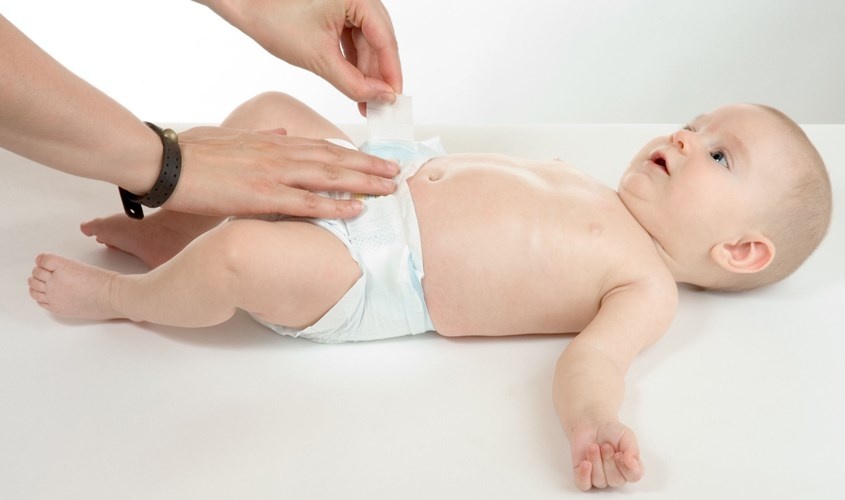
What Are the Signs That My Baby Needs the Next Diaper Size?
There are 6 main signs that your baby may need the next diaper size: persistent red marks, a tight waistband, tight leg openings, difficult-to-fasten tabs, insufficient bottom coverage, and recurring leaks or blowouts. One sign alone does not always mean the diaper is too small, but several signs appearing consistently indicate that the current size is no longer providing the right fit.
Persistent red marks around the waist or thighs are one of the easiest signs to notice. A properly fitted diaper should sit snugly against your baby’s body without creating excessive pressure. Light impressions that disappear shortly after a diaper change are different from deep or persistent marks. When the waistband or leg openings repeatedly leave pronounced marks, the diaper may be fitting too tightly as your baby’s waist and thighs grow.
The fastening tabs provide another practical sizing check. The diaper should close securely without requiring you to pull the tabs excessively to reach the fastening area. If fastening each diaper becomes increasingly difficult, or the waistband appears stretched when the tabs are secured, your baby may be outgrowing the current size. This sign is more useful when considered alongside changes in waist and leg fit rather than used by itself.
Coverage also matters. The diaper should adequately cover your baby’s bottom and sit securely around the waist and legs. A diaper that previously provided good coverage may begin to look short, narrow, or tight as your baby grows. Insufficient coverage can make it harder for the diaper to contain urine and stool, particularly around the back and leg openings.
Recurring leaks and blowouts can also indicate that it is time to size up. A diaper that is becoming too small may not provide enough coverage or maintain the seal needed around your baby’s body. However, leaks and blowouts do not automatically mean the diaper is too small. Incorrect positioning, tucked leg cuffs, insufficient absorbency, or a diaper that is actually too large can produce similar problems. Check the overall fit before using leakage alone as the reason to change sizes.
How Should a Diaper Fit When It Is the Right Size?
A correctly sized diaper should fit snugly around your baby’s waist and thighs without being excessively tight, while providing full bottom coverage and secure contact around the leg openings. The goal is a close fit that helps contain urine and stool without creating persistent pressure marks or restricting normal movement.
Around the waist, the diaper should remain secure as your baby moves without digging into the skin. The waistband should not visibly squeeze the abdomen, and you should not need to pull the fastening tabs excessively to close the diaper. A waistband that is consistently very tight suggests the current size may be too small, while a waistband that leaves obvious gaps can indicate that the diaper is too large or needs to be adjusted.
The leg openings should sit close to your baby’s thighs. Leg cuffs help create a barrier around the legs, so they need to be positioned correctly rather than folded inward. Large gaps can allow urine or stool to escape, while openings that press deeply into the thighs may indicate that the fit is too tight. Checking both legs is useful because the diaper can sometimes sit unevenly after fastening.
The diaper should also provide sufficient coverage across your baby’s bottom and remain in position during normal movement. If the diaper repeatedly shifts, sags, exposes part of the bottom, or looks stretched from front to back, check both the size and how it has been put on. Proper fit involves the entire diaper rather than a single measurement, so evaluate the waist, thighs, tabs, coverage, and containment together.
Should I Choose My Baby’s Diaper Size by Weight or Age?
Choose your baby’s diaper size primarily by the manufacturer’s weight range and actual fit rather than by age alone. Babies of the same age can differ substantially in weight, waist size, thigh circumference, and overall body proportions, so age does not provide a precise measurement for diaper sizing.
Manufacturer weight ranges provide a useful starting point because each diaper size is designed for a particular range of body weights. Check the sizing information for the specific diaper brand you use rather than assuming that every brand follows an identical sizing system. When your baby’s weight approaches the upper end of the current size range, pay closer attention to changes in fit such as tightness, reduced coverage, red marks, or repeated leaks.
Weight should not be treated as the only deciding factor because diaper size ranges can overlap. A baby may fall within the recommended weight range for both the current size and the next size at the same time. In this situation, actual fit becomes the deciding factor. A current-size diaper that remains secure, comfortable, and effective does not need to be replaced simply because your baby has entered the weight range for the next size.
Use three factors together when making the decision: your baby’s weight, the diaper’s physical fit, and recurring diaper problems. This combination provides a more useful sizing assessment than age or weight alone because it accounts for both manufacturer guidance and your baby’s individual body proportions.
Should I Size Up if My Baby Is Between Two Diaper Sizes?
You should size up when your baby falls between two diaper sizes and the current size has become consistently tight or causes recurring fit-related problems. You do not need to move to the next size simply because your baby’s weight falls within its recommended range. Diaper weight ranges commonly overlap, which means two sizes may be suitable based on weight at the same time.
Keep using the current size when it still fits securely around the waist and thighs, provides enough bottom coverage, fastens without excessive stretching, and contains urine and stool effectively. In this situation, moving up early can create unnecessary gaps around the waist or legs. Those gaps can weaken the seal between the diaper and your baby’s body and contribute to leaks.
Try the next size when the current diaper is tight and you also notice signs such as persistent red marks, tabs becoming difficult to fasten, reduced bottom coverage, or repeated leaks and blowouts. For example, if your baby’s weight qualifies for two sizes but the smaller diaper repeatedly digs into the thighs and barely covers the bottom, the larger size is likely the more appropriate option to test.
The simplest decision rule is to combine the size chart with actual fit. Stay with the current size when it fits correctly and performs well; try the next size when the current diaper shows consistent signs of being too small. After sizing up, check the new diaper around the waist, thighs, and bottom rather than assuming that the larger size automatically fits better.
Do Frequent Diaper Leaks Mean My Baby Needs a Bigger Size?
Frequent diaper leaks can mean your baby needs a bigger size, but leakage alone does not prove that the current diaper is too small. Size-related leaks are more significant when they occur together with tight leg openings, a stretched waistband, reduced bottom coverage, difficult fastening, or other signs that your baby has outgrown the diaper.
A diaper that is too small can leak because it no longer fits your baby’s body correctly. As your baby grows, the diaper may provide less coverage across the bottom and less room around the waist and thighs. The resulting fit can make it harder for the diaper to maintain an effective barrier around the legs and back. If leaks begin occurring repeatedly after a period when the same diaper size worked well, check whether your baby’s fit has changed.
Leaks can also occur when the diaper is too large. A larger diaper may leave gaps around the legs or waist instead of creating a close seal. Incorrect positioning can cause similar problems. For example, leg cuffs that remain tucked inward after a diaper change may not form the intended barrier around the thighs. A diaper that has reached its absorbency capacity can also leak even when its size is correct.
Before sizing up because of leaks, check 4 factors: fit, placement, absorbency, and leak location. Look for tightness or gaps, make sure the diaper is centered and the leg cuffs are positioned correctly, consider whether the diaper is becoming saturated, and note where leaks repeatedly occur. Size up when leakage is accompanied by clear signs that the current diaper has become too small rather than treating every leak as a sizing problem.
Do Diaper Blowouts Mean It Is Time to Size Up?
Repeated diaper blowouts can indicate that it is time to size up when the current diaper has become tight or no longer provides adequate coverage around your baby’s bottom. A single blowout is not enough to determine that the diaper size is wrong because stool can escape for reasons unrelated to sizing.
Fit affects how well a diaper contains stool. The diaper needs sufficient coverage across the bottom and a secure fit around the waist and thighs. When a diaper becomes too small, it may sit lower or cover less of the baby’s bottom, reducing the space available to contain stool. This can contribute to blowouts around the back or leg openings, particularly when other signs of a tight diaper are already present.
Before changing sizes, check how the diaper is positioned. Make sure the back provides adequate coverage, the waistband sits securely, and the leg cuffs are not tucked inward. If the diaper fits properly and a blowout happens only occasionally, the event alone does not establish that your baby has outgrown the size.
Consider moving to the next size when blowouts become recurring and appear alongside tightness, persistent red marks, difficult fastening, or inadequate coverage. This combination provides stronger evidence that the current diaper is no longer fitting your baby’s growing body correctly.
Do Red Marks Mean My Baby’s Diaper Is Too Small?
Persistent or pronounced red marks around your baby’s waist or thighs can indicate that the diaper is too small, especially when they appear with other signs of a tight fit. Minor temporary impressions are different from marks that remain noticeable after the diaper has been removed.
Red marks can develop when the waistband or leg openings place excessive pressure on the skin. As your baby’s waist and thighs grow, a diaper that previously fitted correctly may become increasingly tight. You may notice deeper impressions around the thighs, a waistband that visibly presses into the abdomen, or marks appearing consistently at nearly every diaper change.
Evaluate the marks together with the rest of the diaper fit. Check whether the fastening tabs require more stretching than before, whether the leg openings appear tight, and whether the diaper still provides sufficient bottom coverage. When several of these signs occur together, trying the next diaper size provides a practical way to determine whether additional room improves the fit.
Redness should not automatically be attributed to diaper size. Skin irritation can have causes other than pressure from a tight diaper. If redness is persistent, worsening, painful, broken, or otherwise concerning, sizing up should not replace appropriate advice from your baby’s healthcare professional.
Can a Diaper Be Too Big for My Baby?
A diaper can be too big if it leaves noticeable gaps around your baby’s waist or legs, sags excessively, or repeatedly leaks because it cannot maintain a secure seal. Moving to a larger size does not automatically create a better fit, even when your baby’s weight falls within the recommended range for that size.
A diaper that is too large tends to create a different set of fit problems from one that is too small. A small diaper produces excessive tightness, reduced coverage, or pressure around the waist and thighs. An oversized diaper is more likely to leave open spaces between the diaper and your baby’s body. Urine or stool can escape through these spaces before the diaper contains or absorbs it effectively.
Check the leg openings first when testing a larger size. They should sit close to the thighs without creating pronounced pressure marks. Visible gaps between the leg cuffs and your baby’s skin indicate that the diaper may not provide a secure fit. Check the waistband as well. It should remain securely positioned rather than sitting loosely or sliding down as your baby moves.
Sagging is another useful signal, particularly when it appears soon after you put on a clean diaper. A diaper will naturally become heavier as it absorbs liquid, but a fresh diaper should not hang excessively away from your baby’s body. If the next size consistently creates gaps, sagging, or new leaks while the smaller size does not feel excessively tight, your baby may not be ready to size up yet.
How Do I Move My Baby to the Next Diaper Size?
Move your baby to the next diaper size by checking the new size’s weight range, trying it on, evaluating the fit around the waist and legs, and monitoring its performance during regular diaper changes. Testing the fit before fully switching sizes helps you determine whether the larger diaper actually solves the problems you noticed with the current size.
Start with the manufacturer’s size chart. Confirm that your baby’s current weight falls within or reasonably approaches the recommended range for the next size. Diaper sizing can differ between brands, so use the chart for the specific product rather than assuming that the same size number will fit identically across different diaper brands.
Next, put the larger diaper on as you normally would. Check whether the waistband closes securely without excessive stretching or large gaps. Look at both thighs to make sure the leg openings sit close to the skin and that the leg cuffs are positioned correctly. The diaper should also cover your baby’s bottom adequately without looking excessively loose or bulky.
Monitor the new size across regular diaper changes. Pay attention to 4 practical outcomes: red marks, leaks, blowouts, and overall fit. If tight marks disappear, coverage improves, and recurring leaks or blowouts decrease without new gaps appearing, the larger size is providing a better fit. If the new diaper creates large leg gaps, significant sagging, or more leakage, your baby may still fit the previous size better.
You do not need to make the decision based on one diaper change. Comparing how both sizes fit during the transition can provide clearer information, particularly when your baby’s weight falls within overlapping size ranges.
How Do I Know if the Next Diaper Size Fits Correctly?
The next diaper size fits correctly when it stays securely around your baby’s waist and thighs, provides full bottom coverage, fastens comfortably, and contains urine and stool without creating persistent pressure marks or obvious gaps. Evaluate the entire fit rather than relying on the size number alone.
Start with the waist. The waistband should remain secure during normal movement without visibly digging into your baby’s abdomen. The fastening tabs should reach their intended fastening area without requiring excessive pulling. At the same time, the diaper should not be so loose that it slides down or leaves a substantial gap around the waist.
Next, check both leg openings. The cuffs should sit around the thighs without being tucked inward, leaving large gaps, or producing persistent deep marks. Then look at coverage. The diaper should cover the bottom sufficiently and remain positioned correctly instead of shifting significantly during normal movement.
Finally, monitor how the diaper performs. A larger diaper that looks comfortable but repeatedly leaks through gaps is not necessarily a better fit. Likewise, a diaper that contains leaks but produces persistent tightness around the waist or thighs may still be unsuitable. A correctly fitted diaper balances 5 elements: secure waist fit, close leg fit, adequate coverage, comfortable fastening, and reliable containment.
This final check is particularly useful during overlapping weight ranges. The manufacturer’s chart tells you which sizes may be appropriate, while your baby’s actual fit helps determine which of those sizes works better at that stage of growth.
Do Different Diaper Brands Fit Babies Differently?
Different diaper brands can fit the same baby differently even when the diapers display the same size number. A size label is not a universal measurement of diaper dimensions, so changing brands may alter the fit around your baby’s waist, thighs, and bottom.
Each manufacturer provides its own size and weight recommendations. Diaper designs can also differ in waistband shape, leg openings, overall coverage, fastening position, and absorbent-core dimensions. As a result, a Size 3 diaper from one brand does not necessarily fit your baby exactly like a Size 3 from another brand. Your baby’s proportions also affect the result; a diaper that fits securely on one baby may feel tighter around the thighs or looser around the waist on another baby of the same weight.
Check the fit again whenever you switch diaper brands rather than relying only on the size number you previously used. Examine the waistband, leg openings, tabs, and bottom coverage after putting on the new diaper. Also monitor whether leaks, blowouts, persistent red marks, or excessive sagging begin after the change.
Use the new manufacturer’s weight chart as a starting point and your baby’s actual fit as the final check. If a new brand feels too tight or creates significant gaps, another size within that brand may fit better even though your baby wore a different size number successfully in the previous brand.
Should My Baby Wear a Bigger Diaper at Night?
Your baby does not automatically need a bigger diaper at night because overnight leakage can result from absorbency rather than incorrect sizing. Size and absorbency are related to diaper performance, but they represent different problems and should be evaluated separately.
First check whether your baby’s regular diaper still fits correctly. A diaper that remains secure around the waist and thighs, provides adequate bottom coverage, and does not leave persistent pressure marks is not necessarily too small simply because it leaks overnight. A longer period between diaper changes can result in the diaper holding more urine than it does during shorter daytime intervals.
Sizing up is more relevant when nighttime leaks occur together with signs that the current diaper has become too small. For example, a larger size is reasonable to test when the existing diaper is tight around the thighs, difficult to fasten, provides reduced coverage, and repeatedly leaks. In that situation, fit rather than overnight use alone provides the reason for testing the next size.
Avoid choosing a larger nighttime diaper if it creates significant gaps around the legs or waist. Those gaps can cause leakage even when the larger diaper offers more capacity. The correct nighttime option needs both sufficient absorbency and a secure fit, so evaluate these two factors separately when troubleshooting overnight leaks.
How Often Do Babies Move Up a Diaper Size?
Babies do not move up diaper sizes according to one fixed schedule because diaper transitions depend on growth, weight, body proportions, diaper design, and actual fit. Two babies of the same age can move into the next size at different times even when both are growing normally.
Growth is not identical across every stage of infancy. Changes in body weight and proportions can affect how a diaper fits around the waist and thighs, which means age alone cannot tell you exactly when to size up. Manufacturer weight ranges provide a more useful reference, but overlapping ranges also mean there may not be one exact weight at which every baby should switch.
Instead of planning diaper changes around a specific age or number of weeks, reassess the fit as your baby grows. Pay particular attention when your baby’s weight approaches the upper part of the manufacturer’s recommended range or when a previously well-fitting diaper starts behaving differently. Tightness, persistent red marks, difficult fastening, reduced coverage, and recurring containment problems provide more actionable information than a fixed sizing schedule.
This approach also helps avoid sizing up too early. If the current diaper remains comfortable, secure, and effective, your baby can continue wearing it while remaining within an appropriate size range. Move up when the larger size provides a demonstrably better fit rather than because a predetermined amount of time has passed.
Can My Baby Use Two Diaper Sizes During the Transition?
Your baby can use two diaper sizes during a transition when both sizes fall within an appropriate range and each provides a secure fit without excessive tightness or gaps. Overlapping manufacturer weight ranges make this situation possible, particularly when your baby is approaching the upper end of the current size.
Compare the two sizes based on fit rather than treating the larger diaper as automatically better. The smaller size may still fit correctly during part of the transition, while the larger size may begin to provide better coverage as your baby grows. Neither option should create persistent red marks, significant leg gaps, a loose waistband, or repeated leakage caused by poor fit.
Using the transition period to compare sizes can also prevent unnecessary waste if you still have diapers from an open package. Continue using the current size when it remains comfortable and secure, but stop using it once clear signs of an undersized fit appear. Do not continue with a visibly tight diaper simply to finish the remaining supply.
The transition is complete when the next size consistently provides the better overall fit. Use 5 checks to make that decision: waist fit, leg fit, bottom coverage, fastening, and containment. When the larger diaper performs well across these areas while the smaller diaper has become consistently tight or unreliable, your baby is ready to use the next size as the regular diaper.