
Thawed breast milk can be kept in the refrigerator for up to 24 hours once it has completely thawed. The 24-hour period starts when the milk no longer contains ice crystals, not when you first move it from the freezer to the refrigerator. Once thawed breast milk is brought to room temperature or warmed, it should be used within 2 hours. These time limits are important because thawed milk has a shorter safe storage window than freshly expressed breast milk.
The right storage time also depends on what happens to the milk after thawing. Breast milk that remains refrigerated, milk that has been warmed, and milk left in a bottle after a feeding should not be treated the same way. Fully thawed breast milk also follows different guidance from milk that still contains ice crystals, especially when deciding whether it can return to the freezer.
This guide explains how long thawed breast milk lasts in the refrigerator and at room temperature, how warming and feeding affect its storage time, and whether thawed milk can be refrozen. It also covers safe thawing methods, when breast milk should be discarded, and practical ways to thaw only what your baby needs.
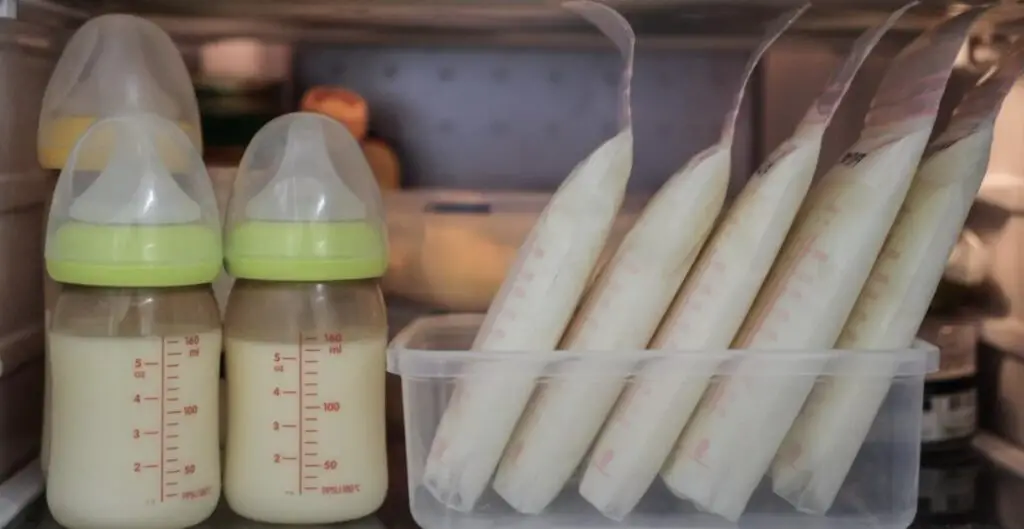
How Long Does Breast Milk Last After Thawing?
Breast milk lasts up to 24 hours in the refrigerator after it has completely thawed. The 24-hour period begins when the last ice crystals disappear, rather than when frozen breast milk is first transferred from the freezer to the refrigerator. This distinction matters because breast milk may take several hours to thaw completely, especially when it is thawed slowly in the refrigerator.
The usable time becomes shorter once thawed breast milk is removed from refrigeration. Previously frozen breast milk should be used within 2 hours after it has reached room temperature or been warmed. For example, if completely thawed milk is taken from the refrigerator and warmed for a 10:00 a.m. feeding, it should not be treated as refrigerated milk for the remainder of its original 24-hour storage window. The warming step creates a shorter period in which the milk should be used.
The storage window also changes after a baby begins drinking from a bottle. Milk remaining after a feeding requires different handling from thawed milk that has stayed in a clean storage container. For this reason, parents should track three points separately: when the milk becomes completely thawed, when it is removed from refrigeration or warmed, and when the baby starts feeding.
| Condition | How long to use thawed breast milk |
|---|---|
| Completely thawed in the refrigerator | Up to 24 hours |
| Brought to room temperature | Within 2 hours |
| Warmed for feeding | Within 2 hours |
| Left over after a feeding | Use within 2 hours after feeding is finished |
| Completely thawed and considered for refreezing | Do not refreeze |
A simple timeline makes the 24-hour rule easier to apply. If a bag of frozen breast milk is moved into the refrigerator at 8:00 p.m. Monday but the final ice crystals do not disappear until 8:00 a.m. Tuesday, the 24-hour period begins at 8:00 a.m. Tuesday. The milk should therefore be used by 8:00 a.m. Wednesday as long as it remains properly refrigerated and is not warmed or used for a feeding earlier.
How Long Does Thawed Breast Milk Last in the Refrigerator?
Thawed breast milk lasts up to 24 hours in the refrigerator after it has completely thawed. Keeping the milk continuously refrigerated during this period slows the processes that make stored milk unsuitable for later feeding. The refrigerator storage window applies to previously frozen breast milk, so it should not be confused with the storage guidance for freshly expressed or freshly pumped milk.
The starting point is based on the milk’s condition rather than simply the time it entered the refrigerator. Frozen breast milk may be transferred from the freezer to the refrigerator several hours before it becomes fully liquid. Milk that still contains visible ice crystals has not completely thawed. Once those final crystals disappear, parents can record that time and use it as the beginning of the 24-hour refrigerated storage period.
For example, consider a parent who places a frozen bag in the refrigerator at 9:00 p.m. for the following day’s feedings. At 7:00 a.m., small ice crystals remain in the bag, but by 9:00 a.m. the milk is completely liquid. In this example, the 24-hour period begins at approximately 9:00 a.m., not at 9:00 p.m. the previous evening. Recording the thaw time on the container or in a feeding log can prevent confusion when several bags are being prepared.
Store thawed breast milk in a clean breast milk storage bag or food-grade container with a secure lid. Keeping stored milk organized by date also makes it easier to use older milk before newer supplies. Once completely thawed milk reaches the end of its 24-hour refrigerated period, it should be discarded rather than kept for another feeding simply because its appearance or smell seems normal.
How Long Can Thawed Breast Milk Stay at Room Temperature?
Thawed breast milk should be used within 2 hours after it has reached room temperature. This storage window is shorter than the 24-hour limit for fully thawed breast milk kept continuously in the refrigerator. Once refrigerated milk warms to room temperature, parents should follow the shorter time limit rather than counting the remaining hours from its refrigerated storage window.
Temperature changes matter because thawed breast milk is no longer in the same storage condition once it leaves the refrigerator and warms. For example, breast milk that has been completely thawed in the refrigerator for 10 hours may still be within its 24-hour refrigerated limit. However, once that milk is brought to room temperature for a feeding, the relevant limit becomes 2 hours. The remaining 14 hours of refrigerator storage should not be used to extend that room-temperature window.
The timing should therefore follow the milk’s current condition. If thawed breast milk is taken from the refrigerator at 1:00 p.m. and reaches room temperature shortly afterward, it should be used within 2 hours of reaching room temperature. Parents preparing several bottles can reduce confusion by removing only the amount expected to be used for the next feeding rather than bringing a larger quantity of thawed milk to room temperature at once.
These limits apply to previously frozen breast milk and should not be substituted with storage times for freshly expressed milk. Freshly expressed breast milk and previously frozen breast milk have different storage histories, so a longer room-temperature guideline for fresh milk does not extend the usable period of milk that has already been frozen and thawed.
How Long Is Thawed Breast Milk Good for After Warming?
Thawed breast milk should be used within 2 hours after it has been warmed. Warming changes the milk from refrigerated storage to milk prepared for feeding, so the original 24-hour refrigerator window should no longer be used as the primary time limit. This applies whether the milk is warmed by placing its container in warm water or by using another recommended breast milk warming method.
For example, a bottle may have 8 hours remaining within its 24-hour refrigerated storage period when a parent warms it at 6:00 p.m. Once warmed, that bottle should be used within 2 hours rather than returned to storage for the remaining 8 hours. Tracking the warming time is therefore more useful than relying only on the original thawing time when milk has already been prepared for a feeding.
Warming breast milk also does not require making it hot. Breast milk can be served cold, at room temperature, or warmed according to the baby’s preference. If a baby accepts cold thawed milk directly from the refrigerator, warming is unnecessary. Avoiding unnecessary warming can simplify feeding preparation and prevents a larger amount of stored milk from entering a shorter usage window before it is needed.
Microwaving should not be used to warm breast milk. Microwave heating can create uneven hot spots that may burn a baby’s mouth, and excessive heating can affect components of human milk. A safer approach is to keep the breast milk in its closed container and place it in warm water until it reaches the desired temperature. Parents can then gently swirl the container to redistribute separated fat before feeding.
How Long Can You Keep Thawed Breast Milk After a Baby Drinks From It?
Thawed breast milk left in a bottle should be used within 2 hours after the baby has finished feeding. Once a baby drinks from the bottle, the remaining milk follows a different time limit from thawed breast milk that has stayed untouched in a clean storage container. The feeding itself becomes the important reference point for deciding when the leftover milk should be used or discarded.
A used bottle requires different handling because the bottle nipple and milk come into contact with the baby’s mouth during feeding. Saliva can enter the remaining milk, so parents should not treat that bottle as if it were untouched refrigerated breast milk. Refrigerating the leftover bottle does not restart its previous storage window or give it another 24 hours of refrigerated storage.
For example, if a baby finishes feeding at 2:00 p.m. but leaves 1 ounce of thawed breast milk in the bottle, the remaining milk should be used by 4:00 p.m. If the baby does not need another feeding during that period, the leftover milk should be discarded. The original thaw time does not extend this 2-hour post-feeding window.
Preparing smaller portions can reduce the amount of breast milk discarded after feedings. Instead of placing a large volume of thawed milk in one bottle, a parent can begin with the amount the baby typically drinks and add more from a separate clean container when needed. This approach keeps unused milk separate from milk that has already been exposed during feeding.
Can You Refreeze Breast Milk After It Has Thawed?
Breast milk should not be refrozen after it has completely thawed. Once previously frozen breast milk becomes fully liquid and no ice crystals remain, it should be kept refrigerated and used within its applicable storage window rather than returned to the freezer. Freezing the milk again does not reset the time it has already spent thawed.
The condition of the milk is important when deciding whether it is fully thawed. Breast milk that remains partially frozen and still contains ice crystals is different from milk that has become completely liquid. If ice crystals are still present, the milk has not yet reached the fully thawed state used to start the 24-hour refrigerator storage period.
For example, a parent may lose power temporarily and find that stored breast milk has softened but still contains visible ice crystals. That situation should not automatically be treated the same as a bag that has completely thawed into liquid milk. By contrast, once all ice crystals have disappeared, the milk should be treated as thawed and should not be refrozen.
Checking the physical state of stored milk is therefore more useful than judging it only by whether the freezer stopped working or whether the storage bag feels softer than usual. Parents should look for remaining ice crystals and track when the milk becomes fully thawed. This distinction also helps determine when the 24-hour refrigerated storage period begins.
What Is the Safest Way to Thaw Frozen Breast Milk?
The safest way to thaw frozen breast milk is gradually in the refrigerator, although it can also be thawed more quickly in a container of warm water or under lukewarm running water. Refrigerator thawing is useful when parents can prepare milk in advance because the milk remains cold throughout the process and can be kept refrigerated after it has completely thawed.
To thaw breast milk in the refrigerator, transfer the amount needed from the freezer and allow it to thaw gradually. Check whether ice crystals remain before starting the 24-hour refrigerated storage period. For example, if a frozen bag is moved to the refrigerator before bedtime but still contains ice crystals the following morning, the 24-hour period has not started simply because the bag has been refrigerated overnight. The countdown begins after the milk has completely thawed.
A faster method is to keep the breast milk in its sealed container and place it in warm water or hold it under lukewarm running water. The water should gradually warm the frozen milk rather than make it hot. Once previously frozen breast milk has been brought to room temperature or warmed, use it within 2 hours instead of applying the longer refrigerated storage window.
Do not thaw or heat frozen breast milk in a microwave. Microwave heating can warm milk unevenly and create hot spots that may burn a baby’s mouth. Breast milk also does not need to be heated before feeding. If the baby accepts cold milk, properly thawed breast milk can be served cold. When warming is preferred, gently swirl the container afterward to mix the separated fat rather than shaking it aggressively.
How Can You Tell if Thawed Breast Milk Should Be Discarded?
Thawed breast milk should be discarded when it exceeds its recommended storage time or has been stored under unsafe conditions. Time and storage history provide a more reliable basis for this decision than appearance alone because normal breast milk can change in color, smell, and consistency during refrigeration, freezing, and thawing.
Separation is one normal change that parents may notice. Stored breast milk can separate into layers as fat rises, so a visible creamy layer does not by itself mean that the milk has spoiled. Its color can also vary according to factors such as diet and the stage of lactation. Gently swirling the container can help remix separated fat before feeding.
Smell should also be interpreted together with storage history rather than used as the only safety test. Previously frozen breast milk may smell or taste different from freshly expressed milk after storage. A different smell therefore does not automatically establish that correctly stored milk is unsafe. However, breast milk that has exceeded its applicable storage window should be discarded even when it still looks and smells normal.
For practical decision-making, track when the milk completely thawed, whether it remained refrigerated, when it was warmed or reached room temperature, and whether the baby already drank from the bottle. For example, completely thawed milk that has remained refrigerated for more than 24 hours should be discarded rather than taste-tested to decide whether to keep it. Likewise, leftover thawed milk should be discarded after its post-feeding window has passed.
Labeling containers can make these decisions easier when several portions are stored at the same time. Recording the expression or storage date and keeping track of the thawing time reduces reliance on memory and helps parents distinguish milk that remains within its storage window from milk that should no longer be used.
How Can You Avoid Wasting Thawed Breast Milk?
You can avoid wasting thawed breast milk by freezing smaller portions, labeling each container, using older milk first, and thawing only the amount your baby is likely to need. These 4 practices reduce the chance that breast milk will reach the end of its storage window before it can be used.
Freezing breast milk in smaller portions gives parents more control over how much milk is thawed for each feeding. If a baby regularly drinks a smaller amount, thawing one large container may leave milk that cannot be used before its applicable time limit. Smaller portions allow another container to remain frozen until it is actually needed. For example, storing milk in several feeding-size portions instead of one large portion makes it easier to prepare an additional amount if the baby is still hungry without thawing more milk in advance.
Label each breast milk storage container with the date the milk was expressed before placing it in the freezer. When several containers are available, use the oldest appropriately stored milk first. Organizing frozen milk by date supports a first-in, first-out routine and reduces the chance that older milk remains forgotten at the back of the freezer.
Thaw only the amount expected for the next feeding period. Once breast milk has completely thawed, its storage options become more limited: the refrigerated storage period begins, and completely thawed milk should not be returned to the freezer. Planning the next few feedings before thawing several bags can therefore preserve more of the frozen supply.
Preparing smaller bottles can also reduce waste after feeding begins. Milk remaining in a bottle after the baby drinks from it has a shorter usable period than milk kept separately in a clean container. A parent can start with a smaller amount and add more milk when the baby remains hungry. The additional milk should come from a separate container that has not been used for feeding.
A simple labeling and rotation system connects all of these practices. Record storage dates, keep older containers easy to reach, track when frozen milk becomes completely thawed, and prepare only the amount needed. This makes breast milk storage easier to manage while reducing unnecessary disposal.