
You usually cannot know or feel the exact moment your egg is fertilized. Fertilization happens when a sperm joins an egg, typically in the fallopian tube, and this microscopic process does not cause a reliable physical symptom that confirms conception. Cramping, spotting, breast tenderness, or other changes you notice around this time cannot tell you with certainty that fertilization has occurred.
What happens after fertilization is more useful for understanding when pregnancy can actually be detected. A fertilized egg begins dividing as it travels toward the uterus. It then needs to implant in the uterine lining before pregnancy-related hormonal changes, including rising human chorionic gonadotropin (hCG), can make pregnancy detectable. This means fertilization, implantation, and a positive pregnancy test are three different points in the conception timeline.
If you are trying to conceive, knowing this timeline can help you avoid interpreting every small body change as proof of pregnancy. This guide explains when fertilization can happen after ovulation, whether you can feel it, what happens to the egg afterward, how fertilization differs from implantation, which early signs may occur, and when a pregnancy test can give you a more useful answer.
How Do I Know If My Egg Was Fertilized?
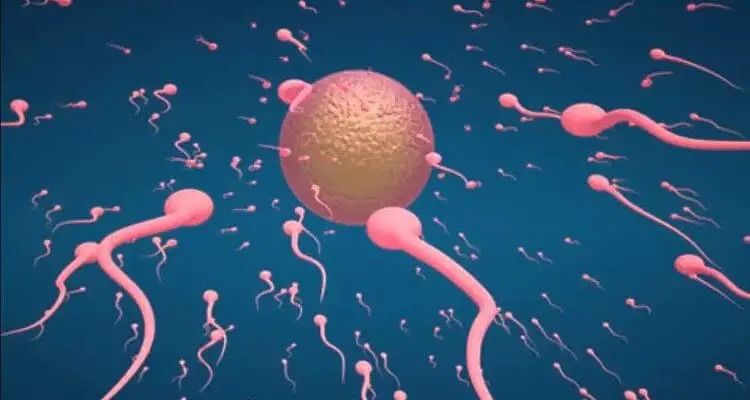
You cannot reliably know that your egg was fertilized at the moment fertilization happens. Fertilization occurs when a sperm penetrates and combines with an egg, creating a fertilized egg that begins developing. This process takes place at a microscopic level, so there is no specific feeling, visible change, or at-home symptom that proves sperm successfully fertilized the egg.
Symptoms are especially unreliable because fertilization and detectable pregnancy do not happen at the same time. After fertilization, the developing egg still has to travel toward the uterus and implant in the uterine lining. Pregnancy-related hormonal changes occur later in this process. For this reason, symptoms such as mild cramping, spotting, fatigue, breast tenderness, or nausea should not be treated as confirmation that an egg was fertilized.
A pregnancy test also cannot detect fertilization itself. Home pregnancy tests look for human chorionic gonadotropin (hCG), a hormone associated with pregnancy that becomes relevant after implantation rather than immediately after sperm meets the egg. Testing too early can therefore produce a negative result even when conception may have occurred.
The most practical way to know whether fertilization led to pregnancy is to wait until pregnancy can be detected with an appropriately timed pregnancy test. Tracking ovulation can help identify when fertilization was possible, while a later pregnancy test provides much stronger evidence that conception progressed beyond fertilization and implantation.
When Does Fertilization Happen After Ovulation?
Fertilization can happen after ovulation while the released egg remains available to be fertilized. Ovulation releases a mature egg from an ovary, after which the egg enters the fallopian tube. Fertilization can occur there when viable sperm are already present or reach the egg during its limited fertilizable window.
The egg and sperm have different survival times, which explains why intercourse and fertilization do not necessarily happen on the same day. An egg generally remains available for fertilization for a relatively short period after ovulation, while sperm can remain viable in the female reproductive tract for longer. As a result, sperm from intercourse before ovulation may still be present when the egg is released.
For example, having sex before your estimated ovulation day does not mean conception was impossible simply because no egg had been released at the time of intercourse. Viable sperm may remain in the reproductive tract until ovulation occurs and then encounter the released egg. Conversely, intercourse that happens too long after the egg is no longer viable is less likely to result in fertilization.
This distinction is important when trying to determine whether an egg may have been fertilized. Ovulation predictor kits, cervical mucus changes, basal body temperature, and menstrual-cycle tracking can help estimate your fertile window, but they cannot show that sperm actually fertilized an egg. They identify when fertilization could have happened rather than confirming that it did happen.
Can You Feel When an Egg Is Fertilized?
You cannot reliably feel the moment when an egg is fertilized. Fertilization occurs when a sperm penetrates the egg and their genetic material combines. Because this process happens at the cellular level inside the fallopian tube, it does not produce a specific sensation that can tell you conception has occurred.
Cramping, pelvic twinges, or mild abdominal discomfort around your fertile window do not prove that an egg was fertilized. These sensations can occur around ovulation, when an ovary releases an egg, and similar discomfort can also occur at other points in the menstrual cycle. The timing may make the sensation seem connected to fertilization, but the sensation itself cannot show whether sperm successfully reached and fertilized the egg.
Spotting is also not confirmation of fertilization. Fertilization and implantation are separate events, and bleeding is not a reliable sign that sperm has joined an egg. Spotting can have several explanations depending on where you are in your menstrual cycle. Even when spotting occurs around the time someone expects implantation, it cannot independently confirm that implantation or pregnancy has occurred.
The same limitation applies to symptoms such as breast tenderness, fatigue, bloating, or nausea. These symptoms are not specific enough to identify fertilization because they can overlap with normal hormonal changes and premenstrual symptoms. More importantly, fertilization occurs before the hormonal changes associated with a detectable pregnancy.
For someone trying to conceive, the timing of intercourse and ovulation can therefore tell you whether fertilization was possible, but physical sensations cannot tell you whether fertilization was successful. Confirmation becomes more practical later in the conception timeline, after implantation has occurred and pregnancy-related hormonal changes can be detected.
What Happens After an Egg Is Fertilized?
After an egg is fertilized, it begins developing and moving toward the uterus, where implantation may later occur. Fertilization is therefore the beginning of a sequence rather than the point at which pregnancy can immediately be detected at home.
The process starts when a sperm successfully enters the egg. The genetic material from the sperm and egg combines to form a single cell called a zygote. This newly fertilized egg then begins dividing into additional cells. Cell division continues as the developing structure travels through the fallopian tube toward the uterus.
This journey explains why there is a delay between fertilization and implantation. The fertilized egg does not normally attach to the uterine lining at the same moment sperm meets the egg. It first undergoes several stages of cell division while moving toward the uterine cavity. Once it reaches an appropriate developmental stage and enters the uterus, implantation can become possible.
Implantation occurs when the developing embryo attaches to the lining of the uterus. This step is especially important when interpreting early pregnancy signs because pregnancy tests do not detect the fertilized egg traveling through the fallopian tube. They detect hCG, a pregnancy-related hormone that becomes relevant after implantation begins.
The sequence can be summarized as ovulation → possible fertilization → cell division → movement toward the uterus → implantation → rising hCG → detectable pregnancy. Each step occurs at a different point, which is why having intercourse during your fertile window, feeling a cramp, or suspecting that fertilization occurred cannot immediately tell you whether you are pregnant.
This timeline also explains why taking a pregnancy test immediately after suspected fertilization is unlikely to provide a useful answer. Even if an egg was successfully fertilized, additional biological steps must occur before a home pregnancy test has something to detect.
What Is the Difference Between Fertilization and Implantation?
Fertilization happens when a sperm joins an egg, while implantation happens later when the developing embryo attaches to the lining of the uterus. These are separate stages of conception, and understanding the difference helps explain why you cannot confirm pregnancy immediately after an egg is fertilized.
Fertilization typically occurs in the fallopian tube after ovulation. If viable sperm reaches the released egg, one sperm can penetrate it and combine its genetic material with the egg. The resulting fertilized egg, initially called a zygote, begins dividing into more cells as it moves through the fallopian tube toward the uterus.
Implantation occurs later in the process. After reaching the uterus and continuing to develop, the embryo can attach to the uterine lining. This means an egg being fertilized does not mean implantation has already happened. There is a biological interval between these two events during which the developing embryo is dividing and traveling toward the uterus.
The distinction also matters for pregnancy testing. A home pregnancy test does not detect the sperm, egg, fertilization event, or developing embryo directly. It detects human chorionic gonadotropin (hCG), a hormone associated with pregnancy that becomes detectable after implantation begins. This is why a test taken immediately after suspected fertilization can be negative even if sperm successfully fertilized the egg.
| Fertilization | Implantation |
|---|---|
| Sperm joins the egg | Developing embryo attaches to the uterine lining |
| Happens first | Happens after fertilization |
| Typically occurs in the fallopian tube | Occurs in the uterus |
| Cannot be detected with a home pregnancy test | Leads to hormonal changes that make pregnancy testing possible |
In practical terms, fertilization tells you that sperm and egg have successfully joined, while implantation is a later step needed before pregnancy can become detectable through hCG testing. Neither event can be confirmed based on a single physical sensation alone.
What Signs Can Happen After Implantation?
Some people notice spotting or mild cramping around the time implantation could occur, while others notice no symptoms at all. These signs cannot confirm implantation because they overlap with normal menstrual-cycle changes and other causes. A pregnancy test taken at an appropriate time provides more useful evidence than symptoms alone.
Can Implantation Cause Spotting?
Light spotting can occur around the time of implantation, but spotting does not prove that implantation has happened. When reported, the bleeding is generally lighter than a typical menstrual period. However, bleeding or spotting can occur for reasons unrelated to pregnancy, so its presence should not be treated as a positive pregnancy test.
Timing also matters when interpreting spotting. Bleeding immediately after intercourse or around ovulation should not automatically be labeled implantation bleeding simply because pregnancy is possible. Fertilization must occur first, followed by embryo development and movement toward the uterus before implantation can take place.
The absence of spotting is equally important to understand. You do not need to experience spotting for conception to result in pregnancy. Looking for bleeding as a required milestone can therefore create unnecessary confusion when you are waiting to test.
Can Implantation Cause Cramping?
Mild cramping may be noticed around the time implantation could occur, but cramping cannot confirm implantation. Pelvic or abdominal discomfort has several possible explanations, including normal menstrual-cycle changes and an approaching period.
The location or sensation of a cramp also cannot tell you whether a particular egg was fertilized. Fertilization occurs earlier in the reproductive timeline, so interpreting a twinge as the exact moment of conception is unreliable.
Instead of using cramping as proof, consider it only within the broader timeline of ovulation, a possible fertile-window exposure, an expected period, and pregnancy testing. Severe, persistent, or otherwise concerning pain should not be assumed to be a normal implantation symptom and warrants medical advice.
Can You Have No Symptoms After Implantation?
Yes, it is possible to have no noticeable symptoms around the time implantation occurs. The absence of spotting, cramping, nausea, breast tenderness, or fatigue does not by itself show that fertilization or implantation failed.
Symptoms also vary in when they become noticeable. Many changes commonly associated with early pregnancy relate to hormonal changes occurring after implantation rather than to fertilization itself. Expecting symptoms immediately after ovulation can therefore lead you to interpret ordinary menstrual-cycle sensations as signs of pregnancy.
The key distinction is that symptoms are observations, not confirmation. Having symptoms does not prove an egg was fertilized, and having no symptoms does not prove that it was not. Pregnancy testing at an appropriate point in the cycle is a more reliable next step for determining whether conception progressed to a detectable pregnancy.
How Soon After Fertilization Can Pregnancy Symptoms Start?
Pregnancy symptoms generally do not start immediately after fertilization because the fertilized egg must develop, reach the uterus, and implant before pregnancy-related hormonal changes progress. This creates a delay between the moment an egg is fertilized and the point when you might notice changes associated with pregnancy.
Immediately after fertilization, the developing egg is still moving through the fallopian tube while its cells divide. At this stage, symptoms such as nausea, breast tenderness, fatigue, or a missed period cannot reliably tell you that fertilization occurred. The body has not reached the same hormonal stage associated with a detectable pregnancy, so a symptom experienced shortly after intercourse should not automatically be interpreted as a sign of conception.
Symptoms become more relevant after implantation and subsequent hormonal changes. Human chorionic gonadotropin (hCG) begins to play an important role after implantation, while other pregnancy-related hormonal changes can contribute to symptoms as pregnancy progresses. This is why the sequence matters: fertilization happens first, implantation follows, and recognizable pregnancy symptoms may develop later.
Early pregnancy symptoms can include breast tenderness, fatigue, nausea, mild cramping, bloating, and a missed period. However, these symptoms are not specific to pregnancy. For example, breast tenderness, bloating, fatigue, and cramping can also occur before a menstrual period because hormonal changes happen during a normal menstrual cycle.
A missed period can provide a more useful reason to take a pregnancy test, but it still does not independently prove that fertilization occurred. Menstrual periods can be delayed for reasons unrelated to pregnancy. Instead of relying on a particular symptom, consider the timing of ovulation, intercourse during the fertile window, your expected period, and an appropriately timed pregnancy test together.
When Can I Take a Pregnancy Test After Fertilization?
You should not take a pregnancy test immediately after suspected fertilization because home pregnancy tests detect hCG rather than the fertilization event itself. Enough time must pass for fertilization, embryo development, implantation, and subsequent hCG production before a urine pregnancy test has a reasonable chance of detecting pregnancy.
Testing too early is one of the main reasons a person can receive a negative result despite potentially being pregnant. A fertilized egg may still be developing or traveling toward the uterus, or implantation may have occurred too recently for hCG to reach the detection threshold of the test. In these situations, the test does not necessarily show that fertilization failed; it may simply have been taken before pregnancy was detectable.
For home testing, the expected date of your period is generally a more practical reference point than trying to calculate the exact moment of fertilization. Ovulation and fertilization cannot always be dated precisely without clinical monitoring, whereas the expected period gives you a recognizable point in your menstrual cycle. Some pregnancy tests are marketed for use before a missed period, but testing earlier increases the possibility of a false-negative result.
Following the instructions for the specific pregnancy test is also important. Urine concentration, test sensitivity, timing, and how the result is read can affect the outcome. If you receive a negative result but your period still does not arrive, repeating the test later according to the manufacturer’s directions or discussing the situation with a healthcare professional can provide more useful information.
Can a Pregnancy Test Detect Fertilization Before Implantation?
No, a home pregnancy test cannot detect that an egg has been fertilized before implantation. Pregnancy tests are designed to detect hCG in urine rather than to identify a fertilized egg.
This distinction explains why there is no home test that you can take immediately after intercourse to determine whether sperm successfully reached an egg. Even when fertilization occurs, the developing embryo must continue through several biological stages before implantation and the subsequent hormonal changes make pregnancy detectable.
A negative pregnancy test before implantation therefore cannot answer the question, “Was my egg fertilized?” At that point, there may simply be no detectable hCG for the test to measure. The result becomes more informative later in the conception timeline.
For someone trying to conceive, this creates an important distinction between possibility and confirmation. Intercourse during the fertile window establishes the possibility of fertilization. Ovulation tracking can improve your estimate of when that possibility existed. An appropriately timed pregnancy test provides evidence that the process progressed far enough to produce detectable pregnancy-related hormonal changes.
Are Early Pregnancy Symptoms a Reliable Way to Confirm Fertilization?
No single early pregnancy symptom can reliably confirm that an egg was fertilized. Symptoms such as breast tenderness, fatigue, nausea, bloating, cramping, spotting, and a missed period can occur during early pregnancy, but several of them can also occur during a normal menstrual cycle or for reasons unrelated to pregnancy.
The main limitation is timing. Fertilization occurs before implantation and before the hormonal changes associated with a detectable pregnancy develop. This means a symptom that appears shortly after intercourse cannot be used to identify the moment when sperm fertilized the egg. Even when intercourse occurred during the fertile window, symptoms alone cannot show whether sperm reached the egg, whether fertilization occurred, or whether the developing embryo later implanted.
Breast tenderness, bloating, fatigue, and cramping are particularly easy to misinterpret because similar changes can occur before a menstrual period. Nausea may be associated with pregnancy, but it is also not specific enough to confirm conception on its own. Spotting has the same limitation because bleeding can have several causes and does not prove that implantation occurred.
A missed period provides a stronger reason to consider pregnancy testing, especially when intercourse occurred during the fertile window. However, a late period is still not confirmation by itself because menstrual-cycle timing can vary. The practical next step is an appropriately timed pregnancy test rather than attempting to diagnose pregnancy from a collection of symptoms.
The distinction is therefore straightforward: early symptoms can make you suspect pregnancy, but they cannot confirm fertilization. Pregnancy testing provides more useful evidence because it detects a biological marker associated with pregnancy rather than relying on symptoms that overlap with other conditions and normal cycle changes.
How Can I Tell If I Ovulated During My Fertile Window?
You can estimate whether ovulation occurred by tracking ovulation predictor kits, cervical mucus, basal body temperature, and menstrual-cycle patterns. These methods can help identify when an egg was likely released and therefore when fertilization was possible, but none can confirm that the released egg was actually fertilized.
Ovulation predictor kits help identify the hormonal changes associated with approaching ovulation. A positive result can indicate that ovulation is likely to occur soon, which can help someone trying to conceive identify a more relevant time for intercourse. However, the test predicts an event related to ovulation rather than detecting sperm meeting an egg.
Cervical mucus provides another fertility signal. Around the fertile window, cervical mucus can change in consistency in ways that support sperm movement through the reproductive tract. Tracking these changes can help identify fertile days, but cervical mucus does not reveal whether fertilization subsequently occurred.
Basal body temperature tracking provides information from a different point in the cycle. A sustained temperature shift can help indicate that ovulation has already occurred. Because the change is generally useful for identifying ovulation retrospectively rather than directly observing egg release, it is more helpful for understanding cycle patterns than for proving conception in a particular cycle.
Menstrual-cycle tracking can bring these signals together. Recording period dates, estimated ovulation, cervical mucus, ovulation test results, and basal body temperature over multiple cycles may help you recognize your own cycle pattern. However, calendar estimates alone are less precise when cycle length or ovulation timing varies.
The key limitation applies to every tracking method: evidence of ovulation is not evidence of fertilization. Ovulation confirms or estimates that an egg was released, while fertilization requires viable sperm to reach and penetrate that egg. A later pregnancy test is therefore more useful for determining whether conception progressed to a detectable pregnancy.
When Should I Contact a Healthcare Professional About Possible Pregnancy?
Contact a healthcare professional when you need help confirming a possible pregnancy, have persistent uncertainty about test results, or develop concerning symptoms. Home pregnancy tests are useful for many people, but they cannot explain every late period, unexpected symptom, or unclear result.
Professional guidance can be useful when your period remains absent despite repeated negative pregnancy tests. A healthcare professional can consider pregnancy alongside other factors that may affect menstrual timing and determine whether additional evaluation or testing is appropriate. This is more reliable than repeatedly interpreting cramping, spotting, nausea, or breast tenderness as evidence that an egg was fertilized.
Medical attention is particularly important when possible pregnancy is accompanied by severe or worsening pain, heavy bleeding, fainting, marked dizziness, or other symptoms that feel significant or unusual. These symptoms should not be assumed to represent normal fertilization or implantation based only on their timing within your cycle.
You can also discuss conception with a healthcare professional when you have been trying to become pregnant and have concerns about ovulation, menstrual-cycle patterns, fertility, or how long conception is taking. The appropriate evaluation depends on factors such as age, reproductive history, cycle characteristics, and individual circumstances.
Ultimately, there is no sensation that allows you to identify the exact moment your egg was fertilized. Tracking ovulation can tell you when fertilization was possible, and symptoms may give you reasons to consider pregnancy, but an appropriately timed pregnancy test is a more useful way to determine whether conception progressed to a detectable pregnancy.