
Babies kick their legs frequently for 8 main reasons: motor development, excitement, play and exploration, hunger, tiredness, gas or digestive discomfort, overstimulation, and physical discomfort. In most cases, frequent kicking is a normal part of infancy. Babies move their legs as they develop muscle strength and motor control, explore how their bodies work, and react to people and activities around them.
The meaning of leg kicking depends more on when it happens and what your baby does at the same time than on how often your baby kicks. A baby who kicks while smiling and looking at a parent is showing a different pattern from a baby who repeatedly pulls the legs toward the stomach while crying. Hunger, tiredness, a wet diaper, digestive discomfort, and overstimulation can also change how a baby moves.
Parents should therefore look at the complete pattern rather than treating leg kicking as an isolated sign. This guide explains why babies kick their legs so much, what different kicking patterns can mean, how kicking changes with age and situation, and which accompanying signs warrant a discussion with your pediatrician.
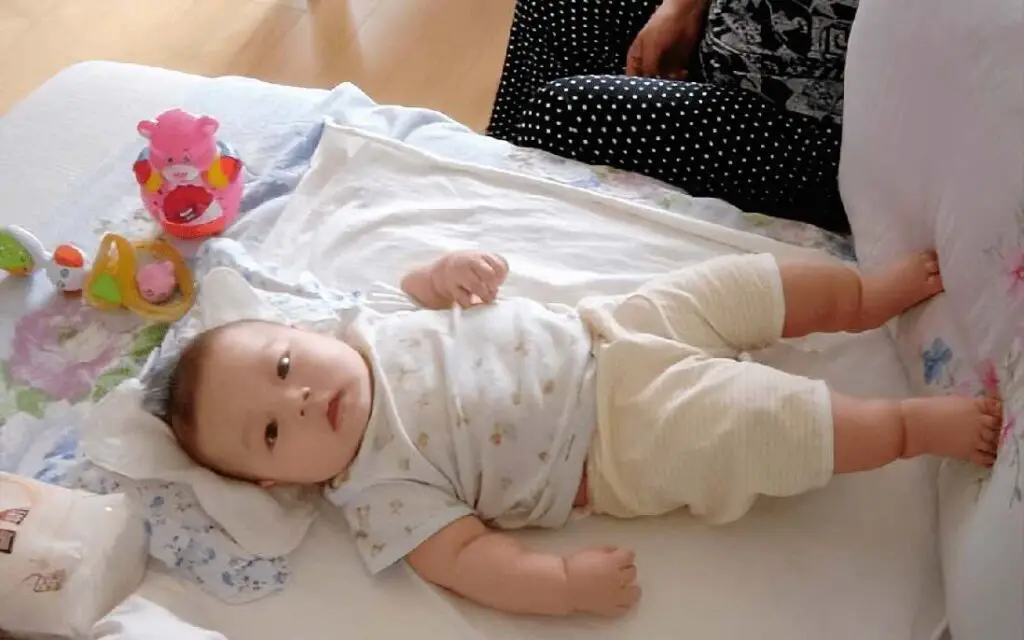
Why Does My Baby Kick His Legs So Much?
Your baby kicks his legs so much because kicking is part of normal infant movement and gives him a way to practice motor skills, explore his body, and respond to what he feels or sees. Babies cannot explain excitement, hunger, tiredness, or discomfort with words, so changes in body movement often accompany these different states. Frequent kicking by itself does not necessarily indicate that something is wrong.
Leg kicking also contributes to early motor development. Each kick activates muscles around the hips, thighs, knees, and lower legs while giving the developing nervous system repeated information about how those body parts move. As babies gain better control over their movements, kicking can become stronger, more coordinated, and more responsive to things happening around them. For example, a baby may begin kicking vigorously when a parent approaches, when a favorite toy appears, or during play on an activity mat.
The context surrounding the movement is therefore more useful than simply counting how many times your baby kicks. Kicking while smiling, cooing, and making eye contact is more consistent with excitement or active play, while kicking accompanied by persistent crying, squirming, or repeatedly drawing the knees toward the abdomen can indicate discomfort. The same physical movement can have different meanings because babies use their whole bodies to respond to both positive stimulation and unpleasant sensations.
Frequent kicking should also be interpreted alongside your baby’s overall behavior and development. Look at whether your baby moves both legs, feeds normally, interacts as expected, and settles after basic needs such as feeding, sleep, or a diaper change are addressed. A single behavior such as frequent leg kicking provides less information than the complete pattern of movement and accompanying signs.
What Are the 8 Most Common Reasons Babies Kick Their Legs?
There are 8 common reasons babies kick their legs: motor development, excitement, play and exploration, hunger, tiredness, gas or digestive discomfort, overstimulation, and physical discomfort. More than one reason can apply during the same period because kicking is a general movement that babies use in several different contexts.
1. Motor development. Babies kick as they learn to use their legs and gain greater control over their bodies. Early infant movements are not as controlled as the movements of an older child, but repeated movement gives babies opportunities to use their muscles and develop coordination. As motor control progresses, parents may notice that kicks become stronger or appear more purposeful. Kicking during awake, content periods is therefore commonly associated with normal physical activity rather than a specific unmet need.
2. Excitement. Babies frequently express excitement through their entire bodies because their ability to communicate intentionally is still developing. A baby may kick rapidly when seeing a parent, hearing a familiar voice, anticipating interaction, or noticing an interesting toy. In this context, the leg movement is usually accompanied by positive signals such as smiling, cooing, eye contact, or energetic arm movements. These accompanying behaviors help distinguish excited kicking from kicking associated with distress.
3. Play and exploration. Kicking allows babies to discover that their movements can produce effects. A kick may move a hanging toy, make an activity mat respond, splash bathwater, or simply create a new physical sensation. Repeating the movement gives the baby another opportunity to experience the same result. Providing safe opportunities for unrestricted movement while your baby is awake can support this natural exploration without requiring parents to stop frequent kicking.
4. Hunger. Some babies become increasingly active or restless as hunger develops, and leg kicking can occur as part of that behavior. Kicking alone is not a reliable hunger cue, so it should be considered alongside other signs. For example, a hungry baby may bring the hands toward the mouth, turn toward feeding cues, become increasingly restless, or begin fussing. If kicking regularly occurs near feeding time and decreases after your baby is fed, hunger provides useful context for interpreting the movement.
5. Tiredness. A tired baby does not always become still. Some babies become physically restless when they need sleep, which can include kicking, squirming, or moving their arms. The surrounding behavior again provides the stronger clue. Kicking that occurs alongside fussiness and difficulty settling has a different context from energetic kicking during alert, happy play. Watching your baby’s usual sleep cues can help determine whether the increased movement is connected with tiredness.
6. Gas or digestive discomfort. Digestive discomfort can accompany kicking, particularly when a baby also squirms, cries, or repeatedly draws the knees toward the abdomen. Parents sometimes describe this pattern as bicycling the legs because the legs alternately bend and extend. The important distinction is that ordinary kicking alone does not establish that a baby has gas. Digestive discomfort becomes a more relevant explanation when the leg movement appears together with abdominal tension, fussiness, feeding-related discomfort, or a recognizable pattern around bowel movements.
7. Overstimulation. Babies can become restless when they have had more sensory input or interaction than they are ready to handle. Bright surroundings, noise, prolonged play, or repeated interaction can coincide with increased body movement, including leg kicking. A baby who was previously engaged may begin turning away, fussing, moving more erratically, or having difficulty settling. In this situation, reducing stimulation and observing whether the baby becomes calmer provides more useful information than interpreting the kicking by itself.
8. Physical discomfort. A wet or dirty diaper, uncomfortable clothing, an awkward position, or being too warm or cold can make a baby restless. Kicking may be one part of that response because the baby cannot directly identify the source of discomfort. Checking these basic physical needs is particularly useful when kicking appears suddenly alongside fussiness. If changing the diaper, adjusting clothing, repositioning the baby, or addressing another obvious source of discomfort results in calmer behavior, the surrounding context helps explain the increased movement.
The 8 causes overlap because leg kicking is a movement pattern rather than a message with one fixed meaning. A smiling baby kicking on an activity mat is likely communicating something very different through overall behavior from a crying baby who repeatedly pulls the legs toward the stomach. Identifying what happens immediately before, during, and after the kicking provides parents with a clearer explanation than the frequency of the kicks alone.
Why Does My Baby Kick His Legs and Flail His Arms?
A baby may kick his legs and flail his arms because excitement, active play, overstimulation, and distress can involve movement of the whole body rather than the legs alone. Babies have limited ways to communicate and are still developing control over their limbs, so an emotional or physical response can appear as simultaneous arm and leg movements.
Excitement is one common context for this behavior. A baby may wave his arms, kick rapidly, smile, coo, or widen his eyes when a parent approaches or an interesting toy appears. These positive accompanying signals help explain the movement. If your baby is alert, engaged, and comfortable while moving both arms and legs, the pattern is different from movements that occur alongside persistent crying or other signs of distress.
Active play can produce a similar pattern. Babies discover their bodies partly by repeating movements and observing what happens. Kicking an activity mat, reaching toward a toy, or moving several limbs at once provides sensory and movement experiences. Because motor control is still developing, these movements may look vigorous or poorly coordinated even when the baby is content.
Overstimulation or discomfort can also increase whole-body movement. In this context, look for additional changes such as turning away, fussing, crying, difficulty settling, or becoming increasingly restless. The key is to interpret arm flailing and leg kicking as part of the baby’s complete behavior rather than assigning one meaning to the movements themselves.
Why Does My Baby Kick His Legs and Cry?
A baby who kicks his legs and cries may be hungry, tired, experiencing digestive discomfort, or reacting to another source of physical discomfort. Crying changes the context because it indicates that the baby needs attention, but the combination of crying and kicking does not identify one specific cause on its own.
Start with basic needs. Hunger can cause increasing restlessness before or alongside crying, while tiredness can make some babies kick, squirm, and struggle to settle. A wet or dirty diaper, uncomfortable clothing, temperature, or body position can produce a similar response. Looking at what happened before the crying started can narrow the possibilities. For example, kicking and crying near a usual feeding time has a different context from the same behavior immediately after a feed.
Digestive discomfort becomes more relevant when crying and kicking occur with additional abdominal behaviors. A baby may squirm, repeatedly bend the legs, draw the knees toward the abdomen, or alternate between bending and extending the legs. These movements can occur around gas or bowel activity, but kicking and crying alone are not enough to determine that gas is the cause.
Pay attention to how long the distress lasts and whether addressing an obvious need changes the behavior. A baby who settles after feeding, sleeping, repositioning, or a diaper change provides a clearer contextual clue. Persistent or severe crying, particularly when accompanied by other concerning symptoms, deserves a different response and should not be explained solely as normal kicking.
Why Does My Baby Pull His Legs Up and Kick?
A baby may pull his legs toward his abdomen and kick because of normal active movement, gas, bowel activity, or digestive discomfort. Pulling the legs up provides more context than kicking alone, but it still needs to be interpreted alongside crying, feeding, abdominal behavior, and the baby’s overall condition.
Normal active movement can include repeated bending and straightening of the legs. Babies experiment with different ranges of motion as their motor control develops, and this can resemble a bicycling pattern. If your baby is otherwise calm, alert, feeding normally, and showing no signs of distress, pulling the legs up can simply occur as part of active movement and exploration.
Gas or digestive discomfort is a more plausible explanation when the movement occurs with fussiness, crying, squirming, or apparent abdominal discomfort. A baby may repeatedly bring the knees closer to the abdomen and then extend the legs again. Parents should consider the complete pattern because the same leg movements can occur in a comfortable baby and a distressed baby for different reasons.
Bowel activity can also coincide with increased movement. Babies may grunt, become red in the face, bend their legs, or move their bodies while passing stool because coordinating the muscles involved is still developing. The movement itself therefore does not establish a digestive problem.
The most useful distinction is between leg movement with and without distress. Frequent kicking or bending in a comfortable baby is different from a pattern accompanied by persistent crying, feeding problems, repeated vomiting, fever, or other signs of illness. When concerning symptoms accompany the movement, parents should discuss the complete pattern with their pediatrician rather than trying to diagnose the cause from the leg position alone.
Why Does My Baby Kick His Legs While Lying Down?
Your baby may kick his legs while lying down because this position gives him freedom to move, practice motor skills, play, and respond to people or objects around him. When a baby lies on his back with the legs unrestricted, he can repeatedly bend, straighten, lift, and kick them without needing to support his body weight.
Lying down also creates opportunities for babies to discover the relationship between movement and their surroundings. A baby may kick an activity mat, move a nearby toy, or simply experience the sensation created by repeatedly moving the legs. These actions help explain why kicking can become particularly noticeable during awake periods on the floor or another safe, flat surface.
Excitement can increase the frequency and intensity of these movements. For example, your baby may begin kicking faster when you approach, talk, smile, or hold up an interesting toy. Smiling, cooing, eye contact, and relaxed body movements provide additional context that the kicking is occurring during positive interaction rather than distress.
The baby’s overall behavior remains more informative than the lying position itself. Kicking while lying down is different when it occurs with persistent crying, unusual stiffness, obvious discomfort, or noticeably different movement between the two legs. Observe what accompanies the kicking and whether your baby appears comfortable instead of using kicking frequency alone to interpret the behavior.
Why Does My Baby Kick His Legs During or After Feeding?
A baby may kick his legs during or after feeding because of normal activity, distraction, feeding position, or digestive discomfort. The timing of the movement provides useful context, but kicking during a feed and kicking after a feed do not necessarily have the same explanation.
During feeding, some babies become physically active when distracted by their surroundings. Increasing alertness can make a baby pause, turn, kick, or move the arms in response to sounds, people, or objects nearby. Position can also influence behavior. If a baby appears uncomfortable while feeding, parents can check whether the baby’s body and legs are supported comfortably rather than assuming that kicking has a digestive cause.
Kicking after feeding can also occur without discomfort. A content baby may simply return to active movement after finishing a feed, particularly during an alert period. In this situation, relaxed facial expressions, normal interaction, and an absence of crying provide useful context for interpreting the movement as ordinary activity.
Digestive discomfort becomes more relevant when kicking after feeding occurs together with crying, squirming, repeated pulling of the legs toward the abdomen, or other signs of discomfort. Instead of using leg kicking alone to distinguish gas, reflux, or another feeding-related issue, parents should consider the complete pattern and discuss persistent feeding concerns with their pediatrician.
Why Does My Baby Kick His Legs at Night?
Your baby may kick his legs at night because he is still awake and active, becoming tired, settling for sleep, or moving while asleep. Nighttime kicking therefore does not automatically mean that a baby has a sleep problem. The first step is determining whether the baby is awake, falling asleep, or already sleeping when the movement occurs.
Before sleep, tired babies can become more restless rather than immediately becoming still. A baby may kick, squirm, move the arms, fuss, or have difficulty settling as tiredness increases. If this pattern regularly occurs near the baby’s usual sleep period and decreases once the baby settles, the timing provides useful information about the movement.
Parents may also notice leg movements after a baby has fallen asleep. Babies do not remain completely motionless throughout sleep, so observing movement at night is not by itself evidence that something is wrong. The surrounding pattern matters more than the fact that the kicking happens after bedtime.
Nighttime kicking deserves more attention when it repeatedly disrupts the baby’s ability to feed or sleep or occurs with persistent distress or other concerning symptoms. Instead of trying to identify a medical cause from leg movement alone, note when the episodes occur, how long they last, whether the baby is awake, and what other behaviors occur at the same time. This information can also help a pediatrician evaluate the pattern if professional advice becomes necessary.
Does Baby Leg Kicking Change With Age?
Baby leg kicking changes as motor control, muscle strength, alertness, and interaction develop during the first months of life. A newborn’s leg movements can look spontaneous and less controlled, while an older baby may kick more strongly or in clearer response to toys, caregivers, and play. Age provides useful context for interpreting kicking, but babies do not develop movement skills on an identical schedule.
The pattern can also change because babies become increasingly interested in their surroundings. Early movements occur while the nervous system and motor control are developing. As babies become more alert, they have more opportunities to repeat movements, react to stimulation, and discover what their legs can do. This means parents may notice more vigorous kicking without the increase necessarily indicating discomfort.
Age should not be used as the only measure of whether leg movement is normal. How your baby moves both sides of the body, interacts, feeds, and progresses in overall development provides more information than the number of kicks at a specific age. Developmental milestones are useful reference points, not a requirement that every baby display the same movement pattern at exactly the same time.
Why Does My Newborn Kick His Legs So Much?
A newborn kicks his legs frequently because spontaneous body movements are a normal part of early infancy. Newborns have not developed the motor control required to make every leg movement deliberate, so their kicks may appear sudden, irregular, or uncoordinated.
Newborn leg movements can occur while the baby is awake, becoming hungry, fussing, or responding to physical sensations. For example, a newborn may bend and extend the legs during a diaper change or move the entire body when becoming unsettled before a feed. The accompanying behavior provides more context than the kicking itself.
Why Does My 2-Month-Old Baby Kick His Legs So Much?
A 2-month-old baby may kick frequently as periods of alertness and interaction increase alongside developing motor control. Parents may begin noticing stronger responses to faces, voices, and objects because the baby has more opportunities to engage with the surrounding environment.
For example, a 2-month-old may become physically active when a caregiver talks or moves into view. Kicking can occur alongside arm movements and other signs of engagement. The important distinction remains whether the baby appears comfortable and responsive or whether the kicking consistently occurs with distress.
Why Does My 3-Month-Old Baby Kick His Legs So Much?
A 3-month-old baby may kick his legs frequently as active movement, interaction, and early motor abilities continue to develop. Repeating leg movements gives the baby opportunities to use growing muscles and experience how different movements feel.
Play can make this behavior particularly noticeable. For example, a baby lying on a safe play surface may repeatedly kick while looking at a caregiver or interacting with nearby toys. When kicking occurs with smiling, vocalizing, and relaxed behavior, the complete pattern provides a different context from kicking accompanied by persistent crying.
Why Does My 4-Month-Old Baby Kick His Legs So Much?
A 4-month-old baby may kick frequently because stronger motor abilities and greater interest in the environment create more opportunities for active movement. Kicking can become more vigorous or appear increasingly connected with play and interaction as the baby gains experience controlling the body.
A baby at this age may repeatedly move the legs while playing on the floor, responding to a toy, or interacting with a caregiver. These movements can be part of a broader pattern of physical exploration rather than a signal that the baby needs something.
Developmental differences between babies remain important at 4 months. One baby may kick constantly during play, while another may express excitement through different combinations of body movement and vocalization. The developmental pattern over time is more informative than comparing how often your baby kicks with how often another baby kicks.
When Should I Worry About My Baby Kicking His Legs?
You should pay closer attention to baby leg kicking when it occurs with persistent or severe distress, feeding difficulties, repeated vomiting, fever or signs of illness, unusual repetitive movements, noticeable movement asymmetry, or loss of previously observed abilities. Kicking alone provides limited information. The accompanying symptoms and changes from your baby’s usual movement pattern are more important.
Persistent distress is one reason to look beyond normal active movement. Kicking during play while your baby smiles, vocalizes, and interacts has a different context from repeated movements accompanied by intense or prolonged crying. Check basic needs first, including hunger, tiredness, diaper comfort, clothing, temperature, and position. Persistent distress after these needs have been addressed warrants more attention.
Changes in feeding or digestive behavior also provide important context. Contact your pediatrician if unusual kicking occurs alongside persistent feeding difficulty, repeated vomiting, or other signs that your baby is unwell. Pulling the knees toward the abdomen or bicycling the legs can occur with digestive activity, but the movement alone cannot identify the underlying cause.
Pay attention to how your baby uses both sides of the body. A noticeable and persistent difference between the movements of the two legs deserves professional evaluation, particularly when it represents a change from your baby’s usual behavior. Parents should also seek medical advice about movements that appear unusual, repeatedly occur in the same pattern, or are difficult to interrupt and cause concern.
Changes in your baby’s broader development matter as well. If your baby stops demonstrating abilities that were previously present or shows a significant change in movement, responsiveness, feeding, or general behavior, discuss the change with a pediatrician. A description or record of when the movement occurs, what it looks like, how long it lasts, and what happens immediately before and afterward can provide useful context for that conversation.
What Should I Do If My Baby Keeps Kicking His Legs?
If your baby keeps kicking his legs, use 5 steps: observe the context, check basic needs, identify accompanying behaviors, monitor unusual patterns, and contact your pediatrician when concerning signs are present. This approach helps distinguish ordinary active movement from kicking associated with a specific need or discomfort.
1. Observe the context. Note what your baby is doing when the kicking begins. Kicking during play, interaction, a diaper change, feeding, or bedtime can have different explanations. Also notice whether your baby appears happy, alert, tired, frustrated, or distressed. Context is the first clue because leg kicking does not have one fixed meaning.
2. Check basic needs. Consider hunger, sleep, diaper comfort, clothing, temperature, and body position. For example, a baby who becomes restless and kicks near a regular feeding time may also show hunger cues, while a tired baby may kick and squirm while struggling to settle. Addressing an obvious need and observing the response can provide more information about what triggered the behavior.
3. Identify accompanying behaviors. Look for smiling, cooing, arm movements, crying, squirming, pulling the knees toward the abdomen, feeding changes, or other behaviors occurring with the kicks. A baby who kicks and smiles during play presents a different overall pattern from a baby who kicks while crying persistently and refusing to feed.
4. Monitor unusual patterns. Pay attention to a sudden change from your baby’s normal behavior, persistent asymmetry between the legs, repeated unusual movements, or episodes that consistently occur with distress. Rather than relying on memory alone, note the timing, duration, circumstances, and accompanying behaviors if a pattern repeatedly concerns you.
5. Contact your pediatrician when concerning signs are present. Professional advice is appropriate when frequent kicking occurs with persistent distress, feeding difficulties, repeated vomiting, fever or other signs of illness, unusual repetitive movements, noticeable movement asymmetry, loss of previously observed abilities, or another significant change in your baby’s usual behavior.
For most comfortable and otherwise well babies, frequent leg kicking can be understood in the context of normal movement, developing motor control, excitement, and everyday needs. The most useful question is therefore not simply how often your baby kicks, but what your baby is doing and experiencing when the kicking occurs. Observing that complete pattern helps you respond to everyday needs while recognizing changes that deserve professional attention.