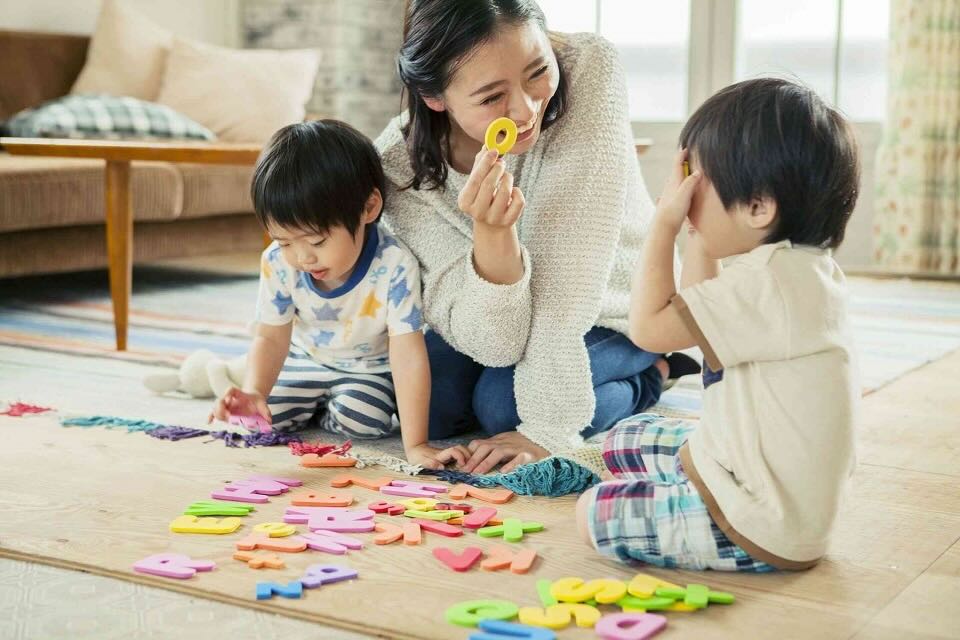
Parents can improve a toddler’s vocabulary at home by talking throughout daily routines, naming objects and actions, expanding the words their child already uses, reading aloud, singing songs, and playing together. Vocabulary grows through frequent, meaningful interactions rather than formal lessons or memorizing lists of words. Everyday moments such as getting dressed, eating breakfast, taking a bath, or playing with toys give toddlers repeated opportunities to connect words with objects, actions, and experiences.
The most effective approach is to make language part of what your toddler is already doing. For example, when your toddler points to a dog and says “dog,” you can respond, “Yes, a big brown dog is running.” This expansion confirms what the child said while providing new words such as “big,” “brown,” and “running” in a context they can understand. Repeating those words during later conversations helps strengthen the connection between the words and their meanings.
There are 12 simple ways to build your toddler’s vocabulary at home, including talking during routines, labeling objects and actions, expanding short phrases, reading picture books, singing nursery rhymes, using gestures, and creating opportunities for your child to communicate. These strategies can be incorporated naturally into activities you already do together each day.
How can you improve your toddler’s vocabulary at home?
You can improve your toddler’s vocabulary at home by creating frequent opportunities to hear, understand, and use words during everyday interactions. The 12 main strategies are talking during daily routines, naming objects and actions, expanding your toddler’s words, reading aloud, singing songs and nursery rhymes, using playtime for language learning, offering choices, pairing words with gestures, repeating words in meaningful contexts, asking conversational questions, creating reasons to communicate, and modeling words correctly instead of repeatedly correcting mistakes.
These strategies work best when words are connected to something your toddler can see, touch, hear, or experience. A toddler who hears the word “apple” while holding an apple has more contextual information than a toddler who hears the same word without a clear reference. The object, the spoken word, your gesture, and the situation work together to clarify what “apple” means.
Vocabulary development also depends on repeated exposure. Hearing a new word once does not guarantee that a toddler will understand or use it. Parents can reinforce the same word naturally across different situations. For example, you might say “open the door” in the morning, “open the box” during playtime, and “open your book” before bed. The repeated use of “open” helps your toddler recognize that the word describes the same action even when the object changes.
The goal is not to make your toddler repeat every new word immediately. Vocabulary building follows a process of exposure, understanding, repetition, interaction, and eventually independent use. Your toddler may understand a word before saying it, use gestures before verbalizing it, or need repeated encounters with the word before using it spontaneously.
How can talking during daily routines build your toddler’s vocabulary?
Talking during daily routines builds your toddler’s vocabulary because repeated activities provide predictable contexts for learning the same groups of words. Meals, dressing, bath time, playtime, and bedtime happen regularly, so parents can expose toddlers to useful vocabulary without creating separate language lessons.
During breakfast, for example, you can describe what is happening using words such as “cup,” “spoon,” “banana,” “pour,” “cut,” “eat,” “hungry,” and “more.” Instead of saying only “Here’s your breakfast,” you might say, “I’m cutting the banana. Here is your spoon. Let’s pour the milk into your cup.” Your toddler can simultaneously see the objects and actions being described, which provides context for each word.
Getting dressed creates a different vocabulary set. Words such as “shirt,” “pants,” “socks,” “shoes,” “arm,” “foot,” “on,” “off,” “pull,” and “zip” can appear naturally while you help your toddler get ready. You might say, “Your socks go on your feet” or “Let’s zip your jacket.” Because the same routine happens repeatedly, many of these words return day after day.
Bath time offers another predictable language environment. Parents can introduce nouns such as “water,” “bubbles,” and “towel,” verbs such as “wash,” “pour,” and “splash,” and descriptive words such as “wet,” “dry,” “warm,” and “clean.” Using different types of words matters because a useful vocabulary consists of more than names for objects.
Talking throughout the day does not mean narrating every second of your toddler’s life. Focus on short, relevant language connected to whatever has your toddler’s attention. If your toddler is watching a truck outside, talking about the truck is more meaningful than redirecting the conversation to unrelated vocabulary you want to teach. You might say, “That is a big truck. The truck is moving. Now it stopped.” The interaction introduces “big,” “moving,” and “stopped” around an object your toddler is already interested in.
How should you name objects and actions for your toddler?
Name objects and actions for your toddler by using clear words at the moment your child sees or experiences their meaning. This technique, often called labeling, helps toddlers connect spoken language with people, objects, actions, qualities, and experiences in their environment.
Start with objects your toddler encounters frequently. At home, these may include “cup,” “chair,” “door,” “shoe,” “book,” “ball,” and “spoon.” Outside, you can label things such as “tree,” “bird,” “car,” “flower,” and “dog.” Pointing to or holding the object while saying its name gives the word a clear reference. For example, when your toddler notices a bird, you can point and say, “Bird. That bird is flying.”
Do not limit labeling to nouns. Toddlers also need verbs and descriptive words to build a functional vocabulary. During play, use action words such as “push,” “pull,” “roll,” “jump,” “throw,” “open,” and “close.” Add descriptive words such as “big,” “small,” “soft,” “cold,” “wet,” “fast,” and “slow.” A ball, for example, creates opportunities to say, “ball,” “round,” “red,” “roll,” “bounce,” and “throw” instead of practicing only the object name.
Connect new words with words your toddler already understands. If your child knows “dog,” you can gradually add information by saying, “brown dog,” “big dog,” “dog running,” or “the dog is sleeping.” This creates semantic connections around a familiar concept and exposes your toddler to words that describe the object’s color, size, action, and state.
Keep the language natural rather than turning labeling into constant testing. Instead of repeatedly asking, “What is this?” and waiting for your toddler to identify an object, provide the word within a meaningful interaction: “You found your yellow ball. Let’s roll the ball.” Your toddler receives a clear language model while remaining engaged in the activity.
How can you expand the words your toddler already says?
Expand your toddler’s vocabulary by taking a word or short phrase they already use and responding with a slightly richer version. This strategy gives your child a correct language model while keeping the conversation focused on what they are already trying to communicate.
For example, when your toddler says “car,” you can respond, “Yes, a red car.” If they say “dog run,” you can say, “The dog is running fast.” When they point to their cup and say “water,” you might respond, “You want more water.” Each response preserves the meaning of your toddler’s message while adding useful words and sentence structure.
Expansion works because new vocabulary is attached to language your toddler already understands. A child who knows the word “ball,” for example, can hear that familiar word combined with “blue ball,” “big ball,” “bounce the ball,” and “the ball is rolling.” These combinations introduce colors, sizes, actions, and simple phrases around an established concept instead of presenting each new word without context.
Keep expansions short enough for your toddler to process. You do not need to turn “truck” into a long explanation about how trucks work. A response such as “big truck,” “blue truck,” or “the truck is moving” provides one or two useful pieces of additional information. As your toddler begins combining more words independently, your responses can become slightly longer and more detailed.
You also do not need to ask your toddler to repeat the expanded phrase every time. Model the richer language, give your child time to hear it, and continue the interaction naturally. For example, if your toddler says “baby sleep,” you can answer, “Yes, the baby is sleeping,” and continue playing. Repeated exposure to these slightly expanded models gives your toddler opportunities to hear how familiar words connect with new vocabulary.
How does reading aloud help toddlers learn new words?
Reading aloud helps toddlers learn new words by connecting spoken language with pictures, actions, characters, and familiar experiences. Picture books can introduce vocabulary that may not appear frequently in ordinary household conversations, while repeated reading gives toddlers additional opportunities to hear those words in the same meaningful context.
You do not need to read every sentence exactly as written to make a book useful for vocabulary development. Follow your toddler’s attention and talk about what they notice on the page. If your toddler points to a duck, for example, you can say, “That’s a yellow duck. The duck is swimming.” You have now connected the familiar noun “duck” with the descriptive word “yellow” and the action word “swimming.”
Pointing and labeling make the connection between a picture and its spoken name more explicit. When a page shows a farm, you might point to individual pictures and say, “cow,” “tractor,” “barn,” and “farmer.” You can then add actions and descriptions: “The cow is eating,” “The tractor is big,” or “The farmer is walking.” This turns one picture into multiple opportunities for vocabulary exposure without requiring your toddler to memorize a list of words.
Ask occasional questions that encourage interaction, but avoid turning every page into a test. Questions such as “Where is the dog?” can invite your toddler to point even when they are not ready to say the word. You can also use comments and pauses: “The dog is hiding behind the…” and give your toddler an opportunity to respond if the word is familiar. If they do not answer, simply provide the word and continue reading.
Reading the same books repeatedly is useful because repetition gives toddlers multiple encounters with the same words, pictures, and meanings. The first few readings may primarily involve listening and observing. Later, your toddler may point to a familiar picture before you name it, finish a repeated phrase, imitate a word, or begin using that word outside the book.
Connect book vocabulary with real experiences whenever possible. If a book introduces the word “puddle,” use the same word when you see a puddle outside. If your toddler learns “stir” from a picture of someone cooking, repeat “stir” the next time you mix food together. Using the same word across books, play, and daily routines helps your toddler understand that the word represents a concept beyond a single picture.
Choose books that make interaction easy. Picture books with clear images, familiar objects, simple actions, repetition, and topics your toddler enjoys provide natural opportunities for vocabulary building. A toddler interested in animals, for example, may stay engaged longer with a book containing dogs, birds, farm animals, or zoo animals, giving you more opportunities to introduce nouns, verbs, sounds, and descriptive words through a shared activity.
How can songs and nursery rhymes build toddler vocabulary?
Songs and nursery rhymes build toddler vocabulary by combining repeated words with rhythm, predictable patterns, actions, and shared attention. Because the same words and phrases appear repeatedly, toddlers get multiple opportunities to hear vocabulary in a familiar context without being asked to memorize individual words.
Repetition is especially useful when the words describe actions your toddler can perform. Songs that include words such as “clap,” “jump,” “turn,” “stop,” “up,” and “down” allow your toddler to hear a word while seeing or performing its meaning. For example, when you sing a line containing “clap” and clap your hands at the same time, the spoken word, movement, and visual cue reinforce one another.
Use gestures to make unfamiliar words easier to understand. You can point upward when singing “up,” move your hands downward for “down,” or imitate sleeping when a song uses the word “sleep.” These actions give toddlers additional contextual information before they can explain or independently use the word.
You can also pause before a familiar word to create an opportunity for your toddler to participate. If a rhyme contains a phrase your child has heard repeatedly, stop briefly before the final word and wait. Your toddler may say the word, make the corresponding sound, use a gesture, or look toward you in anticipation. All of these responses show participation in the language exchange, even when your toddler does not yet produce the complete word.
Keep songs interactive instead of using them only as background sound. Vocabulary learning becomes more meaningful when a parent sings with the toddler, responds to their actions, repeats important words, and connects those words with visible movements or objects. A song about body parts, for example, becomes an opportunity to hear a word such as “nose” while touching the nose and seeing a parent perform the same action.
Repeat favorite songs rather than constantly introducing new ones. Familiarity allows your toddler to anticipate words and actions, while small variations can gradually expand vocabulary. Once your child understands “jump,” for example, you can introduce related words such as “high,” “little,” “fast,” or “again” during the same playful activity.
How can playtime help your toddler learn new words?
Playtime helps toddlers learn new words because toys, movements, and pretend situations give vocabulary an immediate and visible meaning. Instead of presenting words as isolated information, parents can describe what their toddler is already touching, building, moving, or pretending to do.
Follow your toddler’s interests during play and add language to the activity. If your child is building with blocks, use words such as “block,” “build,” “tower,” “tall,” “up,” “fall,” and “again.” You might say, “You’re building a tall tower. One more block. Oh, it fell down!” The words correspond directly to actions your toddler can see, making their meanings easier to connect with the experience.
Toy cars provide a different vocabulary set. Parents can introduce nouns such as “car,” “truck,” and “wheel,” action words such as “drive,” “push,” “stop,” and “turn,” and descriptive words such as “fast,” “slow,” “big,” and “small.” Instead of repeatedly asking your toddler to name the car, describe the play: “The blue car is going fast. Stop! Now the car is turning.”
Pretend play expands vocabulary beyond the names of toys. When your toddler pretends to feed a doll, for example, you can use words such as “hungry,” “spoon,” “eat,” “drink,” “more,” and “finished.” A pretend kitchen can introduce “cook,” “stir,” “pour,” “hot,” and “plate.” Playing with toy animals can introduce actions such as “run,” “sleep,” “eat,” “jump,” and “hide.”
Use your toddler’s actions as the starting point instead of controlling every part of the game. Child-led play gives parents a clear clue about which words are meaningful at that moment. If your toddler repeatedly rolls a ball, saying “roll the ball” is more relevant than trying to teach an unrelated word simply because you planned to practice it.
Expansion also works naturally during play. If your toddler says “train,” respond with “long train,” “train goes fast,” or “the train is stopping.” If they say “baby eat,” you can model “The baby is eating.” These short additions introduce new vocabulary while preserving the interaction your toddler initiated.
The same toy can support different groups of words over time. A toy dog, for example, can introduce the noun “dog,” body-part words such as “tail” and “ears,” action words such as “run” and “sleep,” descriptive words such as “soft” and “brown,” and location words such as “in,” “under,” and “behind.” This approach creates connections between related words instead of teaching vocabulary as disconnected labels.
Keep the focus on communication rather than performance. Your toddler does not need to repeat every word you introduce or correctly name every toy. Talk about the play, model useful language, respond to your toddler’s attempts to communicate, and reuse important words as the activity develops. This turns ordinary playtime into repeated, meaningful vocabulary exposure without making it feel like a lesson.
How can offering choices encourage your toddler to use words?
Offering choices encourages your toddler to use words by giving them a clear reason to communicate between two specific options. Instead of asking broad questions or anticipating what your child wants, present two choices and give your toddler time to respond with a word, sound, gesture, or point.
Use choices during routines that already happen throughout the day. At snack time, instead of asking, “Do you want a snack?” you can ask, “Do you want banana or yogurt?” while showing both options. When getting dressed, ask, “Red shirt or blue shirt?” During playtime, try, “Ball or blocks?” These questions connect each spoken word with an object your toddler can see.
Choices reduce the language demands of a conversation because your toddler does not need to generate an answer without support. The possible words are already included in your question. A toddler who hears “banana or yogurt?” can point to the banana before being able to say “banana,” attempt part of the word, or eventually use the complete word independently.
Model the word after your toddler makes a choice. If your child points to the banana, you can say, “Banana. You want the banana.” If they say “ba,” respond naturally with, “Banana. Here’s your banana.” This confirms their communication while giving them another opportunity to hear the complete word in the correct context.
Avoid withholding necessary items until your toddler says a word perfectly. The purpose of offering choices is to create communication opportunities, not to require speech before meeting your child’s needs. A point, gesture, sound, or word attempt can become the beginning of an interaction that you expand with clear language.
Choices can become more complex as your toddler’s vocabulary grows. A child who initially points to “milk” may later say “milk,” then “more milk,” and eventually “I want more milk.” Your role is to provide a language model that is slightly richer than what your toddler currently communicates while keeping the exchange natural.
How can gestures and pointing help toddlers learn words?
Gestures and pointing help toddlers learn words by connecting spoken language with a visible action, object, person, or location. When your toddler hears a word while simultaneously seeing what it refers to, they receive more information about the word’s meaning.
Point to objects as you name them. If you see a bird outside, point toward it and say, “Bird. The bird is flying.” When reading a picture book, point to the pictured apple while saying “apple.” During dressing, hold up a shoe and say, “Here’s your shoe.” These combinations make the relationship between a word and its referent clearer.
Gestures are particularly useful for action and location words. You can raise your arms while saying “up,” point downward for “down,” wave while saying “bye,” or make an opening motion while saying “open.” Your toddler can begin associating the gesture with the spoken word before independently producing that word.
Respond to your toddler’s gestures as communication rather than ignoring them until they speak. If your toddler points toward a cup, for example, you can say, “You want your cup. Here’s your cup.” The gesture has now created an opportunity for your child to hear the relevant vocabulary within a meaningful exchange.
You can also combine gestures with expansion. If your toddler points at a dog and says “dog,” point with them and respond, “Yes, the dog is running.” If they point toward the door, you might say, “You want to go outside.” In each case, your toddler’s existing communication becomes the foundation for a richer language model.
Gestures do not need to replace spoken words; they can support the connection between words and meanings. Continue saying the relevant word while pointing, demonstrating an action, or responding to your toddler’s gesture. This gives your child both visual and verbal information during the same interaction.
How much repetition does a toddler need to learn new words?
Toddlers need repeated exposure to new words in meaningful situations, but there is no single repetition count that guarantees a child will learn a particular word. Word learning differs according to the word, the context, how familiar the concept is, and the individual child. For that reason, focus on repeating useful words naturally across the day rather than trying to reach a fixed number of repetitions.
Meaningful repetition involves using the same word when it accurately describes different experiences. Consider the action word “pour.” You might say, “Pour the milk” at breakfast, “Pour the water” during bath time, “Let’s pour the tea” during pretend play, and “You’re pouring sand” outside. Your toddler repeatedly hears “pour” while observing the same type of action in several contexts.
Using a word across different situations also helps clarify what the word represents. If your toddler hears “open” only when you open one particular box, they initially encounter the word in a narrow context. Hearing “open the door,” “open the book,” “open the bag,” and “open your mouth” provides additional examples of how the word is used.
Books and songs create another source of repetition. A word your toddler hears in a favorite picture book can reappear during play or a household routine. If a book contains a sleeping bear, for example, you can use “sleep” again when putting a doll to bed and later say, “The dog is sleeping” when you see a sleeping dog.
Repetition should remain responsive rather than mechanical. Repeating “ball, ball, ball, ball” without additional context provides less meaningful information than saying, “Red ball,” “Roll the ball,” “The ball bounced,” and “Your ball is under the chair.” The second approach repeats the central word while also connecting it with colors, actions, locations, and sentence patterns.
Give your toddler opportunities to hear a word without demanding that they repeat it each time. Understanding often develops before independent spoken use, so a child may demonstrate knowledge by looking at, pointing toward, or retrieving an object when they hear its name. Spoken use can emerge later as the word becomes more familiar.
The goal is consistent exposure rather than drilling. Reuse important vocabulary during conversations, books, songs, play, and daily routines, especially when the word matches what your toddler is currently seeing or doing. This repeated connection between word, meaning, context, and interaction creates stronger opportunities for vocabulary growth.
Should you ask your toddler questions to build vocabulary?
Yes, you should ask your toddler questions to build vocabulary, but questions work best when they create a conversation rather than repeatedly test what your child knows. A useful question gives your toddler an opportunity to understand language, make a choice, point, gesture, use a word, or contribute an idea.
Use questions that connect directly to what your toddler is seeing or doing. While playing with toy animals, you might ask, “Where is the cow?” During a meal, you can ask, “Do you want apple or banana?” While reading, try, “Where is the little dog?” These questions give your toddler contextual clues that make the language easier to understand.
Balance questions with comments. Asking “What’s this?” every time your toddler touches an object can turn an interaction into a vocabulary test. Instead, combine occasional questions with descriptive language. If your toddler picks up a toy truck, you might say, “That’s a big truck. The truck has four wheels. Where is the truck going?” Your child hears several useful words before being invited to respond.
Give your toddler time to respond after asking a question. Avoid immediately answering the question yourself or repeating it several times. A short pause allows your child to process what they heard and decide how to respond. The response may be a word, a partial word, a gesture, a point, or an action.
Provide the answer naturally when your toddler does not respond. If you ask, “What is the cat doing?” and your toddler stays silent, you can say, “The cat is sleeping.” This keeps the interaction moving while giving your child a clear language model. You can reuse “sleeping” later when a toy, pet, or family member is asleep.
Questions can also encourage toddlers to use vocabulary they already understand. A child who recognizes “shoes” but rarely says the word may respond when you ask, “Where are your shoes?” Even if your toddler only points, you can expand the response by saying, “There are your shoes. Let’s put your shoes on.”
The goal is not to measure how many words your toddler can produce on command. Use questions as one part of a two-way conversation alongside comments, descriptions, gestures, expansions, and pauses. This approach gives your toddler both language input and opportunities to participate without making every interaction depend on a correct verbal answer.
How can you create more opportunities for your toddler to communicate?
Create more opportunities for your toddler to communicate by leaving small, natural pauses in familiar routines instead of anticipating every response immediately. These pauses give your child a reason to point, gesture, make a sound, attempt a word, or use a phrase to continue an interaction.
Start with routines your toddler already knows. If your child usually receives milk with breakfast, show the milk and pause before pouring it. Your toddler may point, reach, make a sound, or say “milk.” Respond to the attempt by modeling the relevant language: “Milk. You want milk. I’ll pour the milk.”
Playtime provides similar opportunities. Put a favorite toy in sight and wait briefly to see how your toddler communicates interest. During a familiar game, pause before an expected action. If your toddler enjoys rolling a ball back and forth, hold the ball for a moment before the next turn. Your child may say “ball,” “go,” “more,” or use a gesture. You can respond with a slightly expanded model such as, “More ball? Let’s roll it again.”
Books and songs also contain predictable moments where communication can occur. Pause before a familiar word in a repeated line or wait before turning a page your toddler enjoys. The purpose of the pause is to invite participation, not to withhold the activity until your child produces a specific word.
Respond to all intentional communication. A toddler who points to the refrigerator, brings you an empty cup, or reaches toward a toy is already communicating. Put words around that message: “You want a drink,” “Your cup is empty,” or “You want the ball.” These responses connect your toddler’s intention with language that expresses the same meaning.
Avoid creating unnecessary frustration to force speech. Communication opportunities should be inviting rather than restrictive. Do not make your toddler say a word perfectly before giving them water, food, comfort, or another necessary item. Instead, recognize their attempt and provide a clear verbal model that can support future word use.
As your toddler begins communicating more verbally, expand the language you model. A point may be modeled as “ball.” Later, “ball” can become “more ball,” followed by “I want the ball.” This gradual expansion keeps the language connected to your toddler’s current communication while showing them increasingly detailed ways to express the same intention.
Should you correct your toddler when they say a word incorrectly?
You should usually model the correct word naturally instead of repeatedly asking your toddler to correct or repeat an imperfect pronunciation. Modeling lets your child hear the complete word while preserving the flow of the conversation.
For example, if your toddler points to a banana and says “nana,” you can respond, “Yes, banana. You want the banana.” If your toddler says “tar” for “car,” you might say, “Yes, that’s a car. The car is going fast.” Your response confirms the intended message while providing the correct form of the word.
This approach keeps the focus on communication. When a toddler makes an understandable attempt and receives a relevant response, they learn that words have a purpose: words help them share attention, request something, describe an experience, or interact with another person. Requiring immediate perfect pronunciation can shift the interaction away from that purpose.
You can also expand a toddler’s grammatical or vocabulary attempt without explicitly labeling it as wrong. If your toddler says, “Dog run,” respond, “Yes, the dog is running.” If they say, “Two car,” you can model, “Two cars.” The corrected form appears directly after your toddler’s attempt and remains connected to the same meaning.
Repeat the correct model when the word appears naturally again. If your toddler calls a rabbit “wabbit,” you do not need to interrupt the interaction for repeated pronunciation practice. Continue using “rabbit” clearly when talking about the animal: “The rabbit is eating. The rabbit has long ears.” Your toddler receives additional examples without being pressured to reproduce each one.
Distinguish occasional word approximations from broader concerns about communication development. Toddlers are still developing speech and language skills, so an imperfect word alone does not explain a child’s overall development. Parents who are concerned about their toddler’s ability to understand language, communicate, make progress, or maintain previously acquired skills should discuss those concerns with an appropriate pediatric or speech-language professional.
For everyday vocabulary building, prioritize responsive conversation. Listen to what your toddler is trying to communicate, acknowledge the message, model the word clearly, and add a small amount of useful language. This pattern supports vocabulary growth while keeping communication positive and meaningful.
How can you tell if your toddler’s vocabulary is improving?
You can tell your toddler’s vocabulary is improving by looking at how their understanding and use of language change over time, rather than focusing only on the total number of words they can say. Progress can appear through better comprehension, new words, new word combinations, more spontaneous communication, and the use of familiar words in different situations.
One sign of progress is understanding more of the language used during everyday routines. Your toddler may begin responding appropriately when you say, “Bring your shoes,” “Put the cup on the table,” or “Get your ball,” even when you do not point to the object. This shows that vocabulary development includes understanding words before necessarily using those words independently.
Another sign is the appearance of new words in spontaneous communication. A toddler who previously relied on pointing may begin saying “water,” “up,” or “more” to communicate the same needs. Later, individual words may develop into combinations such as “more water,” “mommy up,” or “big truck.” These changes show that your toddler is beginning to use vocabulary in increasingly detailed ways.
Watch for words being transferred to new contexts as well. If your toddler first learns “wet” during bath time and later says or recognizes “wet” after stepping in a puddle, the word is no longer tied to a single routine. Your child is applying the concept across different experiences. The same process can occur with action words such as “open,” “pour,” “jump,” and “sleep.”
Communication initiative is another useful observation. Your toddler may begin pointing out interesting objects, naming things without being asked, bringing you an item while saying its name, or using words to request help. For example, a toddler who previously waited for you to open a container may eventually bring it to you and say “open.” The vocabulary is now serving a practical communication purpose.
Track patterns over weeks and months rather than judging progress from a single day. Vocabulary growth is better viewed as an expanding ability to understand and communicate meaning than as a daily word-count test. Notice whether your toddler is understanding more language, attempting new words, combining familiar words, and using language in a wider range of situations.
What is the difference between receptive and expressive vocabulary in toddlers?
Receptive vocabulary consists of words a toddler understands, while expressive vocabulary consists of words a toddler can actively use to communicate. The distinction matters because a toddler may understand a word before being able or ready to say it.
For example, your toddler may understand “shoes” if they look toward their shoes or bring them to you when you say, “Get your shoes.” They do not need to say “shoes” for the word to be part of their receptive vocabulary. When they begin independently saying “shoes” to name, request, or talk about them, the word has become part of their expressive vocabulary as well.
Parents can observe receptive vocabulary during ordinary interactions. Ask your toddler to find a familiar object, point to a picture, or follow a simple direction within a routine. A child who responds appropriately to “Give me the spoon” demonstrates understanding even without a spoken response. Gestures and actions can therefore provide information about what your toddler understands.
Expressive vocabulary is easier to notice because it includes the words and word combinations your toddler actively produces. These might begin with labels such as “dog” or “cup,” then expand to action words such as “go” and “eat,” descriptive words such as “big” and “hot,” and combinations such as “dog sleeping” or “more banana.”
This distinction also explains why parents should not make spoken repetition the only goal of vocabulary activities. When you read a book and ask, “Where is the elephant?” your toddler may correctly point to the elephant without saying its name. That response demonstrates a meaningful word-to-concept connection, even though expressive use has not occurred yet.
Support both types of vocabulary through the same everyday interactions. Talk clearly, name what your toddler is attending to, pair words with actions and gestures, repeat useful vocabulary, and provide opportunities to respond. Your toddler can first build understanding through repeated exposure and then increasingly use those words to express wants, observations, actions, and ideas.
Can screen time help toddlers learn new words?
Screen time can expose toddlers to new words, but screen exposure should not replace the responsive, two-way interactions that happen when a toddler communicates with a parent or caregiver. Vocabulary learning at home is most useful when a child can connect words with objects, actions, people, and experiences in their immediate environment.
A video, song, or educational program may introduce words such as “train,” “yellow,” “jump,” or “elephant.” The vocabulary becomes more meaningful when a parent connects those words with the toddler’s real experiences. For example, after a program introduces “train,” you can point out a train in a book, play with a toy train, or say, “Look, a train!” when you see one outside. The same word is then reinforced across several contexts.
Parents can also make screen-based content more interactive by watching with their toddler and talking about what appears. If a character is jumping, you might say, “She is jumping. Can you jump?” If an animal appears, you can name it and connect it with something familiar: “That’s a dog. Grandma has a dog too.” These comments link screen vocabulary with actions, people, and objects the toddler already understands.
Passive exposure provides fewer opportunities for this type of back-and-forth communication. A screen cannot respond to your toddler’s point, interpret an unclear word attempt, expand “car” into “a big red car,” or notice that your child has suddenly become interested in something across the room. A caregiver can adjust language immediately according to the toddler’s attention and response.
For vocabulary development, treat screen content as a possible source of words rather than the primary language-learning environment. Everyday conversations, shared reading, songs, play, and household routines provide repeated opportunities for toddlers to hear language and actively participate in communication.
Can toddlers learn vocabulary in two languages at home?
Yes. Toddlers can learn vocabulary in two languages when they receive meaningful and consistent opportunities to hear and use both languages. In a bilingual or multilingual household, parents can support vocabulary through the same strategies used in a single-language environment: conversation, reading, songs, play, repetition, gestures, and daily routines.
Focus on meaningful interaction rather than trying to make vocabulary exposure identical in both languages at every moment. A toddler might hear one language more often with one parent and another language more often with grandparents or other caregivers. The words available to the child in each language can therefore reflect the situations in which that language is used.
Daily routines create predictable opportunities for vocabulary exposure in either language. During breakfast, parents can talk about food, utensils, actions, and preferences. During bath time, they can use words related to water, body parts, washing, and temperature. During play, they can introduce verbs, descriptions, locations, and names of toys. Repeating these interactions gives the toddler recurring connections between language and experience.
Books and songs can provide additional exposure to each language. If your toddler enjoys the same story repeatedly, reading or discussing familiar concepts in the languages used in your household can reinforce vocabulary through a predictable activity. Songs can similarly combine words with rhythm, repetition, gestures, and actions.
A bilingual toddler may also know different words in different languages. For example, a child might use the word for a particular food in one language because that language is used more often at mealtimes, while using words for certain toys in another language because that is the language used during play with a particular caregiver. Vocabulary should therefore be considered within the toddler’s broader language environment rather than assuming that every concept must appear equally in each language.
Parents do not need to turn bilingual vocabulary development into formal lessons. Use the languages that are meaningful in your family, provide frequent opportunities for interaction, and respond to your toddler’s attempts to communicate. When your child uses a word, gesture, or short phrase, you can acknowledge its meaning and provide a slightly richer language model just as you would during any other vocabulary-building interaction.
If you have concerns about your toddler’s overall ability to understand or communicate across the languages they use, those concerns should be considered in the context of the child’s complete language environment. The next section explains when vocabulary or communication concerns warrant discussion with an appropriate professional.
When should you seek help for your toddler’s vocabulary development?
You should seek professional guidance when you have ongoing concerns about your toddler’s ability to understand language, communicate, make developmental progress, or maintain communication skills they previously used. Vocabulary varies between children, so one isolated word, pronunciation mistake, or comparison with another toddler does not provide enough information to determine whether there is a language problem.
Pay attention to your toddler’s overall communication rather than counting spoken words alone. Communication includes receptive vocabulary, expressive vocabulary, gestures, pointing, attempts to get another person’s attention, responses to language, and the ability to participate in everyday interactions. For example, a toddler who uses relatively few spoken words but understands familiar directions and actively communicates through words and gestures presents a different communication picture from a toddler who also appears to have difficulty understanding familiar language.
Progress over time is another important factor. Look for changes in how your toddler understands and communicates during daily life. New words, broader understanding, more intentional gestures, new word combinations, and increasing attempts to communicate are examples of observable changes. If you consistently have concerns about limited progress, discussing what you have observed with your child’s pediatrician can help determine whether further assessment is appropriate.
A loss of previously acquired communication skills deserves particular attention. If your toddler stops using words or communication abilities they previously used consistently, report that change to an appropriate healthcare professional rather than relying only on additional vocabulary activities at home. Home strategies such as reading, talking, singing, and play are designed to support language-rich interaction; they are not tools for diagnosing the reason a child has lost a skill.
A pediatrician can consider vocabulary concerns within the context of your toddler’s broader development and determine whether additional evaluation is needed. A speech-language pathologist can assess areas of speech and language development in greater detail when appropriate. Parents can make these conversations more useful by describing specific observations, such as which words the toddler understands, how they request things, whether they follow familiar directions, what gestures they use, and how their communication has changed over time.
Continue providing responsive language opportunities while seeking guidance unless your child’s healthcare professional recommends otherwise. Talk during routines, read together, follow your toddler’s interests during play, respond to gestures, and model useful words without turning communication into repeated testing.
The purpose of improving toddler vocabulary at home is to create a rich environment for communication, not to diagnose or treat a developmental condition. Consistent conversations, books, songs, play, repetition, and responsive interactions give toddlers meaningful opportunities to connect words with their experiences. Professional guidance provides the appropriate next step when concerns extend beyond everyday vocabulary building.