
Creativity is a skill that develops through everyday experiences, not a talent that only a few children are born with. During the toddler years, children build creativity by exploring their surroundings, experimenting with new ideas, and finding different ways to use familiar objects. Simple moments like stacking blocks, pretending a cardboard box is a rocket, or mixing paint colors help strengthen imagination, problem-solving, and confidence while supporting overall development.
Many parents believe they need expensive toys, structured classes, or artistic skills to raise a creative child. In reality, toddlers benefit most from opportunities to make choices, ask questions, and play without worrying about the “right” answer. A home that encourages curiosity, allows safe exploration, and values the creative process over perfect results provides the foundation for lifelong creative thinking. Everyday routines such as reading together, cooking, gardening, singing songs, or taking nature walks can all become meaningful opportunities for creative learning.
This guide explains how to encourage creativity in toddlers using practical, research-informed strategies that fit naturally into family life. You’ll learn what helps creativity grow, which activities and toys inspire imaginative thinking, how much free play toddlers need, and the common parenting habits that may unintentionally limit creative development. By the end of this article, you’ll have simple ideas you can start using today to help your toddler become a more curious, confident, and creative learner.
What Helps Toddlers Develop Creativity?
Toddlers develop creativity by exploring, experimenting, and making their own choices during everyday play. Creativity is not limited to drawing or making crafts. It includes using imagination, solving simple problems, trying different approaches, and expressing ideas through movement, language, music, and pretend play. Between the ages of one and three, children’s brains rapidly form new neural connections, making this an important period for developing flexible thinking and curiosity.
Creative development grows through experiences rather than instruction. When a toddler stacks blocks in different ways, invents a story for a stuffed animal, or discovers that a wooden spoon can become a drumstick, they are learning to think beyond a single solution. These activities strengthen cognitive flexibility, which supports later skills such as problem-solving, decision-making, and independent learning. Instead of showing children exactly how something should be done, parents can encourage creativity by giving them opportunities to experiment, make mistakes, and discover their own ideas.
Everyday experiences have a greater influence on creativity than expensive toys or formal classes. Simple routines like baking together, watering plants, sorting laundry by color, or collecting leaves during a walk encourage children to observe, ask questions, and explore different possibilities. For example, a walk in the park can become a creative activity when a parent asks, “What else could this stick become?” or “Can you find three different shapes of leaves?” These open-ended conversations help toddlers practice imagination while expanding vocabulary and observation skills.
A supportive parent also plays a key role in nurturing creativity. Children become more willing to explore when they feel safe expressing unusual ideas without being judged or corrected immediately. Praising effort instead of results, showing interest in a child’s explanations, and asking open-ended questions such as “What do you think will happen next?” or “How did you build that?” encourage creative thinking more effectively than focusing on whether an activity was completed correctly. Over time, these daily interactions build confidence and teach toddlers that their ideas have value.
How Can Parents Encourage Creativity in Toddlers Every Day?
Parents can encourage creativity in toddlers by creating daily opportunities for open-ended exploration instead of focusing on perfect results. Young children learn best when they can experiment, make choices, and discover new possibilities on their own. Small changes to everyday routines often have a greater impact on creativity than buying more toys or planning elaborate activities.
Open-ended play is one of the most effective ways to nurture creativity because it allows children to decide how they want to play. Unlike toys with a single purpose, open-ended materials can be used in countless ways depending on a child’s imagination. Wooden blocks can become a castle, a bridge, or a zoo. A blanket can transform into a cave, a superhero cape, or a picnic mat. Since there is no correct outcome, toddlers learn to generate ideas, adapt their thinking, and solve problems independently.
Pretend play also strengthens creativity by encouraging children to invent stories and explore different roles. A toddler may pretend to cook dinner, care for a stuffed animal, or drive an imaginary bus using nothing more than a cardboard box and a spoon. These simple scenarios help children practice communication, emotional expression, and flexible thinking while making sense of the world around them. Parents can support pretend play by following the child’s ideas instead of directing the activity.
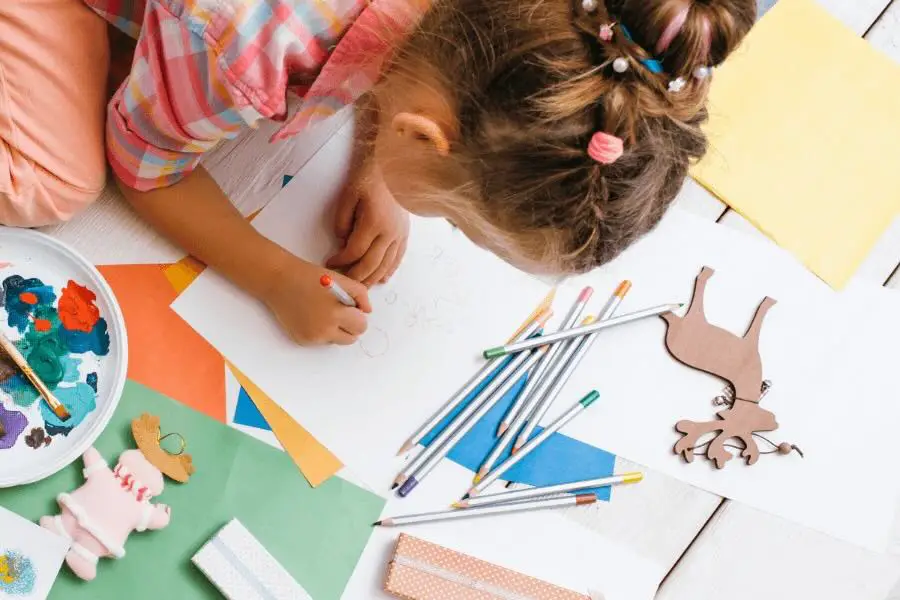
Creative art should focus on the process rather than the finished product. Giving toddlers crayons, washable paint, paper, clay, or recycled materials encourages experimentation with colors, textures, and shapes. Instead of telling a child exactly what to make, invite them to explore freely by asking questions like “What happens if you mix these colors?” or “Can you create something using only circles?” This approach builds curiosity and confidence because children learn that creativity is about exploration rather than producing something that looks perfect.
Reading stories together is another simple way to develop imagination. Rather than reading passively, parents can pause to ask open-ended questions that encourage creative thinking. Asking “What do you think happens next?”, “Why is the character feeling happy?”, or “Can you imagine a different ending?” helps toddlers create their own ideas while expanding language and storytelling skills. Even familiar books become new creative experiences when children are encouraged to contribute their own answers.
Music, movement, and outdoor exploration provide additional opportunities for creative learning. Dancing to different rhythms, making simple instruments from household objects, collecting leaves, building with sticks, or drawing patterns in the sand all encourage children to experiment with sounds, movements, and natural materials. Outdoor environments also introduce unpredictable experiences that inspire curiosity, observation, and imaginative play in ways that structured indoor activities often cannot.
Parents should also allow toddlers to solve age-appropriate problems without stepping in immediately. When a tower falls or a puzzle piece does not fit, giving children time to think encourages persistence and creative problem-solving. Offering gentle prompts instead of instant solutions helps toddlers test ideas, learn from mistakes, and discover that there are often multiple ways to reach the same goal. These everyday moments build creative confidence that extends far beyond playtime.
What Toys Encourage Creativity in Toddlers?
The best toys for encouraging creativity in toddlers are open-ended toys that can be used in multiple ways instead of following a single predetermined function. These toys invite children to imagine, experiment, and create their own ideas rather than simply pressing buttons or following instructions. Because there is no single correct way to play, toddlers naturally develop imagination, problem-solving skills, and independent thinking.
Building toys are among the most valuable options for creative development. Wooden blocks, magnetic tiles designed for young children, and large stacking bricks allow toddlers to build towers, bridges, houses, animals, or anything they imagine. A child may use the same set of blocks differently every day, creating new structures and solving new challenges with each play session. This flexibility encourages spatial awareness, planning, and creative experimentation while strengthening fine motor skills.
Simple art materials also provide endless creative opportunities. Washable crayons, finger paints, modeling clay, colored paper, child-safe scissors, and stickers allow toddlers to explore colors, shapes, and textures without worrying about making mistakes. Parents should encourage children to create freely instead of asking them to copy a specific example. For instance, giving a toddler several colors of paint and different tools such as sponges, cotton swabs, or leaves often produces far more imaginative results than asking them to color inside predefined lines.
Loose parts are another excellent resource for imaginative play because they can be combined in unlimited ways. Bottle caps, cardboard tubes, wooden rings, fabric scraps, pinecones, shells, large buttons, and smooth stones can become ingredients in a pretend kitchen, materials for building miniature worlds, or objects for sorting and pattern-making. Since these materials have no fixed purpose, children are encouraged to invent their own rules and stories while exploring different ways to use familiar objects.
Everyday household items can inspire just as much creativity as store-bought toys. Cardboard boxes, paper towel rolls, measuring cups, mixing bowls, plastic containers, blankets, and clothespins often become rockets, castles, tunnels, musical instruments, or pretend grocery stores during play. Rotating these items regularly keeps the play environment fresh without increasing costs, helping children continue finding new possibilities in ordinary objects.
When choosing toys, parents should prioritize quality over quantity. A smaller collection of versatile, open-ended materials encourages deeper, longer play than a room filled with electronic toys that entertain children passively. Toys that leave room for imagination support creativity because they encourage toddlers to make decisions, solve problems, and invent their own play experiences instead of relying on predetermined sounds, lights, or scripted interactions.
How Much Free Play Do Toddlers Need?
Toddlers need daily free play because unstructured play gives them the freedom to explore ideas, make decisions, and develop creativity at their own pace. Unlike adult-led activities, free play allows children to choose what they want to do, how they want to do it, and when they want to change direction. This flexibility encourages imagination while strengthening problem-solving, independence, and self-confidence.
There is no universal amount of free play that guarantees creative development because every toddler has different interests, energy levels, and daily routines. Instead of focusing on a specific number of minutes, parents should ensure that children have uninterrupted opportunities to play every day without constant instructions or predefined goals. Even short periods of uninterrupted play can become valuable creative experiences when toddlers are free to explore materials, invent stories, and experiment with different ideas.
Free play and guided activities serve different purposes, and children benefit from both. Guided activities introduce new skills, vocabulary, or techniques with support from an adult, while free play allows toddlers to apply what they have learned in their own way. For example, a parent may introduce finger painting by demonstrating how to use different colors, but the child should then have the freedom to mix colors, create shapes, or simply explore textures without being told exactly what to paint. This balance encourages learning while preserving creativity and curiosity.
Parents should also avoid overscheduling toddlers with back-to-back classes, structured lessons, or adult-directed entertainment. Children who constantly move from one planned activity to another have fewer opportunities to initiate their own ideas and practice independent thinking. Leaving time for boredom is not a disadvantage. Moments without planned entertainment often encourage toddlers to invent games, create imaginary worlds, or discover new ways to use familiar objects, all of which support creative development.
The quality of free play matters as much as the amount of time available. A calm environment with accessible toys, art materials, books, and everyday household objects encourages longer periods of focused exploration. Parents do not need to entertain children continuously. Simply observing, responding when invited, and allowing toddlers to lead their own play helps build confidence while reinforcing the idea that creativity grows through exploration rather than constant instruction.
What Habits Can Limit Creativity in Toddlers?
Several everyday parenting habits can unintentionally reduce creativity by limiting opportunities for exploration, independent thinking, and experimentation. Most parents want to help their children learn quickly, but constantly directing play or focusing on the correct answer can discourage toddlers from developing their own ideas. Recognizing these habits makes it easier to create an environment where creativity can flourish.
Excessive screen time is one of the most common barriers to creative development. Watching videos or using interactive apps provides entertainment, but it often requires children to follow pre-designed stories and responses instead of inventing their own. In contrast, activities such as building with blocks, pretending to run a grocery store, or creating artwork require toddlers to generate ideas, make decisions, and adapt when something does not work as expected. Replacing part of a child’s daily screen time with open-ended play creates more opportunities for imagination and active learning.
Correcting every mistake can also discourage creativity. When adults frequently tell children that they are using the wrong color, building something incorrectly, or pretending in unrealistic ways, toddlers may become more concerned about avoiding mistakes than exploring new ideas. Creativity grows when children feel safe experimenting without fear of criticism. Instead of correcting every detail, parents can acknowledge effort by saying, “Tell me about your picture,” or “How did you think of that idea?” These responses encourage children to explain their thinking while reinforcing confidence in their own imagination.
Focusing only on perfect results may reduce a child’s willingness to experiment. If praise is given only when a drawing looks realistic or a craft matches an example, toddlers may avoid trying unfamiliar ideas because they worry about failure. Celebrating curiosity, persistence, and creative effort teaches children that the learning process is more valuable than producing a perfect outcome. This mindset supports resilience and encourages children to continue exploring even when something does not work the first time.
An overscheduled routine can also leave little room for creativity. When every hour is filled with lessons, organized activities, or adult-planned entertainment, toddlers have fewer chances to initiate their own play. Independent play often begins with simple moments of boredom, giving children the opportunity to invent games, create stories, or discover new uses for everyday objects. Leaving unstructured time in a child’s daily routine supports imagination while helping develop self-direction and problem-solving skills.
Electronic toys that perform most of the play experience for the child can further reduce opportunities for creative thinking. Toys with automatic sounds, flashing lights, and predetermined actions often entertain children effectively, but they require less imagination than toys that can be used in many different ways. Balancing electronic toys with open-ended materials such as blocks, art supplies, dolls, cardboard boxes, and natural objects encourages toddlers to create their own stories instead of simply reacting to the toy’s programmed features.
How Can You Create a Home Environment That Encourages Creativity?
A home that encourages creativity gives toddlers easy access to materials, freedom to explore, and the confidence to express their own ideas. Children do not need a dedicated playroom or expensive equipment to become creative. A thoughtfully organized environment that invites curiosity and independent play has a much greater impact on creative development than the number of toys available.
Keeping toys and creative materials within a toddler’s reach encourages children to initiate play independently. Low shelves, labeled baskets, and child-sized storage make it easier for toddlers to choose activities without waiting for adult assistance. When children can decide whether to build with blocks, draw with crayons, or read a favorite book, they practice decision-making while learning to follow their own interests. This sense of independence supports both creativity and confidence.
Rotating toys regularly helps maintain curiosity without increasing clutter. Instead of displaying every toy at once, parents can store some items and replace them every one or two weeks. Familiar toys often become exciting again after a short break, encouraging children to invent new ways to play with them. A smaller selection of toys also reduces distractions, allowing toddlers to focus longer on imaginative play and creative problem-solving.
Displaying children’s artwork shows that their ideas are valued. Hanging paintings on a wall, placing crafts on a shelf, or creating a small family art gallery reinforces the message that creativity deserves attention regardless of artistic ability. Parents should celebrate effort, imagination, and experimentation rather than comparing one child’s work with another. This positive feedback encourages toddlers to continue expressing themselves freely.
Creating a home that welcomes curiosity also means encouraging questions instead of providing immediate answers. When toddlers ask why leaves change color or how birds can fly, parents can explore the answers together through books, observations, or simple experiments. Responding with questions such as “What do you think?” or “How could we find out?” teaches children that curiosity is an important part of learning and creative thinking.
Allowing safe messes is another essential part of a creative environment. Activities such as finger painting, sensory bins, water play, baking, or building with natural materials often create temporary clutter, but they also provide rich opportunities for exploration. Preparing washable surfaces, using protective mats, and setting clear boundaries helps parents feel more comfortable saying yes to these experiences. When children know they are allowed to experiment safely, they become more willing to test ideas, solve problems, and express their creativity without fear of making a mess.
A creative home also benefits from limiting unnecessary interruptions. Constant reminders to clean up immediately, switch activities, or follow strict instructions can interrupt a toddler’s concentration. Giving children enough uninterrupted time to finish a pretend game, complete a drawing, or rebuild a fallen tower helps develop sustained attention, persistence, and creative confidence that will continue supporting learning as they grow.
How Does Creativity Benefit Toddler Development?
Creativity supports every major area of toddler development, including cognitive growth, language acquisition, emotional regulation, physical coordination, and self-confidence. Although creative activities often appear to be simple play, they help children build essential skills that influence learning and development throughout childhood. Every opportunity to imagine, experiment, and solve problems strengthens abilities that extend well beyond arts and crafts.
Creative play improves cognitive development by encouraging toddlers to think flexibly and solve problems independently. When children build a tower that keeps falling, sort objects into different groups, or invent new ways to use everyday materials, they learn to test ideas and adjust their approach based on the results. This process strengthens critical thinking, memory, attention, and cognitive flexibility, making it easier for children to approach unfamiliar situations with confidence rather than frustration.
Language development also benefits from creative experiences because toddlers constantly communicate while playing. Pretend games encourage children to describe actions, ask questions, imitate conversations, and create simple stories. Reading books together, singing songs, and inventing imaginary characters further expand vocabulary while helping children understand sentence structure and expressive language. The more opportunities children have to communicate during creative play, the stronger their language skills become in everyday interactions.
Creative activities help children develop emotional regulation by giving them safe ways to express feelings that may be difficult to communicate directly. A toddler who draws pictures, pretends to care for a doll, or acts out stories with stuffed animals can explore emotions such as happiness, fear, excitement, or disappointment through play. These experiences help children recognize emotions, develop empathy, and practice coping with different situations in a supportive environment.
Fine motor skills improve naturally through many creative activities. Holding crayons, rolling modeling clay, threading large beads, tearing paper, stacking blocks, or using child-safe paintbrushes strengthens the small muscles in the hands and fingers. These movements also improve hand-eye coordination and finger control, which later support writing, dressing independently, and completing everyday tasks that require precision.
Creativity also builds confidence because it encourages children to trust their own ideas. When toddlers are free to make choices, experiment without fear of failure, and complete projects in their own way, they learn that their thoughts and efforts have value. Completing a self-designed block tower, inventing a pretend adventure, or creating an original painting gives children a sense of accomplishment that strengthens resilience and intrinsic motivation. Instead of relying on adult approval for every decision, they gradually become more willing to explore, take healthy risks, and solve problems independently.
How Can Parents Encourage Creativity Without Expensive Toys?
Parents do not need expensive toys to raise a creative toddler because everyday household materials often inspire more imaginative play than high-tech products. Children are naturally curious and can transform ordinary objects into almost anything when they have the freedom to experiment. The value of a play material depends on how many different ways it can be used, not how much it costs.
Cardboard boxes are one of the most versatile materials for creative play. A single box can become a house, a race car, a pirate ship, a puppet theater, or a pretend grocery store. Toddlers can decorate it with crayons, stickers, or washable paint, then change its purpose whenever they imagine a new story. Because there is no fixed function, cardboard boxes encourage children to invent ideas instead of following predetermined rules.
Recyclable materials provide endless opportunities for hands-on creativity. Paper towel rolls, egg cartons, plastic bottles, yogurt containers, bottle caps, and small cardboard tubes can be turned into musical instruments, animals, vehicles, or simple construction projects. Parents can collect these materials in a dedicated creativity basket so toddlers always have new objects to combine, stack, sort, and transform during play.
Kitchen items also become valuable creative tools when used safely under adult supervision. Measuring cups, wooden spoons, mixing bowls, muffin tins, silicone baking molds, and plastic containers encourage sensory exploration, pretend cooking, and early problem-solving. A toddler may use bowls as drums, cups for stacking challenges, or spoons as magic wands during imaginative play. These simple activities strengthen creativity while supporting fine motor development and coordination.
Natural materials introduce unique textures, colors, and shapes that manufactured toys cannot easily replicate. Leaves, pinecones, flowers, smooth stones, large shells, and small sticks can be collected during outdoor walks and used for sorting, counting, building, or creating nature-inspired artwork. Seasonal changes also provide new materials throughout the year, helping toddlers observe differences in the environment while encouraging curiosity and creative thinking.
Simple sensory activities can be created at home using inexpensive materials that most families already own. Dry rice, pasta, oats, water, ice cubes, shaving foam, homemade playdough, or kinetic sand alternatives provide opportunities for scooping, pouring, squeezing, and molding. Adding measuring cups, toy animals, or alphabet letters transforms these materials into open-ended learning experiences that combine creativity with language, math, and sensory exploration.
The most valuable resource for creative development is not a toy but a parent’s willingness to support exploration. Asking open-ended questions, allowing children to experiment, and joining pretend play when invited help toddlers develop imagination far more effectively than constantly introducing new products. A child who has time, encouragement, and freedom to explore often gains more creative confidence than one surrounded by expensive toys that leave little room for independent thinking.
Frequently Asked Questions About Toddler Creativity
At what age does creativity begin?
Creativity begins in infancy and becomes more noticeable during the toddler years. Between one and three years old, children start pretending, experimenting with different ways to use objects, and creating simple stories through play. These early behaviors show that creativity develops naturally as children explore their environment and gain new experiences. Parents do not need to wait until preschool to encourage creativity because everyday interactions, conversations, and play opportunities all contribute to its growth.
Can every toddler become creative?
Yes, every toddler has the ability to develop creativity. Creativity is a developmental skill rather than a fixed talent that only some children possess. While children express creativity in different ways, every toddler can strengthen imagination, curiosity, and problem-solving through open-ended play, exploration, storytelling, music, art, and everyday experiences. A supportive environment has a greater influence on creative development than natural artistic ability.
Does screen time affect creativity?
Too much screen time can reduce opportunities for creative play because it replaces active exploration with passive entertainment. Educational programs and interactive apps may introduce new concepts, but they cannot fully replace experiences that require children to invent stories, build structures, solve problems, or create artwork independently. Balancing limited screen time with daily opportunities for imaginative play helps toddlers develop stronger creative thinking skills.
How much creative play should toddlers have each day?
Toddlers benefit from daily opportunities for creative play throughout their normal routines. Rather than aiming for a specific number of minutes, parents should provide regular periods of uninterrupted play where children can explore materials, make choices, and follow their own ideas. Creative experiences can happen during indoor play, outdoor exploration, reading, music, cooking, or everyday household activities, making creativity a natural part of daily life instead of a separate lesson.
What should parents do if a toddler loses interest quickly?
A short attention span is a normal part of toddler development. Instead of encouraging children to finish every activity, parents should observe their interests and introduce a variety of simple, open-ended materials. Rotating toys, changing the play environment, following the child’s curiosity, and joining play only when invited often help maintain engagement. Keeping activities flexible allows toddlers to return to unfinished ideas later, which supports creativity without creating unnecessary pressure.
Final Thoughts
Encouraging creativity in toddlers does not require expensive toys, detailed lesson plans, or artistic expertise. Children develop creative thinking through everyday experiences that allow them to explore, imagine, experiment, and solve problems independently. Small changes such as providing open-ended materials, making time for free play, encouraging curiosity, and valuing effort over perfection can have a lasting impact on a child’s confidence and lifelong love of learning.
The most effective approach is to create a home where creativity becomes part of everyday life rather than an occasional activity. Reading stories together, exploring nature, building with recycled materials, dancing to music, or asking thoughtful questions all encourage toddlers to think in new ways while strengthening cognitive, language, social, and emotional development. By consistently supporting curiosity and independent exploration, parents help their children build creative skills that continue to benefit them throughout school and beyond.