
Watching your toddler struggle to stack blocks, fit a puzzle piece, or figure out how to open a snack container can be tempting. Many parents instinctively step in to help because they want to prevent frustration or save time. However, these small everyday challenges are exactly how toddlers begin developing problem-solving skills. Each attempt, mistake, and new strategy helps strengthen the thinking processes they will rely on throughout childhood.
Problem-solving is not a skill children suddenly learn when they start school. It develops gradually through daily experiences that encourage curiosity, decision-making, and persistence. Whether your toddler is choosing which toy to use, finding another way to reach a favorite book, or experimenting with different ways to build a block tower, they are learning how to observe, think, test ideas, and adapt when something does not work. These early experiences also support executive function, cognitive development, and growing independence.
In this guide, you’ll learn how to teach toddlers problem-solving skills through simple activities, everyday routines, and positive parenting strategies that fit naturally into family life. You’ll also discover age-appropriate expectations, common mistakes that limit independent thinking, and practical ways to build your child’s confidence without solving every problem for them.
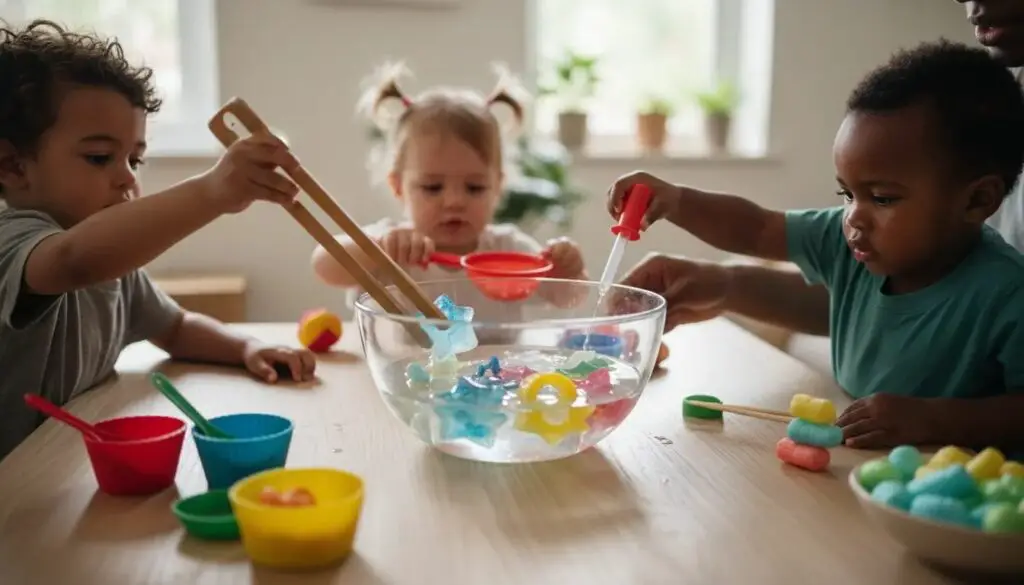
What Are Problem-Solving Skills for Toddlers?
Problem-solving skills are a toddler’s ability to recognize a challenge, think of possible solutions, test different ideas, and learn from the outcome. These skills begin developing long before children can explain their thinking with words. Every time a toddler figures out how to fit a shape into the correct opening, reaches a toy by moving a chair, or tries several ways to stack blocks without them falling over, they are practicing problem solving.
Problem solving is closely connected to cognitive development and executive function. Instead of memorizing answers, toddlers learn to observe what is happening, predict what might work, make decisions, and adjust when their first attempt fails. This process strengthens flexible thinking, attention, memory, and self-control, all of which support future learning at preschool and beyond.
Many everyday moments give toddlers opportunities to solve problems naturally. They may decide which shoes to wear, figure out how to zip a jacket, build a taller tower with blocks, or discover how to retrieve a toy from under the couch. Although these challenges seem simple to adults, they encourage children to think independently instead of waiting for someone else to provide the solution.
Parents play an important role by creating opportunities rather than providing immediate answers. Allowing toddlers to experiment, make mistakes, and try again teaches them that challenges are normal and that persistence often leads to success. Over time, this mindset builds confidence alongside stronger problem-solving abilities.
When Do Toddlers Develop Problem-Solving Skills?
Toddlers begin developing problem-solving skills during infancy, but the most noticeable progress happens between 12 months and 3 years of age. As children gain mobility, language, and curiosity, they become more capable of exploring different ways to solve everyday challenges on their own.
Around 12 to 18 months, toddlers mainly learn through trial and error. They repeatedly press buttons, drop objects, stack cups, or push toys to see what happens next. These simple experiments help them understand cause and effect while building the foundation for logical thinking.
Between 18 and 24 months, children start solving slightly more complex problems. They may move objects to reach something placed higher, complete simple shape sorters, or try different ways to fit puzzle pieces together. Their growing memory allows them to remember strategies that worked previously and apply them to similar situations.
By ages 2 and 3, toddlers become more intentional in their thinking. They can plan simple actions, compare different choices, and continue trying after an unsuccessful attempt with less adult assistance. Pretend play also becomes more sophisticated, encouraging children to imagine situations, create solutions, and adapt when their ideas change.
Parents can recognize healthy progress by watching how their toddler approaches challenges instead of focusing only on whether they succeed. A child who explores different ideas, asks questions, persists after mistakes, or proudly solves a small everyday problem is demonstrating that their problem-solving skills are developing as expected.
How to Teach Toddlers Problem-Solving Skills at Home
The most effective way to teach toddlers problem-solving skills is to let them solve age-appropriate challenges with guidance instead of immediate solutions. Children develop stronger thinking skills when they have opportunities to observe a problem, try different approaches, and learn from the results. Rather than creating special lessons, parents can turn everyday routines into valuable learning experiences.
Give your toddler time to struggle before stepping in. When a child cannot fit a puzzle piece, stack blocks evenly, or put on a shoe, resist the urge to fix the problem immediately. Waiting for 20 to 30 seconds gives them time to think, experiment, and discover another approach. Even if they do not succeed right away, the thinking process is more valuable than reaching the correct answer quickly. Children who regularly experience productive struggle become more confident when facing new challenges because they learn that mistakes are part of learning.
Ask open-ended questions instead of giving instructions. Questions encourage toddlers to think independently rather than relying on adults for answers. Instead of saying, “Turn the puzzle piece around,” ask, “What happens if you try it a different way?” or “Which piece looks like it might fit?” These prompts guide children’s thinking without removing the opportunity to solve the problem themselves. Over time, toddlers begin asking themselves similar questions whenever they encounter a challenge.
Model your thinking aloud during everyday tasks. Toddlers learn not only by watching what parents do but also by hearing how they think. For example, if a toy will not fit into a storage bin, you might say, “This box is too full. I need to move these blocks first so there is enough space.” Hearing this thought process teaches children that solving problems involves observing the situation, considering different options, and choosing the one that makes the most sense.
Treat mistakes as valuable learning opportunities instead of failures. When a block tower falls or a cup spills, avoid showing disappointment or rushing to fix everything yourself. Instead, acknowledge what happened and encourage another attempt by saying, “The tower fell because the bottom blocks moved. Let’s see how we can make the base stronger.” This approach helps toddlers understand that mistakes provide useful information rather than a reason to give up.
Encourage independent decision-making throughout the day. Small choices help toddlers practice evaluating options and accepting the results of their decisions. Let them choose between two outfits, decide which book to read before bed, or pick the cup they want to use at lunch. These simple decisions strengthen critical thinking while teaching children that their choices have meaningful outcomes.
Praise effort, persistence, and creative thinking instead of focusing only on success. Comments such as “You kept trying until it worked,” “I noticed you tried three different ways,” or “You found a new solution” reinforce the behaviors that build strong problem-solving skills. This type of feedback encourages a growth mindset and motivates toddlers to approach future challenges with curiosity instead of fear of making mistakes.
What Activities Improve Toddlers’ Problem-Solving Skills?
The best activities for developing problem-solving skills are those that encourage toddlers to explore, experiment, and find solutions independently. Open-ended activities challenge children to think creatively because they have more than one possible outcome. Instead of focusing on completing a task correctly, toddlers learn by testing ideas, making adjustments, and discovering what works through experience.
Puzzles are one of the most effective activities for building problem-solving skills. Simple wooden puzzles and shape sorters teach toddlers to recognize patterns, compare shapes, and understand spatial relationships. As they rotate pieces, test different positions, and eventually find the correct fit, children practice logical thinking, patience, and persistence. Start with puzzles that have large, easy-to-grasp pieces and gradually increase the difficulty as your toddler becomes more confident.
Building blocks help toddlers develop planning and critical thinking. Whether they are stacking towers, building bridges, or creating simple structures, children constantly make decisions about balance, size, and placement. When a tower collapses, they naturally evaluate what happened and try a different strategy. This process teaches cause and effect while encouraging resilience after setbacks.
Pretend play strengthens flexible thinking by allowing toddlers to solve imaginary problems. During activities such as running a grocery store, cooking in a play kitchen, or caring for stuffed animals, children make decisions, adapt to changing situations, and use creativity to overcome challenges. Pretend play also supports language development because toddlers learn to explain their ideas and negotiate simple roles during play with parents or siblings.
Sorting and matching games encourage toddlers to compare, classify, and organize information. Children can sort objects by color, size, shape, or category using everyday household items such as socks, plastic lids, toy animals, or building blocks. These activities improve observation skills and teach toddlers to recognize similarities and differences, both of which are essential for effective problem solving.
Daily routines provide countless opportunities for natural learning. Ask your toddler to help set the table, match shoes before going outside, organize toys into baskets, or choose the correct container for leftovers. These simple responsibilities require children to think through each step instead of following instructions automatically. Because these challenges occur regularly, toddlers strengthen their problem-solving skills through consistent practice rather than isolated lessons.
Household tasks can also become valuable learning experiences. Invite your child to water plants without spilling, help pack snacks for an outing, or decide which items belong in the refrigerator after grocery shopping. These real-life activities make problem solving meaningful because children see the direct results of their decisions while developing greater independence and confidence.
The most effective activities share one important characteristic: they allow toddlers to think before adults intervene. Choosing age-appropriate challenges, offering encouragement, and celebrating persistence instead of perfection helps children develop the confidence to approach unfamiliar problems with curiosity rather than hesitation.
How Should Parents Respond When Toddlers Get Frustrated?
Parents should respond to toddler frustration with calm encouragement instead of immediate intervention. Feeling frustrated is a natural part of learning because children are attempting something beyond their current ability. When parents solve every problem too quickly, toddlers miss valuable opportunities to develop persistence, confidence, and independent thinking.
Pause before offering help whenever your toddler encounters a challenge. If they are trying to complete a puzzle, build a tower, or put on a jacket, observe what they do first instead of stepping in automatically. Many toddlers find a solution after trying several different approaches. Giving children time to think communicates that you believe they are capable of solving problems on their own.
Offer guidance without taking control when your child becomes stuck. Instead of completing the task yourself, provide small hints that encourage another attempt. Questions such as “What else could you try?” or “Which piece looks different?” help toddlers continue thinking while keeping ownership of the solution. This type of support, often called scaffolding, gradually builds independence because children learn how to solve similar problems in the future.
Acknowledge your toddler’s emotions without focusing only on the outcome. Saying, “I know this feels difficult,” or “You’re working really hard,” helps children feel understood while encouraging them to keep trying. Recognizing effort reduces the fear of failure and teaches toddlers that frustration is a normal part of learning something new.
Celebrate persistence more than success. When your toddler continues trying after making mistakes, praise the process instead of the final result. Statements such as “You didn’t give up,” “You kept trying different ideas,” or “You figured it out by yourself” reinforce behaviors that strengthen long-term problem-solving skills. Children who receive process-based praise are more likely to approach future challenges with confidence rather than avoiding them.
What Mistakes Should Parents Avoid?
Several common parenting habits unintentionally reduce opportunities for toddlers to develop problem-solving skills. Avoiding these mistakes gives children more chances to think independently and become confident decision-makers.
Solving every problem immediately is one of the biggest obstacles to learning. While helping may seem supportive, constantly providing answers teaches toddlers to depend on adults whenever they face a challenge. Waiting briefly before assisting encourages children to explore possible solutions first.
Giving too many instructions can also limit independent thinking. Step-by-step directions leave little room for toddlers to observe, experiment, or make decisions. Instead of explaining every action, offer one simple prompt and allow your child to determine the next step on their own.
Choosing activities that are too difficult often leads to discouragement, while activities that are too easy provide little opportunity for learning. Select challenges that require effort but remain achievable with minimal support. As your toddler’s abilities improve, gradually increase the complexity of games, puzzles, and everyday tasks.
Praising only correct answers sends the message that success matters more than learning. Toddlers benefit far more from hearing praise that recognizes curiosity, persistence, creativity, and effort. This type of feedback encourages children to continue experimenting even when their first solution does not work.
Comparing your toddler with siblings or other children can reduce confidence and motivation. Every child develops problem-solving skills at a different pace depending on temperament, experience, and developmental readiness. Focus on your child’s individual progress by noticing how they approach challenges today compared with a few weeks or months earlier.
Finally, avoid interrupting every mistake. Small failures, such as spilling water while pouring or knocking over a block tower, provide immediate feedback that helps toddlers understand cause and effect. Allowing children to experience these natural consequences in a safe environment teaches lessons that are often more memorable than verbal instructions alone.
How Can Parents Create a Home Environment That Encourages Problem Solving?
A home that encourages curiosity, independence, and exploration gives toddlers countless opportunities to develop problem-solving skills every day. Children learn best when they can safely experiment, make decisions, and experience the natural results of their choices. Rather than purchasing expensive educational toys, parents can create a learning environment by making simple changes to everyday routines and play spaces.
Make toys and learning materials easy to reach. When toddlers can choose puzzles, blocks, books, or pretend play items independently, they naturally make decisions about what to play with and how to use each object. Rotating toys every few weeks also keeps activities interesting while encouraging children to discover new ways to play with familiar materials.
Choose open-ended toys that can be used in multiple ways instead of toys with only one correct outcome. Building blocks, magnetic tiles, stacking cups, loose parts, cardboard boxes, and pretend play sets allow toddlers to create, experiment, and solve different problems every time they play. These materials encourage imagination because children decide how each item should be used instead of following fixed instructions.
Include your toddler in everyday family activities. Cooking, gardening, organizing groceries, folding laundry, and tidying toys all present small challenges that require observation and decision-making. Asking questions such as “Where should this spoon go?” or “Which basket is bigger?” encourages children to think actively while contributing to daily routines.
Allow safe, manageable risks during play. Let your toddler build a taller block tower, pour water into a cup, carry lightweight objects, or climb age-appropriate playground equipment under supervision. Small challenges help children judge distance, balance, and cause and effect while increasing confidence in their own abilities.
Maintain predictable routines while allowing flexibility. Consistent daily routines help toddlers understand what comes next, but occasional opportunities to make choices encourage independent thinking. Let your child choose between two healthy snacks, decide which pajamas to wear, or select the bedtime story. These simple decisions teach that their choices influence everyday experiences.
Most importantly, create a family culture where curiosity is valued more than perfection. Celebrate questions, encourage experimentation, and remind your toddler that trying different solutions is an important part of learning. When children feel safe making mistakes, they become more willing to explore unfamiliar situations and develop stronger problem-solving skills over time.
Frequently Asked Questions
Can toddlers learn problem-solving skills through play?
Yes. Play is one of the most effective ways for toddlers to develop problem-solving skills because it encourages exploration, creativity, and trial and error. Activities such as building with blocks, completing puzzles, sorting objects, and engaging in pretend play require children to think, make decisions, and adjust their strategies as they play.
What are the best toys for developing problem-solving skills?
Open-ended toys provide the greatest learning opportunities because they allow children to create multiple solutions. Good examples include wooden blocks, stacking cups, shape sorters, simple puzzles, magnetic tiles, pretend play kitchens, toy vehicles, and loose parts such as cardboard tubes or large wooden pieces.
What if my toddler gives up easily?
Children who give up quickly often need encouragement rather than solutions. Break large tasks into smaller steps, acknowledge their effort, and offer gentle prompts instead of completing the activity for them. Choosing challenges that are slightly above your toddler’s current ability also helps build confidence without causing overwhelming frustration.
Are Montessori activities good for problem-solving development?
Yes. Many Montessori-inspired activities encourage toddlers to work independently, make choices, and learn through hands-on exploration. Practical life tasks, open-ended materials, and self-correcting activities naturally strengthen problem-solving, concentration, and decision-making skills.
How much should parents help?
Parents should provide enough support to keep toddlers engaged without taking over the task. Observe first, offer hints when necessary, and gradually reduce assistance as your child becomes more confident. The goal is not to prevent every mistake but to help toddlers develop the skills needed to solve future problems independently.