
Toddlers develop gross motor skills through everyday movement, but purposeful activities help them build strength, balance, coordination, and confidence more effectively. From running and jumping to climbing and crawling, these large-body movements strengthen major muscle groups while supporting body awareness, spatial awareness, and motor planning. Strong gross motor skills also make everyday tasks easier, including walking up stairs, carrying toys, kicking a ball, and participating in playground games with other children.
The good news is that you don’t need expensive equipment or a large play space to encourage movement. Many of the best toddler gross motor skills activities use simple household items such as pillows, painter’s tape, balloons, or laundry baskets. Others take advantage of outdoor spaces where toddlers can explore, climb, run, and develop physical skills naturally through play. By offering a variety of movement experiences, parents can keep children engaged while supporting healthy physical development at every stage.
This guide shares more than 50 fun toddler gross motor skills activities for both indoor and outdoor play. You’ll also learn why gross motor development matters, how to choose activities that match your toddler’s abilities, how much active play children need each day, and simple safety tips to make every activity enjoyable and age-appropriate. Whether you’re looking for rainy-day games, backyard adventures, or easy ideas using items you already have at home, you’ll find practical activities that fit naturally into your family’s daily routine.
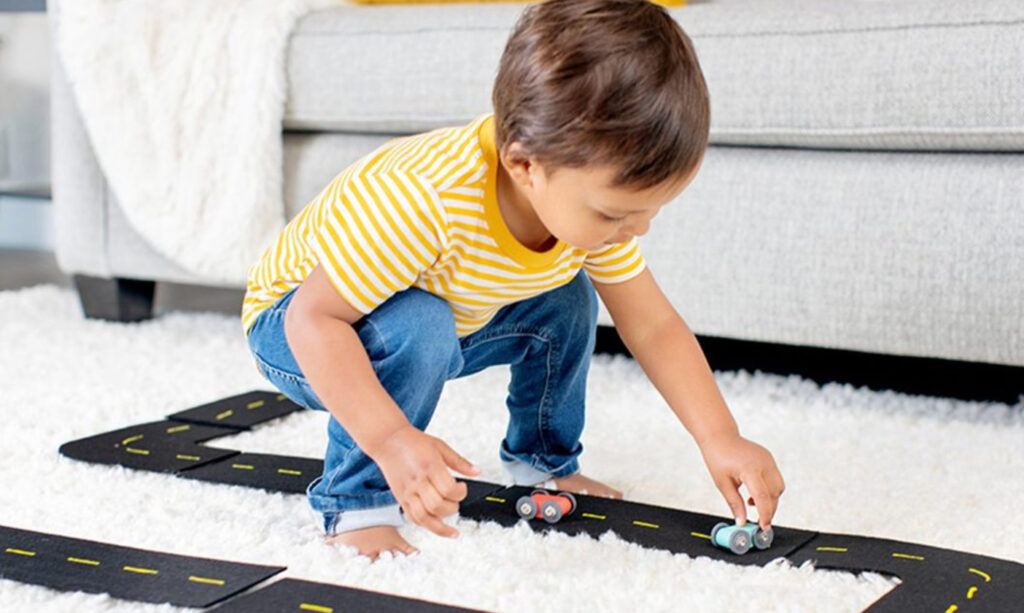
What Are Gross Motor Skills for Toddlers?
Gross motor skills are movements that use the large muscles in a toddler’s arms, legs, back, and core. These skills allow children to perform everyday actions such as walking, running, jumping, climbing, crawling, balancing, and throwing a ball. As toddlers become more confident with these movements, they gain greater independence and are better prepared for increasingly complex physical activities.
Gross motor skills differ from fine motor skills because they focus on whole-body movement rather than precise hand and finger control. While fine motor skills help toddlers hold a crayon, stack blocks, or button clothing, gross motor skills enable them to move safely through their environment, maintain balance, and coordinate multiple body parts at the same time. Both types of motor skills develop together, but gross motor development provides the physical foundation for many daily activities.
The toddler years, typically between 1 and 3 years old, are one of the fastest periods of physical development. During this stage, children progress from taking their first independent steps to running, jumping with two feet, climbing playground equipment, and kicking a ball. Providing regular opportunities for active play helps strengthen muscles, improve coordination, and build confidence as toddlers practice these important developmental milestones.
Why Are Gross Motor Skills Activities Important?
Gross motor skills activities strengthen the muscles that support everyday movement. Running, climbing, pushing, pulling, and jumping improve muscle strength in the legs, arms, shoulders, and core, making it easier for toddlers to complete everyday tasks with greater stability and control. Strong muscles also support better posture and reduce fatigue during active play.
Movement activities improve balance, coordination, and body awareness by encouraging toddlers to control their movements in different environments. Walking along a taped line, stepping over obstacles, or kicking a moving ball teaches children how to shift their weight, judge distances, and coordinate both sides of their body. These abilities help reduce falls while preparing toddlers for more advanced physical skills as they grow.
Active play also supports healthy brain development. Every time toddlers crawl through a tunnel, follow movement directions, or complete a simple obstacle course, their brains strengthen the connections responsible for planning movements, solving problems, and processing sensory information. Physical activity encourages learning because movement and cognitive development work together throughout early childhood.
Developing gross motor skills also prepares toddlers for preschool and everyday independence. Children with strong movement skills are more comfortable participating in playground games, group activities, dancing, and physical education. They are also more confident completing daily routines such as climbing stairs, carrying small objects, sitting upright during learning activities, and exploring new environments with curiosity.
What Are the Best Indoor Toddler Gross Motor Skills Activities?
Indoor gross motor activities help toddlers stay active regardless of the weather while developing strength, balance, coordination, and body awareness. Most activities require only a few minutes to set up and use common household items, making them easy to include in your daily routine.
1. Animal Walks
Ask your toddler to move like different animals, such as a bear, crab, frog, duck, or bunny. Changing movement patterns strengthens the arms, legs, shoulders, and core while improving coordination and balance.
Skills developed: Strength, coordination, body awareness
Materials: None
Recommended age: 18 months–3 years
Safety tip: Use a soft carpet or play mat to prevent slips.
2. Pillow Obstacle Course
Arrange pillows and cushions on the floor for your toddler to crawl over, walk around, or step across. Navigating different obstacles improves balance, motor planning, and confidence while making movement feel like an adventure.
Skills developed: Balance, coordination, motor planning
Materials: Pillows and cushions
Recommended age: 18 months–3 years
Safety tip: Keep obstacles low and stable.
3. Balloon Volleyball
Hit a balloon back and forth to keep it off the floor. Because balloons move slowly, toddlers have extra time to track the object and react, helping improve hand-eye coordination and timing.
Skills developed: Hand-eye coordination, balance, reaction time
Materials: Balloon
Recommended age: 2–3 years
Safety tip: Remove broken balloon pieces immediately to prevent choking hazards.
4. Dance Party
Play upbeat music and encourage your toddler to dance, spin, stomp, clap, and freeze when the music stops. Dancing develops endurance, rhythm, and whole-body coordination while allowing children to express themselves through movement.
Skills developed: Coordination, balance, endurance
Materials: Music player
Recommended age: 1–3 years
Safety tip: Create an open space free from furniture with sharp edges.
5. Tape Balance Line
Place painter’s tape on the floor in straight, curved, or zigzag lines. Challenge your toddler to walk heel-to-toe along the path without stepping off the line. As their confidence grows, introduce backward walking or carrying a lightweight toy.
Skills developed: Balance, concentration, body control
Materials: Painter’s tape
Recommended age: 2–3 years
Safety tip: Remove the tape after play to avoid tripping.
6. Tunnel Crawling
Create a tunnel using a pop-up tunnel or large cardboard boxes. Crawling strengthens the shoulders, arms, hips, and core while encouraging bilateral coordination as both sides of the body work together.
Skills developed: Core strength, bilateral coordination
Materials: Play tunnel or cardboard boxes
Recommended age: 1–3 years
Safety tip: Ensure the tunnel is sturdy and well ventilated.
7. Bubble Popping
Blow bubbles at different heights and encourage your toddler to jump, reach, squat, or run to pop them. This simple game promotes quick movement changes and improves visual tracking.
Skills developed: Agility, coordination, jumping
Materials: Bubble solution
Recommended age: 18 months–3 years
Safety tip: Wipe slippery floors after bubble play.
8. Simon Says Movement Game
Give simple movement instructions such as “Jump three times,” “Touch your toes,” or “Spin around.” Following directions while moving strengthens listening skills alongside gross motor development.
Skills developed: Coordination, listening, body awareness
Materials: None
Recommended age: 2–3 years
Safety tip: Choose movements appropriate for your toddler’s abilities.
9. Bean Bag Toss
Place laundry baskets or boxes at different distances and let your toddler throw bean bags into each target. Throwing and aiming develop upper-body strength, coordination, and depth perception.
Skills developed: Throwing skills, hand-eye coordination
Materials: Bean bags or soft balls, basket
Recommended age: 2–3 years
Safety tip: Use only soft, lightweight objects.
10. Toddler Yoga
Practice simple poses such as Tree Pose, Downward Dog, Cat-Cow, and Butterfly Pose. Holding each position for a few seconds improves balance, flexibility, and core stability while helping toddlers become more aware of their bodies.
Skills developed: Balance, flexibility, core strength
Materials: Yoga mat or soft rug
Recommended age: 2–3 years
Safety tip: Keep sessions short and encourage gentle movements without forcing stretches.
What Are the Best Outdoor Toddler Gross Motor Skills Activities?
Outdoor play gives toddlers more room to move, explore, and practice large-body movements naturally. Uneven surfaces, open spaces, and playground equipment introduce new physical challenges that strengthen muscles, improve balance, and build confidence. These activities also encourage children to spend more time in fresh air while developing essential gross motor skills through active play.
1. Nature Walk
Take a walk through a park, garden, or neighborhood and encourage your toddler to step over sticks, walk on grass, collect leaves, or point out flowers and birds. Walking on different surfaces improves balance while exploring nature keeps children engaged.
Skills developed: Balance, coordination, endurance
Materials: Comfortable shoes
Recommended age: 1–3 years
Safety tip: Stay on safe walking paths and supervise near roads or water.
2. Playground Climbing
Climbing ladders, ramps, and age-appropriate play structures strengthens the arms, legs, shoulders, and core. It also teaches toddlers how to judge distances and plan their movements before climbing or stepping down.
Skills developed: Strength, coordination, motor planning
Materials: Playground equipment
Recommended age: 2–3 years
Safety tip: Choose equipment designed for toddlers and remain within arm’s reach.
3. Running Games
Invite your toddler to run toward a tree, chase a parent, or race to a favorite toy. Short bursts of running improve cardiovascular fitness, leg strength, and overall endurance while allowing children to practice changing direction.
Skills developed: Endurance, speed, coordination
Materials: Open outdoor space
Recommended age: 18 months–3 years
Safety tip: Play on grass or other soft surfaces whenever possible.
4. Ball Kicking
Roll or place a lightweight ball on the ground and encourage your toddler to kick it toward a target. Repeated kicking strengthens the lower body while improving balance and eye-foot coordination.
Skills developed: Balance, coordination, lower-body strength
Materials: Soft playground ball
Recommended age: 18 months–3 years
Safety tip: Use lightweight balls in an open area away from traffic.
5. Bubble Chase
Blow bubbles across the yard and encourage your toddler to run, jump, or reach to pop them before they float away. The unpredictable movement of bubbles encourages quick reactions and full-body movement.
Skills developed: Agility, coordination, visual tracking
Materials: Bubble solution
Recommended age: 1–3 years
Safety tip: Avoid slippery surfaces if bubbles land on pavement.
6. Sidewalk Chalk Movement Game
Draw simple shapes, lines, numbers, or colored circles with sidewalk chalk. Ask your toddler to jump to a color, walk along a line, or hop between shapes. This activity combines movement with early learning concepts in a playful way.
Skills developed: Jumping, balance, coordination
Materials: Sidewalk chalk
Recommended age: 2–3 years
Safety tip: Play on flat sidewalks or driveways away from vehicles.
7. Treasure Hunt
Hide safe objects such as toy animals, balls, or colorful bean bags around the yard or playground. Encourage your toddler to walk, crawl, squat, and climb while searching for each item. The activity keeps children moving while developing problem-solving skills.
Skills developed: Coordination, body awareness, endurance
Materials: Small toys or outdoor objects
Recommended age: 2–3 years
Safety tip: Hide objects only in areas that are easy and safe for toddlers to access.
8. Water Play Relay
Place buckets or containers a short distance apart and let your toddler carry water using a small cup. Walking while balancing water strengthens coordination and concentration while providing a refreshing activity on warm days.
Skills developed: Balance, coordination, upper-body control
Materials: Buckets, cups, water
Recommended age: 2–3 years
Safety tip: Empty containers after play and supervise children around water at all times.
9. Tricycle Ride
Riding a tricycle develops leg strength, coordination, and balance while helping toddlers learn how to steer and control speed. Regular practice also builds confidence as children become more independent riders.
Skills developed: Leg strength, coordination, balance
Materials: Toddler tricycle and helmet
Recommended age: 2–3 years
Safety tip: Ride on smooth, traffic-free surfaces while wearing a properly fitted helmet.
10. Hill Climbing
Walking up and down gentle grassy hills challenges toddlers to shift their weight, maintain balance, and control their movements. Changes in elevation activate different muscle groups than walking on flat ground.
Skills developed: Balance, core strength, lower-body strength
Materials: Small grassy hill
Recommended age: 2–3 years
Safety tip: Choose gentle slopes with soft ground and avoid slippery conditions.
What Household Items Can You Use for Gross Motor Play?
You don’t need specialized toys to help your toddler develop gross motor skills. Everyday household items can create engaging movement activities that build strength, balance, coordination, and confidence while keeping playtime affordable.
Painter’s tape is perfect for creating balance lines, zigzag paths, hopscotch patterns, and obstacle courses on the floor. It removes easily without damaging most surfaces, making it a versatile choice for indoor play.
Pillows and cushions can be arranged into climbing paths, stepping stones, or soft obstacle courses. Crawling over cushions and stepping between pillows helps toddlers strengthen their core muscles while improving balance.
Laundry baskets work well as push toys, tunnels, or targets for throwing soft balls and bean bags. Pushing a loaded basket also provides gentle resistance that strengthens the legs and upper body.
Cardboard boxes quickly become tunnels, pretend cars, or crawl-through mazes. Large boxes encourage crawling, climbing, and imaginative movement while costing nothing if you reuse delivery packaging.
Balloons create slow-moving targets that encourage jumping, reaching, and running without the safety concerns associated with harder balls. They are especially useful for toddlers who are still developing hand-eye coordination.
Pool noodles can become low hurdles, balance beams, or markers for obstacle courses. Their lightweight, soft design makes them safe for active play indoors or outdoors.
Paper plates are useful as stepping stones or colored movement spots. Ask your toddler to jump, hop, or walk from one plate to another to practice balance and coordination.
Hula hoops encourage jumping in and out, crawling through, or rolling games. They also help toddlers understand personal space while improving body control.
Which Activities Help Develop Specific Gross Motor Skills?
Choosing activities based on the skill you want to strengthen makes it easier to support your toddler’s overall physical development. Many games improve multiple abilities at the same time, but some activities are especially effective for specific gross motor skills.
Activities for Balance
Walking along a tape line, standing on one foot with support, stepping across pillows, walking on curbs, and practicing simple yoga poses all improve balance. These activities teach toddlers how to control their bodies while shifting weight from one foot to the other.
Activities for Coordination
Balloon volleyball, kicking a ball, bean bag toss, dancing, and bubble popping encourage toddlers to coordinate their arms, legs, and eyes during movement. Better coordination makes everyday activities such as climbing stairs and catching objects much easier.
Activities for Core Strength
Tunnel crawling, bear walks, crab walks, wheelbarrow walks with adult support, and climbing playground equipment strengthen the muscles around the stomach, back, and hips. A strong core supports better posture, balance, and overall movement control.
Activities for Bilateral Coordination
Animal walks, crawling through obstacle courses, pulling wagons, carrying lightweight objects with both hands, and climbing ladders encourage both sides of the body to work together. Bilateral coordination is important for future skills such as riding a bicycle, swimming, and participating in sports.
Activities for Jumping
Jumping over tape lines, hopping between paper plates, jumping off low steps with supervision, trampoline play designed for toddlers, and leapfrog-style games strengthen leg muscles while improving landing control and balance.
Activities for Climbing
Playground climbing structures, indoor climbing cushions, gentle hills, stairs with supervision, and foam play equipment help toddlers develop strength, confidence, and motor planning while learning how to navigate different heights safely.
Activities for Throwing and Catching
Rolling balls back and forth, tossing bean bags into baskets, throwing soft balls at large targets, catching balloons, and playing with lightweight beach balls improve hand-eye coordination and upper-body control. These activities also introduce toddlers to early ball skills that become increasingly important during preschool years.
How Much Gross Motor Activity Do Toddlers Need Each Day?
Toddlers need regular movement throughout the day to support healthy growth, muscle development, coordination, and overall physical well-being. Active play does not need to happen as one long exercise session. Instead, toddlers benefit from frequent opportunities to move through structured games, free play, outdoor exploration, and everyday activities.
Children between 1 and 3 years old naturally learn through movement. Walking, climbing, dancing, carrying toys, pushing objects, and playing on playground equipment all contribute to daily physical activity. The goal is not to train toddlers like athletes but to provide enough movement experiences that allow them to practice different gross motor skills.
A balanced routine includes both structured and unstructured play. Structured activities involve parent-guided games such as obstacle courses, ball games, or movement songs. Unstructured play allows toddlers to explore their environment independently by running, climbing, crawling, or creating their own games. Both types of play support motor development because children practice planning and controlling their movements in different ways.
Parents can encourage more movement by building active moments into normal routines. Walking instead of being carried for short distances, helping with simple household tasks, playing outside after meals, or having a short dance session before bedtime can all increase daily activity without making exercise feel like a chore.
How Can Parents Encourage Toddlers to Be More Active?
Parents can encourage toddlers to be more active by making movement enjoyable, accessible, and part of everyday life. Young children are more likely to participate when activities feel like play rather than instructions or exercises.
Join your toddler during active play whenever possible. Children often copy adult behavior, so a parent who runs, dances, jumps, or plays ball with them becomes a positive example. Shared movement also strengthens the parent-child relationship and helps toddlers feel more confident trying new physical challenges.
Offer different types of activities instead of repeating the same game every day. A toddler who enjoys kicking a ball may also enjoy climbing, dancing, or obstacle courses when introduced gradually. Variety exposes children to different movement patterns and helps develop a wider range of gross motor skills.
Follow your toddler’s interests when choosing activities. Some children enjoy active outdoor games, while others prefer imaginative movement such as pretending to be animals or completing a treasure hunt. Connecting movement with a child’s interests increases engagement and encourages longer periods of active play.
Keep activities simple and avoid focusing only on performance. Toddlers develop skills through repeated practice, not through competition. Praise effort, exploration, and problem-solving instead of whether a child completes a movement perfectly.
Create an environment where movement is easy. Keep safe play areas available, store active toys where children can access them, and reduce unnecessary barriers that prevent movement. A clear space with a few simple materials often encourages more physical play than a room filled with passive entertainment options.
What Safety Tips Should Parents Follow During Gross Motor Play?
Safety is an important part of toddler gross motor activities because young children are still developing balance, coordination, and awareness of risks. A safe play environment allows toddlers to explore movement confidently while reducing preventable injuries.
Choose play areas with appropriate surfaces. Soft flooring, grass, foam mats, and playground surfaces with impact protection reduce the risk of injuries when toddlers fall. Hard surfaces such as concrete require extra supervision because toddlers are still learning how to control their movements.
Use age-appropriate equipment during active play. Climbing structures, ride-on toys, balls, and other movement tools should match your toddler’s physical abilities and size. Equipment that is too advanced can create unnecessary challenges before a child has developed the strength and coordination needed to use it safely.
Supervise toddlers closely during activities that involve climbing, jumping, water, or elevated surfaces. Young children can develop new abilities quickly, but they may not yet recognize dangerous situations. Staying nearby allows parents to provide support while still giving toddlers opportunities to practice independence.
Create a safe indoor environment before starting movement activities. Remove sharp objects, secure unstable furniture, clear small choking hazards, and create enough open space for running, jumping, or crawling. A simple preparation step can make everyday household play safer.
Consider weather conditions during outdoor activities. Toddlers lose body heat quickly in cold environments and can overheat faster than adults during hot weather. Provide appropriate clothing, offer water during active play, and adjust activity intensity based on the environment.
When Should Parents Be Concerned About Gross Motor Development?
Parents should pay attention to gross motor development milestones because they show how children are progressing with movement, balance, and coordination. Every child develops at a different pace, but consistent difficulty with age-appropriate movements may indicate a need for professional guidance.
By around 12 to 18 months, many toddlers begin walking independently, standing without support, and exploring their surroundings through movement. Between 18 and 24 months, children often improve their ability to run, climb onto furniture, kick a ball, and walk up steps with assistance.
By around 2 to 3 years old, many toddlers can run more smoothly, jump with both feet, climb playground equipment, throw a ball, and participate in simple movement games. These skills develop through repeated practice and regular opportunities for active play.
Parents may consider discussing development with a pediatrician or physical therapist if a child consistently struggles with major movement skills compared with other children of a similar age. Signs that may require additional attention include avoiding movement activities, frequent falls, difficulty walking independently, unusual stiffness, very low muscle tone, or losing previously learned physical skills.
Early support can help children strengthen specific areas of development. A pediatrician or physical therapist can evaluate movement patterns, identify possible challenges, and recommend activities or therapies that support the child’s individual needs.
Parents should remember that gross motor development is not about reaching milestones at the exact same time as every other child. The goal of toddler gross motor activities is to provide consistent opportunities for practice, exploration, and confidence-building through safe movement experiences.
Frequently Asked Questions About Toddler Gross Motor Skills Activities
What is the easiest gross motor activity for toddlers?
The easiest gross motor activities for toddlers are simple movements that require no special equipment, such as dancing, animal walks, walking along a line, or playing follow-the-leader. These activities are effective because they allow children to practice large muscle movements while adjusting the difficulty naturally based on their abilities.
For example, a younger toddler may practice walking and squatting during a simple toy-picking game, while an older toddler can add jumping, running, or obstacle challenges. The best activity is one that matches the child’s current development level and encourages repeated movement.
Can toddlers develop gross motor skills at home?
Yes, toddlers can develop gross motor skills at home through regular movement opportunities. Indoor spaces can support activities such as crawling through tunnels, climbing over pillows, dancing, throwing soft balls, and completing simple obstacle courses.
Home-based activities are effective because toddlers learn through repetition. Practicing the same movement several times helps children improve muscle control, coordination, and confidence without needing formal training equipment.
What toys help develop gross motor skills?
Toys that encourage movement are the most helpful for gross motor development. Examples include balls, ride-on toys, balance boards, climbing structures, tunnels, tricycles, and push or pull toys.
These toys support different movement patterns. Balls encourage throwing, catching, and kicking. Ride-on toys develop leg strength and balance. Climbing equipment improves strength and coordination. The best toys are those that motivate toddlers to move actively rather than sit passively.
Are gross motor skills activities the same as sensory activities?
Gross motor activities and sensory activities overlap but focus on different areas of development. Gross motor activities primarily involve large muscle movements such as running, jumping, climbing, and balancing. Sensory activities focus on how children process information through senses such as touch, sight, sound, and movement.
Some activities support both areas at the same time. For example, playing in a sensory bin while squatting, carrying objects during a nature walk, or crawling through different textured surfaces combines physical movement with sensory exploration.
Can gross motor play improve toddler sleep?
Regular physical activity can support healthy sleep patterns by helping toddlers use energy, regulate emotions, and maintain a consistent daily routine. Active play during the day may make it easier for some children to settle at bedtime.
However, the timing and intensity of activities matter. Calm activities such as stretching, gentle dancing, or slow movement games may work better close to bedtime, while energetic running and jumping activities are usually better earlier in the day.
How long should toddlers practice gross motor activities?
Toddlers benefit from frequent movement throughout the day rather than one long exercise session. Short activity periods of 10 to 20 minutes can be effective when combined with regular opportunities for walking, climbing, playing, and exploring.
The most important factor is consistency. Daily movement experiences help toddlers strengthen physical skills gradually while making active play a normal part of their routine.
What should I do if my toddler does not like active games?
If a toddler avoids active games, start with activities connected to their existing interests. A child who enjoys music may respond well to dancing, while a child who likes toys may enjoy a treasure hunt or movement-based toy search.
Avoid forcing participation because pressure can make movement feel negative. Instead, provide small opportunities, join the activity yourself, and celebrate attempts. Many toddlers become more willing to move when they see physical play as a fun shared experience.