
Most toddlers are not unwilling to share—they are simply not developmentally ready to do it consistently. Between the ages of 1 and 3, children are still developing self-regulation, emotional control, and an understanding that other people have needs and feelings different from their own. Wanting to keep a favorite toy or becoming upset when another child takes it is a normal part of early childhood development, not a sign of selfishness.
Many parents try to solve sharing conflicts by telling their child to “share nicely” or by forcing them to hand over a toy. Although these reactions are well intentioned, they often increase frustration, trigger tantrums, and make sharing feel like losing something valuable instead of making a positive choice. Teaching sharing is more effective when children first learn related social skills, including taking turns, waiting patiently, recognizing emotions, and cooperating during play.
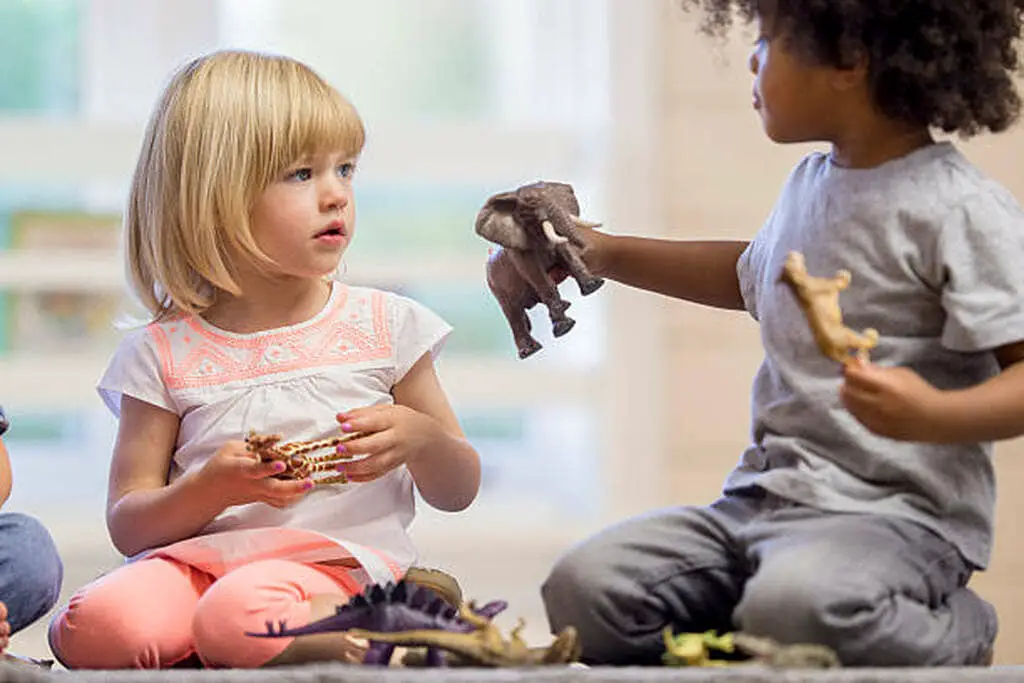
This guide explains how to teach sharing to toddlers using age-appropriate strategies supported by child development principles. You’ll learn when children are developmentally ready to share, why toddlers often refuse to share, practical techniques that encourage cooperation without pressure, simple activities that build sharing skills, common parenting mistakes to avoid, and the signs that your toddler is making meaningful progress.
When do toddlers learn to share?
Most toddlers begin learning the foundations of sharing between 18 months and 3 years of age, but consistent voluntary sharing usually develops later. At this stage, children are building self-control, language, and social awareness. They can start practicing simple sharing behaviors, yet they are not developmentally expected to give up valued possessions willingly every time.
During the second year of life, toddlers mainly view toys as extensions of themselves. Their understanding of ownership is strong, while their ability to consider another child’s perspective is still emerging. By around age 3, many children become more comfortable taking turns, waiting briefly, and cooperating during play. These early experiences lay the foundation for genuine sharing as they approach preschool age.
Parents should focus on teaching age-appropriate social skills instead of expecting perfect sharing. Learning to wait, asking before taking a toy, exchanging toys, and participating in cooperative activities are all important milestones that develop before generous sharing becomes a consistent habit.
Why don’t toddlers want to share?
Toddlers refuse to share because protecting possessions is a normal part of early brain and emotional development. Their brains are still developing the executive functions needed to control impulses, manage disappointment, and understand another person’s point of view. As a result, keeping a favorite toy often feels like protecting something important rather than acting selfishly.
A strong sense of ownership also explains many sharing conflicts. Toddlers invest emotional value in familiar objects because those objects provide comfort, predictability, and a sense of control. When another child reaches for the same toy, the situation can feel like a personal loss. Tantrums and toy-grabbing are often emotional reactions instead of deliberate misbehavior.
Another common reason is that toddlers are still learning empathy. While they may recognize another child’s emotions, consistently responding to those emotions requires cognitive and emotional skills that continue developing throughout the preschool years. Expecting immediate empathy often leads to frustration for both parents and children.
Forcing a toddler to hand over a toy can unintentionally create negative associations with sharing. Instead of learning generosity, the child may learn that sharing means losing control over something valuable. A more effective approach is to acknowledge the child’s feelings, set clear expectations, and guide them toward turn-taking or finding another solution that respects both children’s needs.
How can you teach sharing to toddlers?
Teach sharing by building the social and emotional skills that make sharing possible instead of expecting the behavior immediately. Toddlers learn to share through repeated experiences, adult guidance, and positive interactions. The goal is not to make a child give away a toy on command but to help them gradually understand cooperation, fairness, and empathy.
Start by modeling sharing in everyday life. Let your toddler see you share food, household items, or activities with family members. Use simple language such as, “I’m sharing my snack with you,” or, “Daddy is taking turns with me.” Young children learn more from observing consistent behavior than from repeated instructions.
Teach turn-taking before teaching sharing. Waiting for a turn is a simpler skill because the child knows the toy will come back. During play, use a timer or short verbal countdown to help toddlers understand that each person gets a chance. Games involving rolling a ball, building with blocks together, or completing a simple puzzle naturally reinforce this concept.
Acknowledge your toddler’s emotions before encouraging cooperation. If your child refuses to give up a favorite toy, avoid saying, “Stop being selfish.” Instead, describe what they are feeling: “You really like playing with that truck, and you’re not ready to let it go yet.” Once children feel understood, they are usually more willing to listen to guidance and consider another solution.
Practice sharing during low-pressure situations rather than waiting for conflicts to happen. Introduce activities that require cooperation, such as building one tower together, creating a drawing as a team, or taking turns choosing storybooks. These experiences allow toddlers to practice sharing without the stress of protecting a favorite possession.
Praise the effort instead of the result. Rather than saying, “Good job for sharing,” be specific about the behavior you noticed. Comments such as, “You waited for your turn,” or, “You let your friend use the puzzle after you finished,” help children understand exactly which actions are positive. Specific praise reinforces the process of learning rather than encouraging children to seek approval.
What should you do when your toddler refuses to share?
Respond calmly and coach the interaction instead of forcing an immediate solution. Refusing to share is an opportunity to teach problem-solving, not a sign that discipline has failed. Children are more likely to learn social skills when adults stay neutral and guide the conversation.
If two children want the same toy, first acknowledge both perspectives. For example, “You both want the fire truck.” Naming the problem helps children feel heard before any solution is introduced. Avoid deciding too quickly who is right or wrong, as this often increases frustration.
Next, guide the children toward an age-appropriate solution. Encourage taking turns, choosing another toy while waiting, or playing together if possible. For toddlers under three, adults usually need to facilitate these solutions because independent conflict resolution is still developing.
Set clear boundaries around physical behavior. Hitting, biting, pushing, or grabbing toys should never be accepted, even if the child is upset. Calmly stop the behavior, explain the limit in simple language, and redirect the child toward a safer way to express frustration. Consistent boundaries help toddlers separate acceptable emotions from unacceptable actions.
It is also important to respect special belongings. Children do not have to share every toy, especially comfort objects or favorite possessions. Allowing toddlers to keep a few special items teaches healthy ownership while creating opportunities to practice sharing with toys intended for group play. This balanced approach reduces power struggles and helps children view sharing as a voluntary social skill rather than an obligation.
What activities help toddlers learn to share?
The best sharing activities allow toddlers to practice cooperation without feeling pressured to give up their favorite possessions. Activities with a shared goal help children discover that working together is enjoyable and rewarding.
Cooperative games are one of the easiest ways to introduce sharing. Instead of focusing on winning, choose activities where everyone contributes to the same outcome. Building a block tower together, completing a floor puzzle as a team, or rolling a ball back and forth teaches toddlers that taking turns helps everyone reach a common goal.
Pretend play also creates natural opportunities to practice sharing. Children can prepare meals in a toy kitchen, care for dolls together, or run an imaginary grocery store. These activities encourage toddlers to exchange toys, wait for props, and communicate during play. Because the focus is on storytelling rather than ownership, children often cooperate more willingly.
Creative activities reinforce sharing in a different way. Drawing a large picture together, making a collage, or building with modeling clay encourages toddlers to share crayons, glue, scissors, and other materials. Parents can model simple language such as, “I’ll use the blue crayon when you’re finished,” to demonstrate respectful turn-taking.
Daily routines offer valuable learning opportunities as well. Baking cookies together, watering plants, sorting laundry, or setting the dinner table all require children to share tools, space, and responsibilities. Repeating these routines helps sharing become part of everyday family life instead of a rule that only applies during playdates.
Reading books about kindness, friendship, and cooperation strengthens these lessons. After reading, ask simple questions such as, “How did the character help their friend?” or “What happened after they took turns?” These conversations help toddlers connect stories with real-life situations.
How do you teach sharing between siblings?
Teaching siblings to share starts with creating fairness, not forcing equal access to every toy. Brothers and sisters naturally experience more conflicts because they spend significant time together and often want the same objects. Parents should focus on building cooperation while respecting each child’s sense of ownership.
Establish simple family rules that everyone understands. Rules such as “We ask before taking someone else’s toy,” “We wait for our turn,” and “We use gentle hands” provide consistent expectations during conflicts. Keeping rules short makes them easier for toddlers to remember.
Allow each child to have personal belongings that do not have to be shared. Favorite stuffed animals, comfort blankets, or special birthday gifts should remain under the owner’s control. Respecting these boundaries helps children feel secure and reduces the need to protect every possession.
Whenever possible, encourage teamwork instead of competition. Invite siblings to build one large tower, complete a treasure hunt together, or clean up toys as a team. Shared goals shift attention away from ownership and toward cooperation, making positive interactions more frequent.
Parents should also avoid comparing siblings. Statements such as “Your sister always shares better than you” often increase resentment instead of improving behavior. Recognize each child’s progress individually and celebrate specific examples of kindness, patience, or cooperation.
Read more: Toddler Learning Activities by Age: A Complete Parent Guide
What mistakes should parents avoid?
Several common parenting mistakes can unintentionally make sharing more difficult to learn. Recognizing these habits allows parents to replace them with strategies that build long-term social skills.
One of the biggest mistakes is forcing children to hand over a favorite toy immediately. Although this may stop the conflict, it teaches compliance rather than generosity. Children are more likely to develop genuine sharing skills when they feel their emotions and belongings are respected.
Another mistake is expecting developmental abilities that toddlers have not yet mastered. Young children are still learning impulse control, emotional regulation, and empathy. Holding them to adult standards often creates frustration for both the child and the parent.
Labeling a child as selfish can also become counterproductive. Children often internalize repeated labels and begin identifying themselves by those descriptions. Instead, focus on the specific behavior that needs improvement and explain what to do differently next time.
Parents should also avoid solving every disagreement immediately. When conflicts remain calm and safe, give toddlers a chance to practice waiting, negotiating, or accepting guidance. These small experiences gradually strengthen independent problem-solving skills.
Finally, avoid rewarding every act of sharing with treats or prizes. External rewards may produce short-term compliance, but they can reduce intrinsic motivation over time. Warm encouragement, specific praise, and positive attention are usually more effective in helping children value cooperation for its own sake.
How do you know your toddler is making progress?
Progress appears gradually through small social and emotional improvements rather than sudden perfect sharing. Most toddlers develop these skills over months of repeated practice, and occasional conflicts remain a normal part of learning.
One of the earliest signs is that your toddler begins waiting briefly for a turn instead of reacting immediately with frustration. They may also start asking before taking another child’s toy, returning borrowed items after using them, or accepting simple reminders from adults without becoming upset.
Another positive sign is improved emotional recovery. Instead of having a prolonged tantrum when sharing is difficult, your child may calm down more quickly, accept an alternative activity, or cooperate after gentle coaching. This shows growth in emotional regulation, which is an important foundation for sharing.
As language develops, many toddlers begin expressing their needs with words instead of grabbing or pushing. Simple phrases such as “My turn,” “Can I play next?” or “I’m still using it” reduce conflicts because children can communicate their intentions more effectively.
Every child develops at a different pace, but consistent progress is more important than perfect behavior. If your toddler continues to struggle with sharing while gradually improving in communication, self-control, and cooperation, they are moving in the right direction. Consider speaking with your pediatrician or a child development specialist if persistent sharing difficulties occur alongside significant delays in language, social interaction, or emotional development.