
Choosing toddler learning activities by age helps children build the right skills at the right time. A 12-month-old explores the world differently from a 3-year-old, so activities that challenge one child may frustrate or bore another. Matching learning experiences to developmental milestones allows toddlers to strengthen cognitive, language, motor, and social-emotional skills through play instead of pressure.
Parents do not need expensive educational toys or structured lessons to support early learning. Everyday experiences such as stacking blocks, sorting objects by color, reading picture books, playing with water, or exploring nature can become valuable learning opportunities when they match a toddler’s developmental stage. The goal is not to accelerate academic achievement but to encourage curiosity, independence, problem-solving, and confidence.
This guide organizes toddler learning activities by age, from 12 months to 3 years old, so you can easily find ideas that fit your child’s current abilities. You’ll also learn which developmental skills each activity supports, discover simple indoor and outdoor learning ideas, and understand how to create a balanced daily routine that makes learning enjoyable through play.
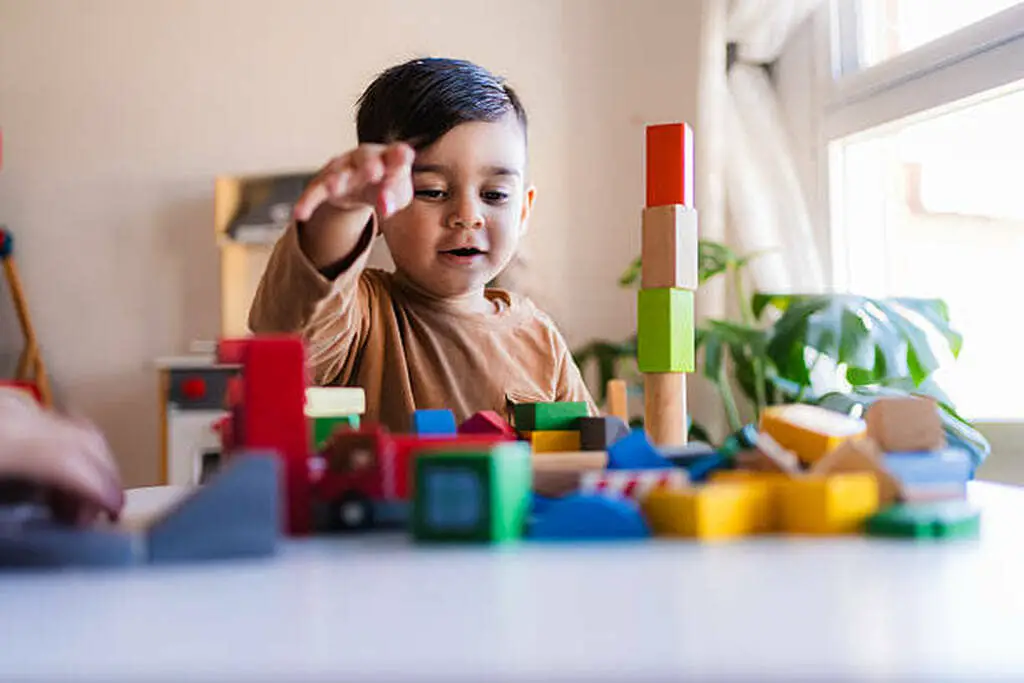
What learning activities are appropriate for toddlers at each age?
The best toddler learning activities are those that match a child’s developmental stage rather than their exact age. While every child develops at a different pace, age ranges provide a practical guide for selecting activities that are challenging enough to encourage learning without causing frustration.
12–18 months
At this stage, toddlers learn primarily by exploring through their senses and repeating simple actions. Activities should focus on building curiosity, coordination, and early communication.
Suitable learning activities include:
- Stacking 2–4 large blocks
- Looking at board books with simple pictures
- Rolling a ball back and forth
- Putting large objects into a container and taking them out
- Listening to nursery rhymes and action songs
- Exploring water play under adult supervision
These activities strengthen hand-eye coordination, object permanence, early vocabulary, and cause-and-effect thinking while encouraging independent exploration.
18–24 months
Between 18 and 24 months, toddlers become more mobile, begin solving simple problems, and rapidly expand their vocabulary. Learning activities should introduce matching, sorting, and pretend play.
Recommended activities include:
- Matching identical pictures or objects
- Sorting toys by color or shape
- Completing simple wooden puzzles with large pieces
- Pretend cooking or caring for dolls
- Scribbling with large crayons
- Following one-step instructions during play
These activities develop cognitive flexibility, fine motor control, language comprehension, and imaginative thinking while encouraging toddlers to make simple decisions independently.
2 years
Two-year-olds enjoy activities that require movement, creativity, and simple problem-solving. Their attention span increases, allowing slightly more structured play.
Effective learning activities include:
- Building towers with blocks
- Simple arts and crafts using washable materials
- Sorting objects by size or color
- Counting everyday objects during play
- Reading interactive storybooks and answering simple questions
- Obstacle courses using cushions or cones
- Singing songs with actions and repetition
These activities improve early numeracy, vocabulary, balance, coordination, creativity, and listening skills while introducing toddlers to following short sequences of instructions.
3 years
By age three, toddlers can participate in activities that require longer attention spans, imagination, and cooperation with others. Learning becomes more interactive and problem-oriented.
Recommended activities include:
- Role-playing games such as grocery shopping or visiting a doctor
- Simple science experiments, such as observing objects that float or sink
- Creating patterns with blocks or beads
- Completing age-appropriate jigsaw puzzles
- Drawing basic shapes and practicing pre-writing strokes
- Gardening, nature walks, and collecting leaves or rocks
- Group games that involve taking turns and following rules
These activities strengthen critical thinking, communication, creativity, self-regulation, and social skills while helping children prepare for preschool routines.
Rather than introducing increasingly difficult activities as quickly as possible, parents should observe how their toddler responds to each experience. An activity is age-appropriate when it keeps a child engaged, encourages exploration, and can be completed with only minimal adult support. If a toddler consistently loses interest within a few minutes or becomes frustrated, simplifying the activity is often more effective than encouraging them to continue.
How do learning activities support toddler development?
Toddler learning activities strengthen five core areas of development: cognitive, language, fine motor, gross motor, and social-emotional skills. The most effective activities support multiple developmental domains at the same time, allowing children to learn naturally through exploration and play instead of formal instruction.
Cognitive development
Cognitive learning activities help toddlers understand how the world works by encouraging observation, memory, and problem-solving. As children manipulate objects, identify patterns, and experiment with cause and effect, they begin developing the thinking skills needed for future learning.
Activities such as shape sorting, stacking blocks, matching picture cards, and simple puzzles encourage toddlers to recognize relationships between objects and solve increasingly complex challenges. Everyday routines also provide valuable learning opportunities. Asking questions like “Which cup is bigger?” or “Can you find the red ball?” helps children compare, classify, and make simple decisions while expanding their understanding of basic concepts.
Fine motor skills
Fine motor activities strengthen the small muscles in the hands and fingers that toddlers need for everyday tasks. Developing these muscles improves grip strength, finger control, and hand-eye coordination, all of which prepare children for drawing, writing, dressing independently, and using utensils.
Simple activities such as threading large beads, stacking blocks, turning book pages, peeling stickers, using child-safe tongs, or tearing paper require precise hand movements. Art projects with crayons, washable paint, and playdough also encourage finger strength while allowing toddlers to express creativity. Repeating these activities regularly helps children gain confidence as their coordination improves.
Gross motor skills
Gross motor activities develop balance, coordination, strength, and body awareness by encouraging toddlers to move in different ways. Active play also supports physical health and improves children’s ability to control larger muscle groups.
Running, climbing playground equipment, kicking balls, jumping, dancing to music, crawling through tunnels, and navigating simple obstacle courses all challenge toddlers to coordinate movement while improving balance and spatial awareness. Outdoor play is especially valuable because it gives children more opportunities to explore uneven surfaces, different speeds, and changing environments.
Language development
Language learning activities build vocabulary, listening skills, and communication through meaningful interaction. Toddlers learn language most effectively by hearing words repeatedly in real-life situations rather than through memorization.
Reading picture books together, singing nursery rhymes, describing everyday activities, naming objects during play, and encouraging toddlers to answer simple questions all increase language exposure. Pretend play also supports communication because children naturally practice new words while acting out familiar routines such as cooking, shopping, or caring for dolls.
Social-emotional development
Social-emotional activities help toddlers understand emotions, develop confidence, and learn how to interact with other people. These skills form the foundation for cooperation, empathy, and self-regulation as children grow.
Activities that involve taking turns, sharing toys, role-playing, or working together on simple tasks teach toddlers patience and communication. Reading books about emotions, talking about facial expressions, and helping children identify their own feelings also improve emotional awareness. When caregivers respond consistently and encourage independent problem-solving, toddlers gradually become more resilient and confident in new situations.
Rather than treating each developmental area separately, parents should choose activities that combine multiple skills whenever possible. For example, building a block tower develops fine motor control, problem-solving, early mathematical thinking, language through conversation, and social skills when children build together. Activities that engage several developmental domains at once provide richer learning experiences while keeping play enjoyable and meaningful.
Which indoor and outdoor learning activities are best for toddlers?
Indoor and outdoor learning activities help toddlers develop different skills because each environment provides unique opportunities for exploration. Indoor activities often encourage concentration, creativity, and fine motor development, while outdoor play promotes physical movement, sensory experiences, and curiosity about the natural world. A balanced routine should include both whenever possible.
Which indoor activities are easiest to do at home?
The best indoor learning activities require minimal preparation and use everyday household items. Parents do not need a dedicated playroom or expensive educational toys to create meaningful learning experiences.
Some of the most effective indoor activities include:
- Building towers with blocks or plastic cups
- Matching colors using socks, toys, or household objects
- Reading picture books and asking simple questions
- Drawing with crayons or washable markers
- Playing with playdough to strengthen finger muscles
- Sorting objects by color, size, or shape
- Creating simple obstacle courses with pillows and cushions
- Singing action songs such as Head, Shoulders, Knees and Toes
These activities improve attention span, vocabulary, problem-solving, hand-eye coordination, and creativity. Because they are easy to repeat, toddlers gain confidence while gradually mastering new skills.
Parents can also rotate activities every few days instead of offering every toy at once. A smaller selection keeps toddlers engaged longer and encourages deeper, more focused play.
Which outdoor activities encourage exploration and movement?
Outdoor learning activities give toddlers opportunities to investigate their surroundings while developing large muscle movements. Uneven surfaces, changing weather, plants, and natural materials provide learning experiences that cannot be fully recreated indoors.
Simple outdoor activities include:
- Nature walks to collect leaves, flowers, or small rocks
- Playing catch with a soft ball
- Drawing with sidewalk chalk
- Running simple obstacle courses
- Water play on warm days
- Digging in sand or soil with child-safe tools
- Bubble chasing games
- Visiting playgrounds to climb, balance, and slide
These activities strengthen balance, coordination, endurance, spatial awareness, and sensory processing. They also introduce early science concepts as toddlers observe insects, weather, shadows, plants, and changing seasons through direct experience.
Parents can extend learning by asking open-ended questions during outdoor play, such as “What do you notice?”, “Which leaf is bigger?”, or “Why do you think this rock feels smooth?” These conversations encourage observation, comparison, and early critical thinking without turning play into a formal lesson.
Rather than viewing indoor and outdoor activities as separate types of learning, families should combine them throughout the day. For example, a toddler might collect leaves outside, then return indoors to sort them by size, create leaf rubbings, or read a picture book about trees. Connecting experiences across different environments reinforces learning while keeping activities fresh and engaging.
Read more: 25 Toddler Social Skills Activities at Home
Which sensory activities are safe for toddlers?
Safe sensory activities encourage toddlers to explore different textures, sounds, temperatures, and movements while supporting brain development. During the toddler years, children learn by using all of their senses simultaneously. Well-designed sensory play strengthens neural connections, improves fine motor control, expands language, and helps children regulate their emotions.
Parents do not need elaborate sensory bins to provide meaningful experiences. Simple activities using everyday materials are often the most engaging because toddlers can manipulate them freely and discover new properties through trial and error.
Some age-appropriate sensory activities include:
| Activity | Recommended Age | Skills Developed |
|---|---|---|
| Water play with cups and spoons | 12 months+ | Cause and effect, hand-eye coordination |
| Playdough | 18 months+ | Fine motor strength, creativity |
| Finger painting | 18 months+ | Sensory exploration, color recognition |
| Rice or pasta sensory bin (with supervision) | 2 years+ | Scooping, pouring, concentration |
| Sand play | 2 years+ | Problem-solving, tactile awareness |
| Nature exploration | All toddler ages | Observation, vocabulary, curiosity |
Each activity introduces different sensory experiences while allowing toddlers to experiment at their own pace. For example, pouring water between containers teaches volume and cause-and-effect relationships, while molding playdough strengthens the small muscles needed for writing later in childhood.
Sensory play also supports language development. Parents can describe what a child is experiencing by using words such as soft, rough, cold, smooth, sticky, heavy, or light. Hearing descriptive vocabulary during play helps toddlers connect words with real experiences, making language easier to understand and remember.
Another important benefit is emotional regulation. Many repetitive sensory activities—such as squeezing playdough, scooping sand, or pouring water—have a calming effect. These experiences help toddlers practice focusing their attention, managing frustration, and transitioning between activities more easily.
While sensory play offers many developmental benefits, safety should always come first. Parents should:
- Choose non-toxic, age-appropriate materials.
- Supervise activities involving small objects that could become choking hazards.
- Avoid materials that may trigger allergies or irritate sensitive skin.
- Keep water play shallow and never leave toddlers unattended.
- Clean and replace sensory materials regularly to prevent bacterial growth.
The safest sensory activities are also the simplest. A bowl of water, a spoon, a few measuring cups, or a collection of leaves gathered during a walk can provide just as much learning value as commercial sensory kits. What matters most is giving toddlers the freedom to explore, experiment, and repeat activities at their own pace in a safe environment.
How can parents build a daily learning routine for toddlers?
A successful toddler learning routine combines structured activities, independent play, outdoor exploration, and everyday life experiences. Young children learn best through short, engaging sessions that follow a predictable rhythm rather than a strict academic schedule. A consistent routine helps toddlers feel secure while creating repeated opportunities to practice new skills.
Unlike older children, toddlers do not benefit from long periods of focused instruction. Most learning activities should last 10–20 minutes, depending on the child’s age, interest, and attention span. Parents should prioritize quality interactions over the number of activities completed each day.
A balanced daily routine might look like this:
| Time of Day | Learning Opportunity | Development Focus |
|---|---|---|
| Morning | Read books or sing songs | Language, listening, vocabulary |
| Mid-morning | Outdoor play or nature walk | Gross motor skills, observation |
| Before lunch | Sensory or creative activity | Fine motor skills, creativity |
| Afternoon | Independent play | Problem-solving, imagination |
| Evening | Storytime and conversation | Communication, emotional bonding |
This structure provides variety without overwhelming young children. The routine should remain flexible so parents can adjust activities based on their toddler’s energy level, mood, or interests.
Balance guided learning with independent play
Toddlers need both adult-guided activities and uninterrupted independent play. Guided activities introduce new concepts, vocabulary, and skills, while independent play allows children to practice those skills through experimentation and repetition.
For example, a parent may first demonstrate how to sort colored blocks. After a few minutes of playing together, the child can continue exploring independently by creating their own games. This gradual shift from guidance to self-directed play encourages confidence, creativity, and problem-solving.
Experts generally recommend avoiding schedules where every minute is planned. Free play gives toddlers the opportunity to make choices, solve simple challenges, and develop persistence without relying on constant adult direction.
Use everyday routines as learning opportunities
Daily routines are some of the most valuable learning experiences for toddlers because they occur naturally and repeatedly. Children learn more effectively when new concepts are connected to real-life situations.
Parents can turn ordinary moments into learning opportunities by:
- Counting pieces of fruit while preparing snacks.
- Naming colors during laundry.
- Identifying shapes while walking outside.
- Comparing object sizes during cleanup.
- Talking about weather, animals, and vehicles during errands.
- Encouraging toddlers to help set the table or organize toys.
These simple interactions strengthen vocabulary, early math concepts, memory, and practical life skills without requiring additional preparation.
Adjust activities as your toddler develops
A learning routine should evolve alongside a toddler’s developmental progress rather than follow a fixed schedule. As children gain new abilities, familiar activities can be made slightly more challenging to maintain interest and encourage continued growth.
For example:
- A child who stacks three blocks can begin building simple towers or bridges.
- Matching identical colors can progress to sorting by both color and size.
- Looking at picture books can develop into answering “who,” “what,” and “where” questions.
- Simple scribbling can gradually become drawing circles, lines, and recognizable shapes.
Increasing the difficulty in small steps allows toddlers to experience success while continuing to develop new skills. Activities that become too easy may lead to boredom, while tasks that are too difficult often result in frustration.
Ultimately, the best daily learning routine is one that is consistent, flexible, and enjoyable. When toddlers are encouraged to explore, communicate, move, and solve problems through everyday play, learning becomes a natural part of family life rather than a separate activity.
What toys support toddler learning activities?
The best toys for toddlers are open-ended, age-appropriate, and encourage active participation rather than passive entertainment. Open-ended toys can be used in multiple ways, allowing children to explore, solve problems, and create their own play scenarios. This flexibility supports long-term development and keeps toys engaging as toddlers grow.
Instead of choosing toys based on flashing lights or electronic features, parents should focus on toys that encourage children to think, move, and interact. Simple toys often provide richer learning opportunities because they require imagination and hands-on exploration.
The following toys support multiple areas of development:
| Toy | Recommended Age | Skills Developed |
|---|---|---|
| Stacking blocks | 12 months+ | Fine motor skills, spatial awareness, problem-solving |
| Shape sorter | 12–18 months | Hand-eye coordination, shape recognition |
| Board books | All toddler ages | Vocabulary, listening, early literacy |
| Nesting cups | 12 months+ | Size comparison, sequencing, coordination |
| Large-piece puzzles | 18 months+ | Logical thinking, concentration |
| Play kitchen | 2 years+ | Imagination, language, social skills |
| Playdough tools | 2 years+ | Finger strength, creativity |
| Building blocks | 2–3 years | Engineering thinking, creativity, persistence |
| Ride-on toys | 18 months+ | Balance, coordination, gross motor skills |
| Art supplies | 2 years+ | Creativity, hand control, self-expression |
Parents do not need to purchase every educational toy available. Rotating a small collection every one or two weeks often keeps children more engaged than providing unlimited choices. Fewer toys encourage deeper concentration, longer play sessions, and greater creativity because toddlers learn to explore different ways of using familiar materials.
When selecting toys, safety should always take priority. Choose products that match the manufacturer’s recommended age, avoid small detachable parts that present choking hazards, and regularly inspect toys for damage. Well-made wooden toys, durable plastic toys, and everyday household objects used under supervision can all provide valuable learning experiences.
What mistakes should parents avoid when choosing learning activities?
Choosing age-appropriate activities is more important than choosing difficult activities. One of the most common misconceptions is that introducing advanced concepts earlier will accelerate learning. In reality, toddlers learn most effectively when activities are slightly challenging but still achievable.
The most common mistakes include:
Choosing activities that are too advanced
Activities designed for older children often require attention spans, language skills, or fine motor control that toddlers have not yet developed. Repeated failure can reduce confidence and decrease motivation to explore new experiences.
Over-scheduling the day
Filling every hour with structured learning leaves little opportunity for independent exploration. Toddlers need unstructured play to experiment, make decisions, and practice newly acquired skills at their own pace.
Focusing only on academic skills
Teaching letters, numbers, or worksheets should not replace activities that develop movement, communication, creativity, and emotional regulation. During the toddler years, these foundational abilities contribute more to long-term learning than early academic instruction alone.
Providing too many toys or activities at once
Offering numerous choices can overwhelm toddlers and shorten their attention span. Presenting a limited selection allows children to concentrate, repeat actions, and discover new ways to use the same materials.
Expecting every toddler to reach milestones at the same pace
Development is not identical for every child. Some toddlers develop language rapidly, while others demonstrate stronger physical or problem-solving skills first. Parents should observe individual progress and adjust activities accordingly instead of comparing children with siblings or peers.
Taking over the activity
Adults sometimes complete puzzles, build towers, or solve problems too quickly when a toddler struggles. Although well intentioned, this limits opportunities for persistence and independent thinking. Offering small hints or encouragement is usually more beneficial than providing the solution immediately.
The most effective learning activities are those that match a toddler’s current abilities, encourage curiosity, and make exploration enjoyable. When parents focus on progress rather than perfection, children develop confidence, resilience, and a lifelong interest in learning.
Frequently Asked Questions
How many learning activities should a toddler do each day?
Most toddlers benefit from 3–5 short learning activities each day, with each activity lasting approximately 10–20 minutes. The exact number is less important than maintaining a balance between guided learning, independent play, outdoor exploration, meals, naps, and family routines. If a toddler remains engaged and curious, parents can naturally extend play instead of ending it at a fixed time.
Should toddlers learn letters and numbers before preschool?
Toddlers should become familiar with letters and numbers through everyday play rather than formal lessons. Reading picture books, singing alphabet songs, counting toys, identifying shapes, and talking about numbers during daily routines build early literacy and numeracy naturally. At this age, developing language, curiosity, and problem-solving skills is generally more valuable than memorizing the alphabet or counting sequences.
Are screen-based learning activities recommended?
Screen-based activities should not replace hands-on learning experiences. Interactive conversations, pretend play, outdoor exploration, art, music, and sensory activities provide richer opportunities for brain development because toddlers actively engage their senses and communicate with others. If screens are used, they should be limited, age-appropriate, and accompanied by an adult who helps explain and discuss the content.
What if my toddler is not interested in learning activities?
A toddler who loses interest is often signaling that an activity is either too easy, too difficult, or no longer engaging. Instead of insisting that the child continue, parents can simplify the activity, introduce a new challenge, or switch to another type of play. Rotating toys regularly, following the child’s interests, and allowing choice often increases participation more effectively than encouraging longer practice.
Conclusion
Choosing toddler learning activities by age helps children develop the right skills at the right time while keeping learning enjoyable. As toddlers grow from 12 months to 3 years, their curiosity, coordination, communication, and problem-solving abilities change rapidly. Adapting activities to these developmental stages allows children to explore confidently without becoming overwhelmed or losing interest.
The most effective learning experiences do not require expensive educational products or rigid lesson plans. Reading together, building with blocks, exploring nature, creating art, singing songs, and participating in everyday household routines all provide valuable opportunities to strengthen cognitive, language, motor, and social-emotional development.
Rather than focusing on how quickly a toddler reaches academic milestones, parents should prioritize consistent opportunities to play, explore, and interact. When learning becomes part of everyday life, toddlers develop confidence, independence, and a positive attitude toward discovering new ideas. Small, age-appropriate experiences repeated consistently often have a greater long-term impact than complex activities introduced too early.